Tang Xiaohu, Keenan Melissa M, Wu Jianli, Lin Chih-An, Dubois Laura, Thompson J Will, Freedland Stephen J, Murphy Susan K, Chi Jen-Tsan
Department of Molecular Genetics and Microbiology, Duke University Medical Center, Durham, North Carolina, United States of America; Center for Genomic and Computational Biology, Duke University Medical Center, Durham, North Carolina, United States of America.
Center for Genomic and Computational Biology, Duke University Medical Center, Durham, North Carolina, United States of America; Duke Proteomics and Metabolomics Core Facility Duke University Medical Center, Durham, North Carolina, United States of America.
PLoS Genet. 2015 Apr 7;11(4):e1005158. doi: 10.1371/journal.pgen.1005158. eCollection 2015 Apr.
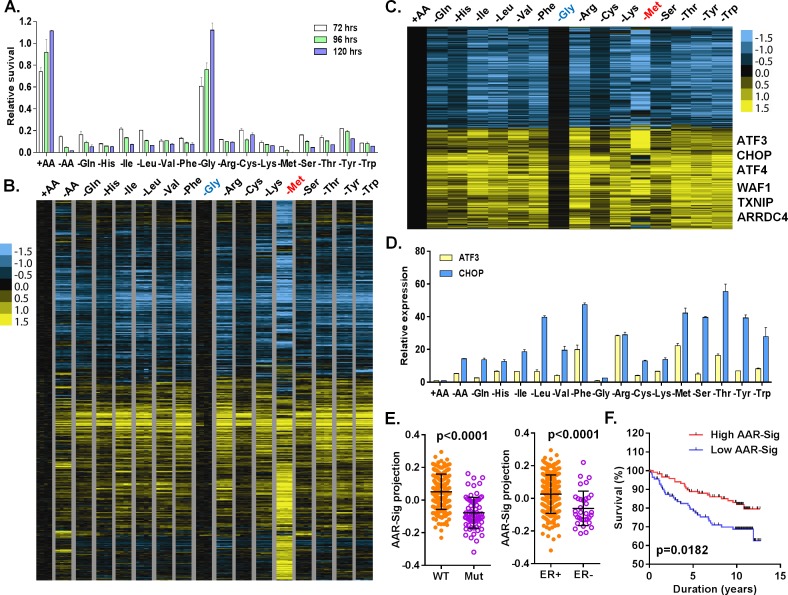
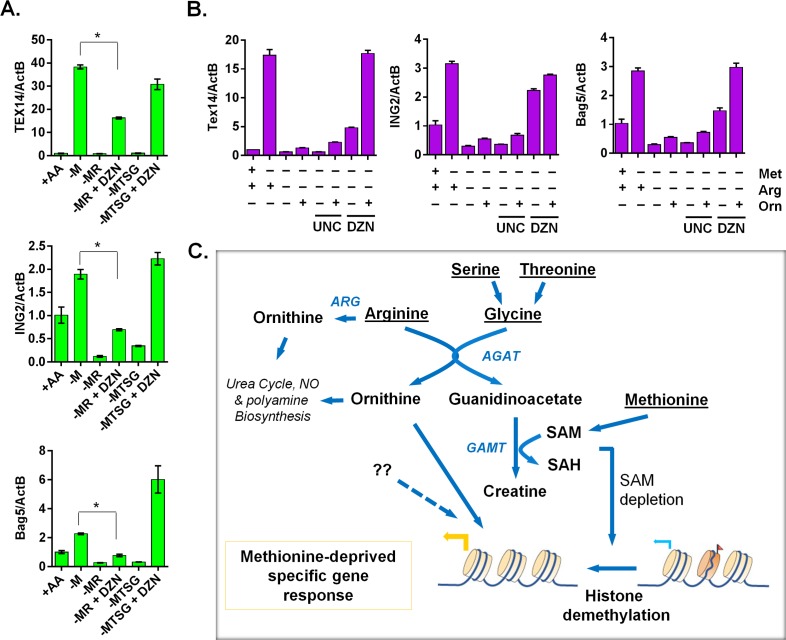
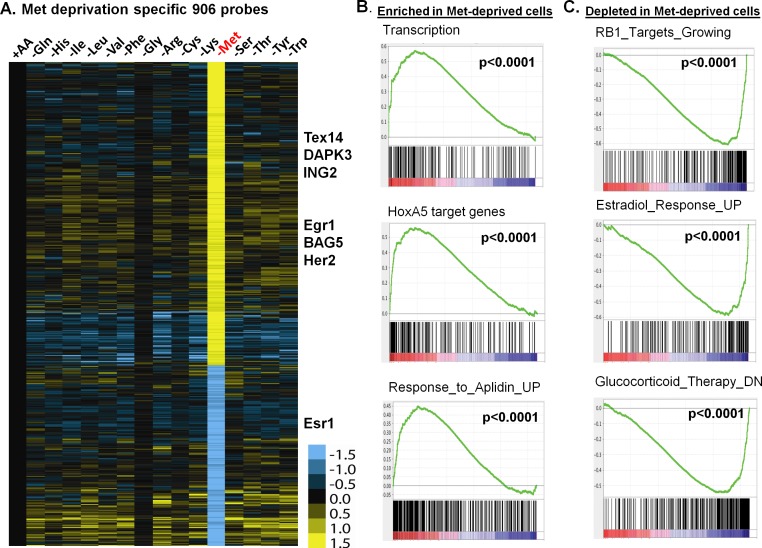
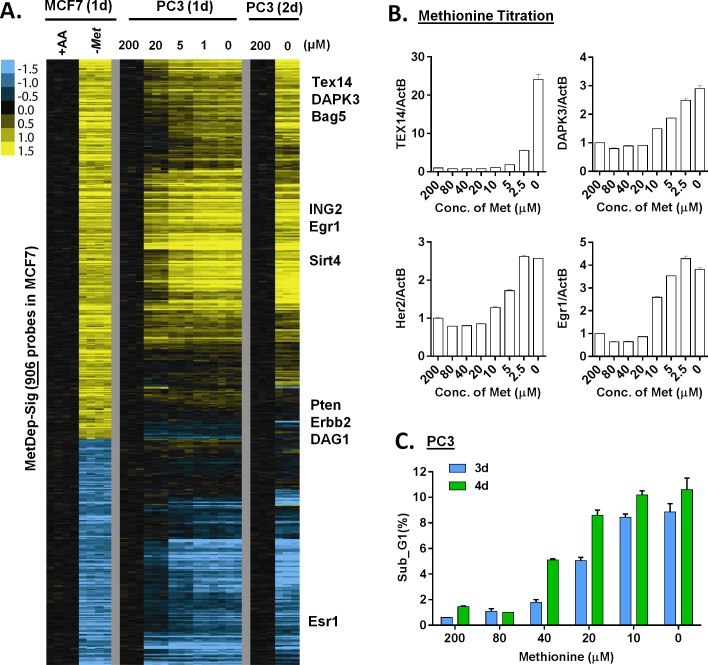
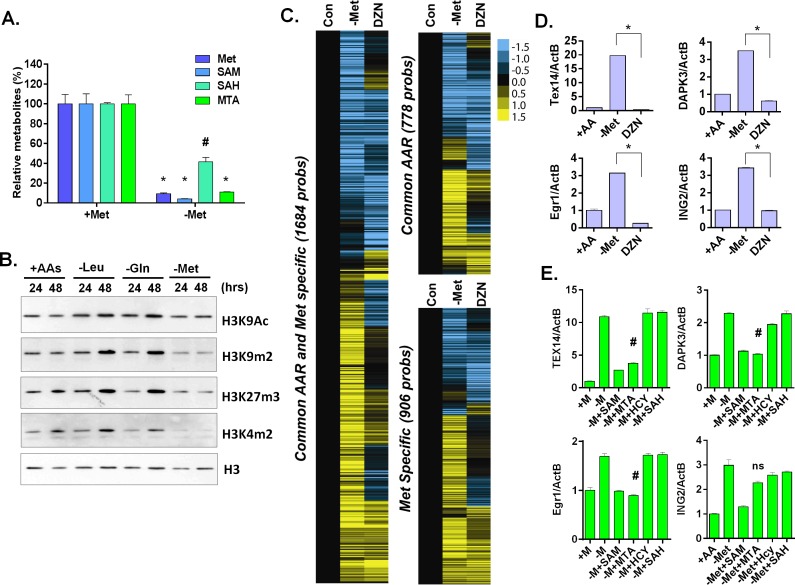
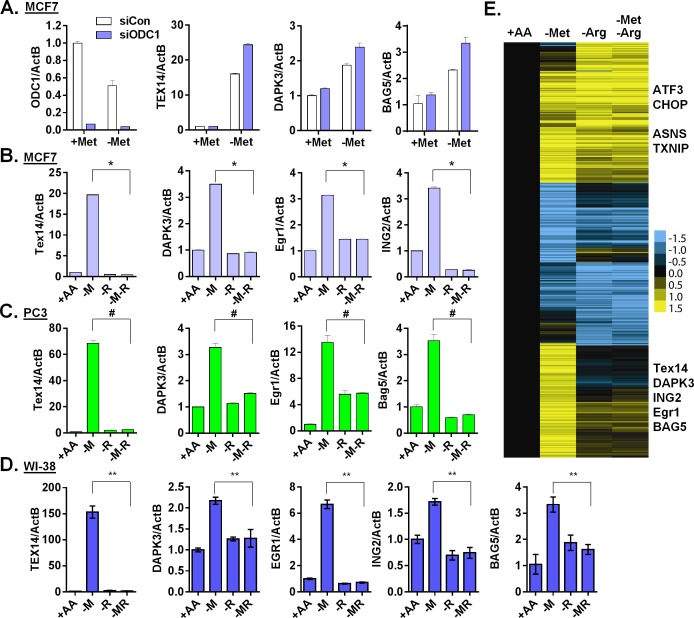
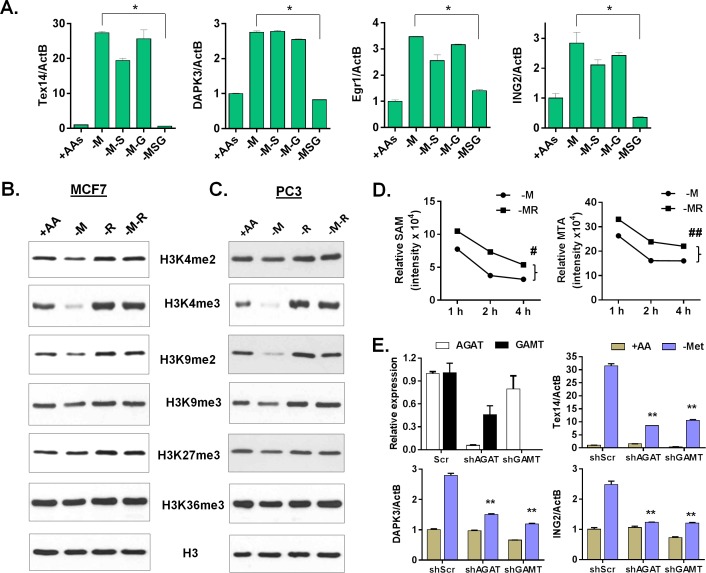
Besides being building blocks for protein synthesis, amino acids serve a wide variety of cellular functions, including acting as metabolic intermediates for ATP generation and for redox homeostasis. Upon amino acid deprivation, free uncharged tRNAs trigger GCN2-ATF4 to mediate the well-characterized transcriptional amino acid response (AAR). However, it is not clear whether the deprivation of different individual amino acids triggers identical or distinct AARs. Here, we characterized the global transcriptional response upon deprivation of one amino acid at a time. With the exception of glycine, which was not required for the proliferation of MCF7 cells, we found that the deprivation of most amino acids triggered a shared transcriptional response that included the activation of ATF4, p53 and TXNIP. However, there was also significant heterogeneity among different individual AARs. The most dramatic transcriptional response was triggered by methionine deprivation, which activated an extensive and unique response in different cell types. We uncovered that the specific methionine-deprived transcriptional response required creatine biosynthesis. This dependency on creatine biosynthesis was caused by the consumption of S-Adenosyl-L-methionine (SAM) during creatine biosynthesis that helps to deplete SAM under methionine deprivation and reduces histone methylations. As such, the simultaneous deprivation of methionine and sources of creatine biosynthesis (either arginine or glycine) abolished the reduction of histone methylation and the methionine-specific transcriptional response. Arginine-derived ornithine was also required for the complete induction of the methionine-deprived specific gene response. Collectively, our data identify a previously unknown set of heterogeneous amino acid responses and reveal a distinct methionine-deprived transcriptional response that results from the crosstalk of arginine, glycine and methionine metabolism via arginine/glycine-dependent creatine biosynthesis.
除了作为蛋白质合成的构件外,氨基酸还具有多种细胞功能,包括作为ATP生成和氧化还原稳态的代谢中间体。在氨基酸剥夺时,游离的无电荷tRNA触发GCN2-ATF4介导特征明确的转录性氨基酸反应(AAR)。然而,尚不清楚不同单个氨基酸的剥夺是否会触发相同或不同的AAR。在这里,我们表征了一次剥夺一种氨基酸后的全局转录反应。除了甘氨酸(MCF7细胞增殖不需要)外,我们发现大多数氨基酸的剥夺触发了共同的转录反应,包括ATF4、p53和TXNIP的激活。然而,不同单个AAR之间也存在显著的异质性。蛋氨酸剥夺引发了最显著的转录反应,在不同细胞类型中激活了广泛而独特的反应。我们发现特定的蛋氨酸剥夺转录反应需要肌酸生物合成。对肌酸生物合成的这种依赖性是由肌酸生物合成过程中S-腺苷-L-蛋氨酸(SAM)的消耗引起的,这有助于在蛋氨酸剥夺时消耗SAM并减少组蛋白甲基化。因此,同时剥夺蛋氨酸和肌酸生物合成来源(精氨酸或甘氨酸)消除了组蛋白甲基化的减少和蛋氨酸特异性转录反应。精氨酸衍生的鸟氨酸也是完全诱导蛋氨酸剥夺特异性基因反应所必需的。总体而言,我们的数据确定了一组以前未知的异质性氨基酸反应,并揭示了一种独特的蛋氨酸剥夺转录反应,该反应是由精氨酸、甘氨酸和蛋氨酸代谢通过精氨酸/甘氨酸依赖性肌酸生物合成相互作用产生的。