Reeves Analise Z, Spears William E, Du Juan, Tan Kah Yong, Wagers Amy J, Lesser Cammie F
†Department of Medicine, Division of Infectious Diseases, Massachusetts General Hospital, Cambridge, Massachusetts 02139, United States.
‡Department of Microbiology and Immunobiology, Harvard Medical School, Boston, Massachusetts 02138, United States.
ACS Synth Biol. 2015 May 15;4(5):644-54. doi: 10.1021/acssynbio.5b00002. Epub 2015 Apr 24.
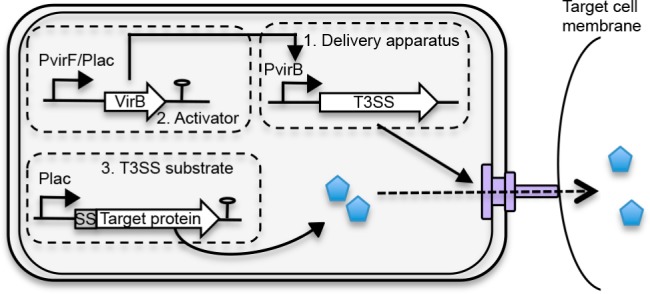
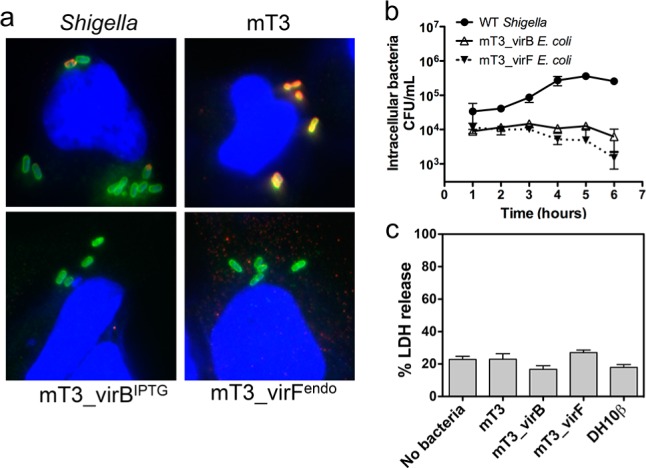
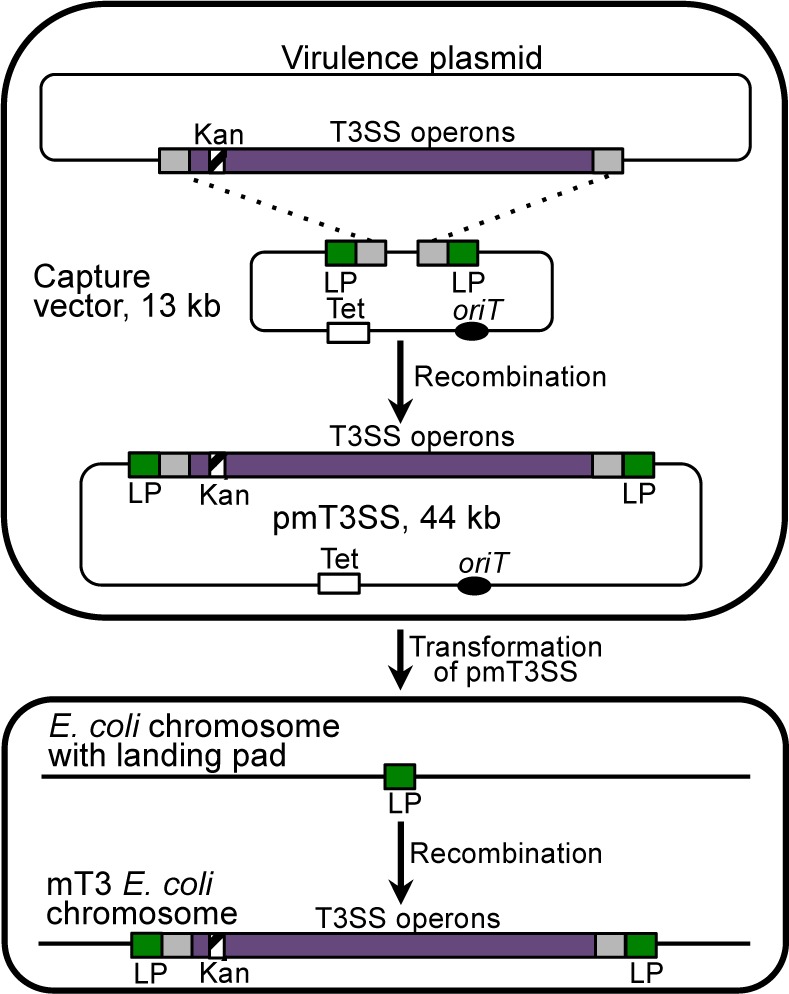
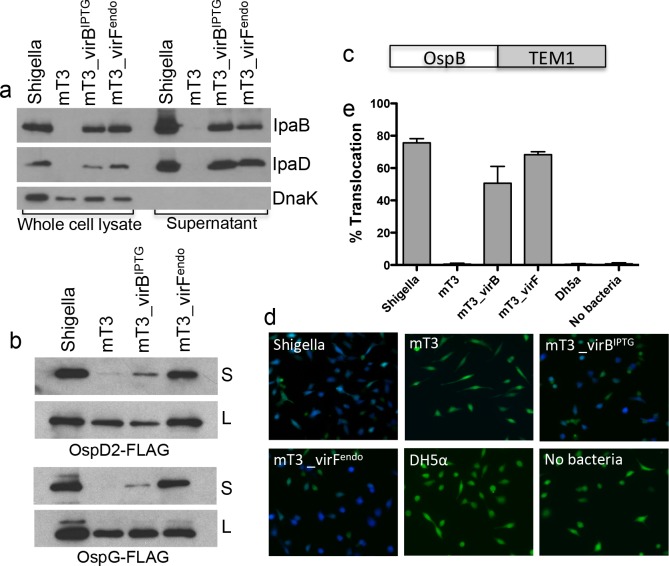
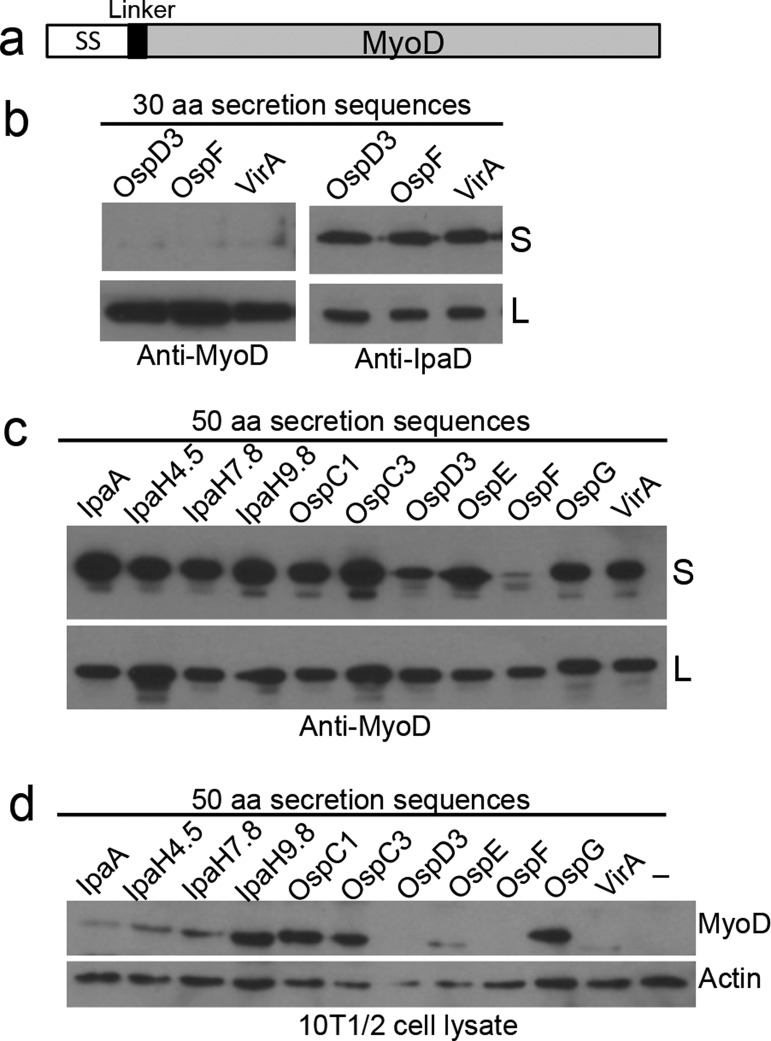
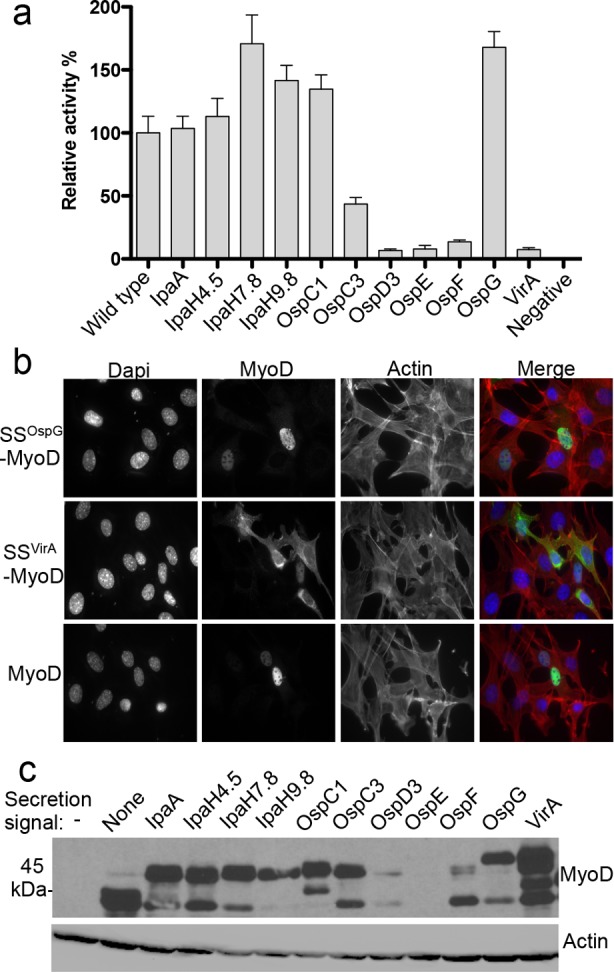
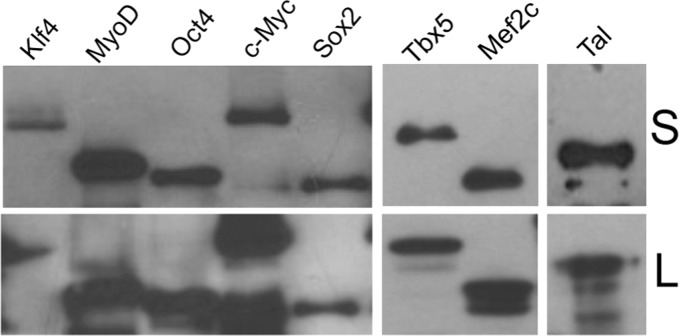
Many Gram-negative pathogens encode type 3 secretion systems, sophisticated nanomachines that deliver proteins directly into the cytoplasm of mammalian cells. These systems present attractive opportunities for therapeutic protein delivery applications; however, their utility has been limited by their inherent pathogenicity. Here, we report the reengineering of a laboratory strain of Escherichia coli with a tunable type 3 secretion system that can efficiently deliver heterologous proteins into mammalian cells, thereby circumventing the need for virulence attenuation. We first introduced a 31 kB region of Shigella flexneri DNA that encodes all of the information needed to form the secretion nanomachine onto a plasmid that can be directly propagated within E. coli or integrated into the E. coli chromosome. To provide flexible control over type 3 secretion and protein delivery, we generated plasmids expressing master regulators of the type 3 system from either constitutive or inducible promoters. We then constructed a Gateway-compatible plasmid library of type 3 secretion sequences to enable rapid screening and identification of sequences that do not perturb function when fused to heterologous protein substrates and optimized their delivery into mammalian cells. Combining these elements, we found that coordinated expression of the type 3 secretion system and modified target protein substrates produces a nonpathogenic strain that expresses, secretes, and delivers heterologous proteins into mammalian cells. This reengineered system thus provides a highly flexible protein delivery platform with potential for future therapeutic applications.
许多革兰氏阴性病原体编码III型分泌系统,这是一种精密的纳米机器,可将蛋白质直接递送至哺乳动物细胞的细胞质中。这些系统为治疗性蛋白质递送应用提供了诱人的机会;然而,它们的效用因其固有的致病性而受到限制。在此,我们报告了对一种实验室菌株大肠杆菌的改造,该菌株带有一个可调节的III型分泌系统,能够有效地将异源蛋白质递送至哺乳动物细胞中,从而无需进行毒力减弱处理。我们首先将弗氏志贺氏菌DNA的一个31 kB区域引入到一个质粒上,该区域编码形成分泌纳米机器所需的所有信息,该质粒可在大肠杆菌中直接繁殖或整合到大肠杆菌染色体中。为了对III型分泌和蛋白质递送进行灵活控制,我们构建了从组成型或诱导型启动子表达III型系统主调节因子的质粒。然后,我们构建了一个III型分泌序列的Gateway兼容质粒文库,以便能够快速筛选和鉴定与异源蛋白质底物融合时不会干扰功能的序列,并优化它们向哺乳动物细胞中的递送。结合这些元件,我们发现III型分泌系统和修饰的靶蛋白底物的协同表达产生了一种无致病性的菌株,该菌株能够表达、分泌异源蛋白质并将其递送至哺乳动物细胞中。因此,这种改造后的系统提供了一个高度灵活的蛋白质递送平台,具有未来治疗应用的潜力。