Taniguchi M, Ogiso H, Takeuchi T, Kitatani K, Umehara H, Okazaki T
Department of Life Science, Medical Research Institute, Kanazawa Medical University, 1-1 Daigaku, Uchinada, Ishikawa 920-0293, Japan.
Division of Hematology/Immunology, Department of Medicine, Kanazawa Medical University, 1-1 Daigaku Uchinada, Uchinada, Ishikawa 920-0293, Japan.
Cell Death Dis. 2015 Apr 9;6(4):e1717. doi: 10.1038/cddis.2015.82.
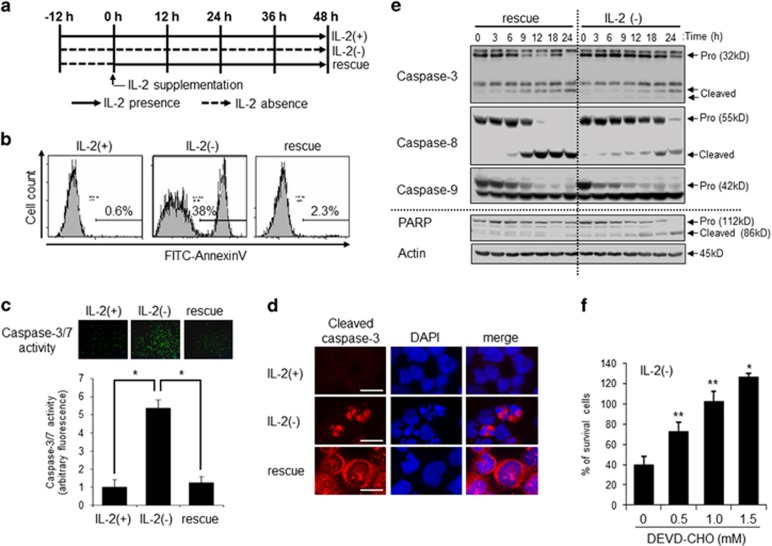
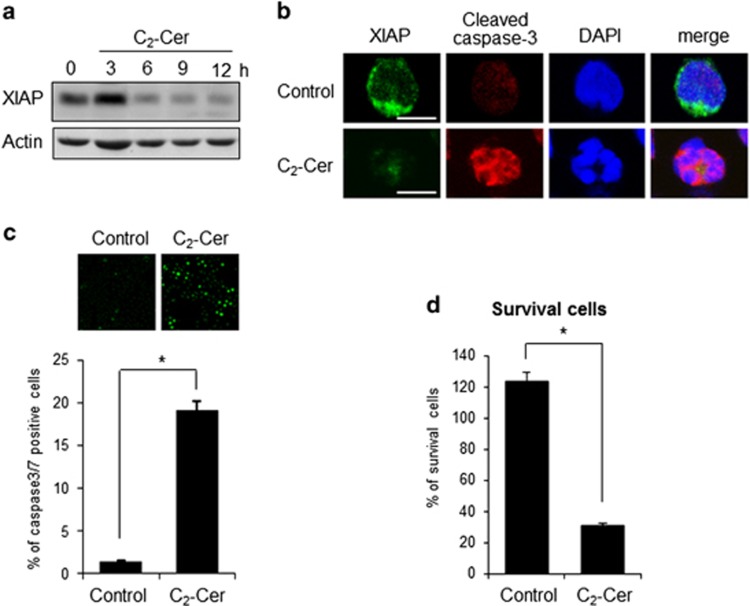
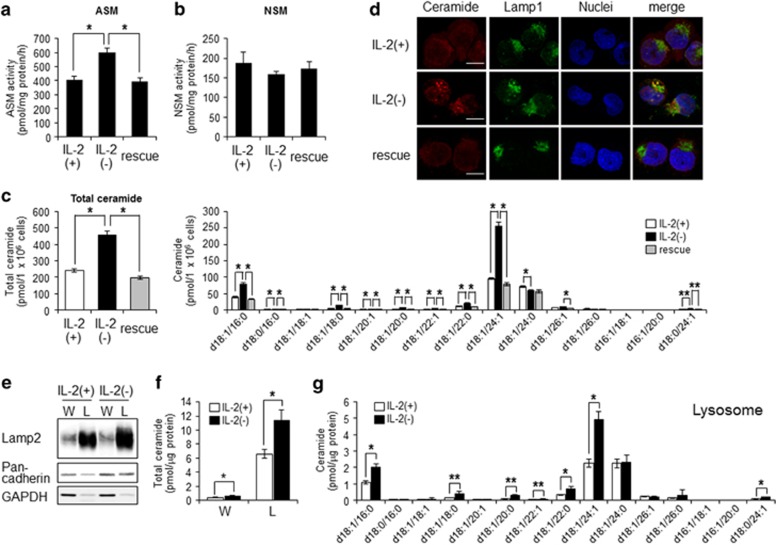
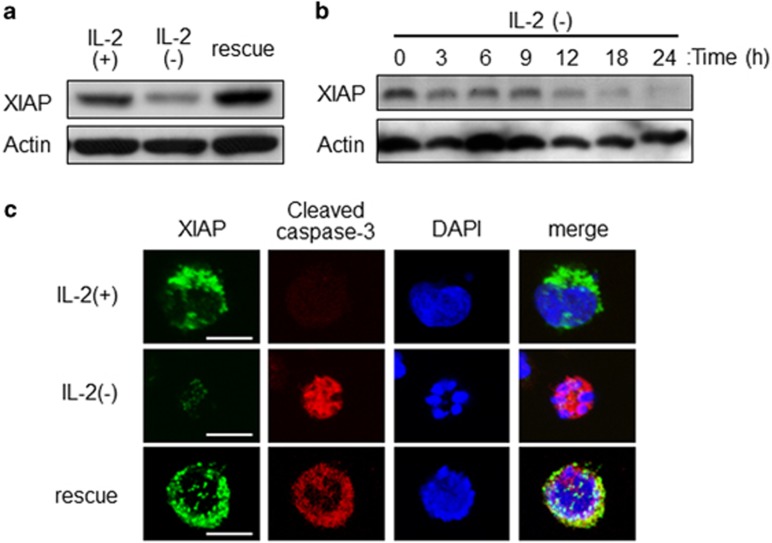
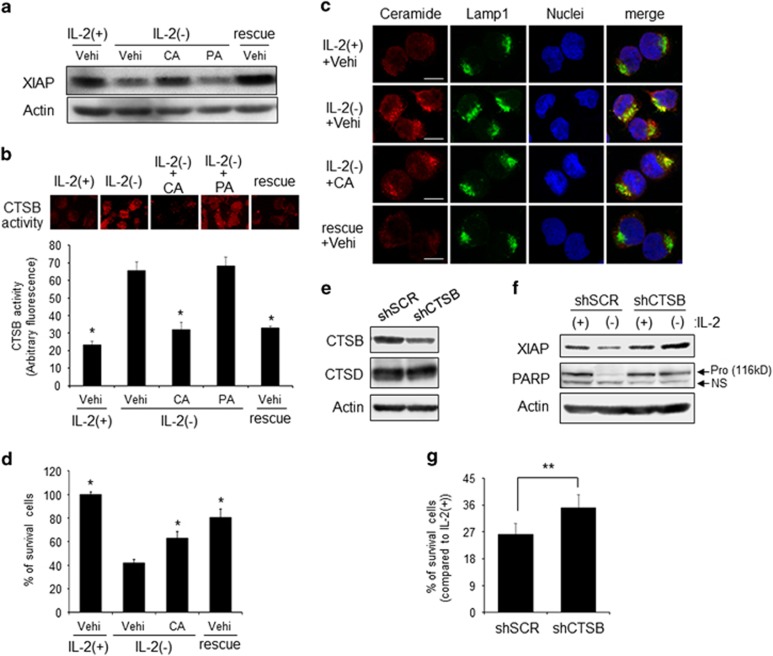
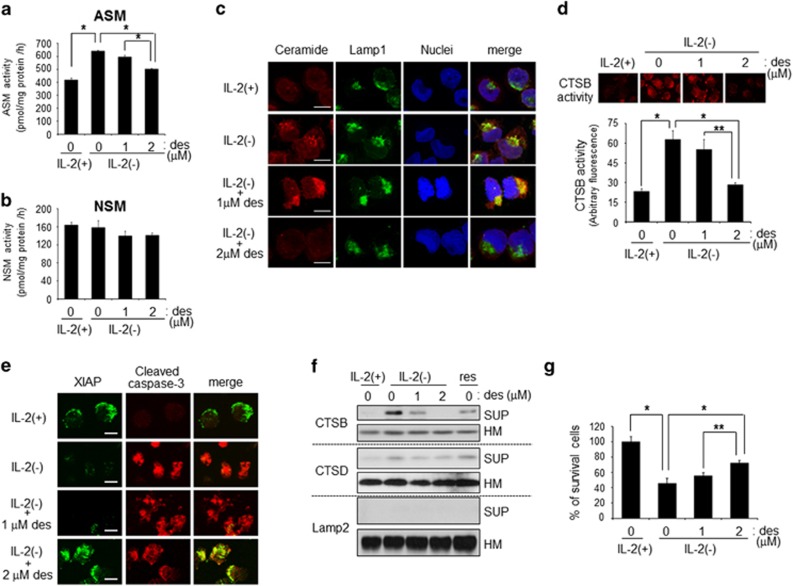
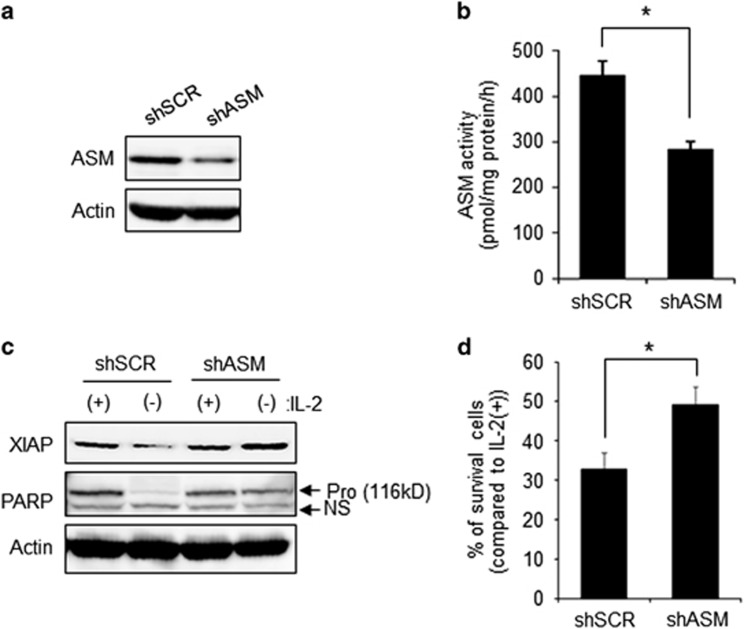
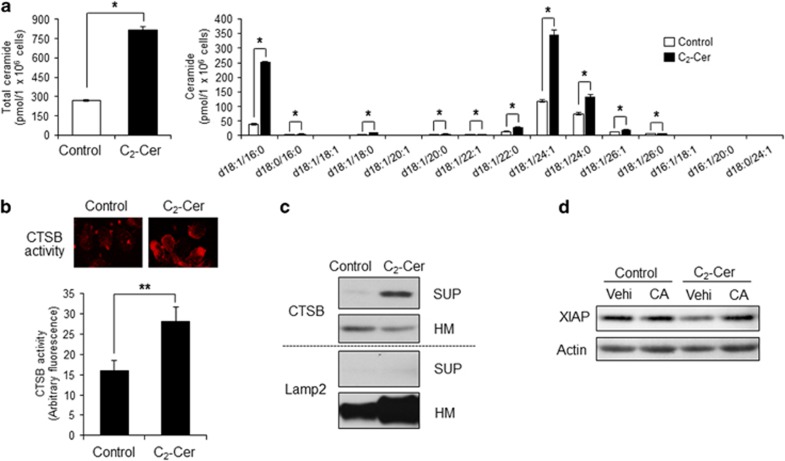
We previously reported that IL-2 deprivation induced acid sphingomyelinase-mediated (ASM-mediated) ceramide elevation and apoptosis in an NK/T lymphoma cell line KHYG-1. However, the molecular mechanism of ASM-ceramide-mediated apoptosis during IL-2 deprivation is poorly understood. Here, we showed that IL-2 deprivation induces caspase-dependent apoptosis characterized by phosphatidylserine externalization, caspase-8, -9, and -3 cleavage, and degradation of X-linked inhibitor of apoptosis protein (XIAP). IL-2 re-supplementation rescued apoptosis via inhibition of XIAP degradation without affecting caspase cleavage. However, IL-2 deprivation induced ceramide elevation via ASM in lysosomes and activated lysosomal cathepsin B (CTSB) but not cathepsin D. A CTSB inhibitor CA-074 Me and knockdown of CTSB inhibited ceramide-mediated XIAP degradation and apoptosis. Inhibition of ceramide accumulation in lysosomes using an ASM inhibitor, desipramine, decreased cytosolic activation of CTSB by inhibiting its transfer into cytosol from the lysosome. Knockdown of ASM also inhibited XIAP degradation and apoptosis. Furthermore, cell permeable N-acetyl sphingosine (C2-ceramide), which increases mainly endogenous d18:1/16:0 and d18:1/24:1 ceramide-like IL-2 deprivation, induced caspase-dependent apoptosis with XIAP degradation through CTSB. These findings suggest that lysosomal ceramide produced by ASM mediates XIAP degradation by activation of cytosolic CTSB and caspase-dependent apoptosis. The ASM-ceramide-CTSB signaling axis is a novel pathway of ceramide-mediated apoptosis in IL-2-deprived NK/T lymphoma cells.
我们之前报道过,白细胞介素-2(IL-2)缺失会诱导酸性鞘磷脂酶介导(ASM介导)的神经酰胺升高以及NK/T淋巴瘤细胞系KHYG-1发生凋亡。然而,在IL-2缺失期间,ASM-神经酰胺介导的凋亡的分子机制仍知之甚少。在此,我们表明IL-2缺失会诱导半胱天冬酶依赖性凋亡,其特征为磷脂酰丝氨酸外翻、半胱天冬酶-8、-9和-3的切割以及凋亡抑制蛋白(XIAP)的X连锁抑制因子的降解。重新补充IL-2通过抑制XIAP降解挽救了凋亡,而不影响半胱天冬酶的切割。然而,IL-2缺失通过溶酶体中的ASM诱导神经酰胺升高,并激活溶酶体组织蛋白酶B(CTSB),但不激活组织蛋白酶D。CTSB抑制剂CA-074 Me和CTSB的敲低抑制了神经酰胺介导的XIAP降解和凋亡。使用ASM抑制剂去甲丙咪嗪抑制溶酶体中神经酰胺的积累,通过抑制CTSB从溶酶体转移到细胞质中,降低了CTSB的细胞质激活。ASM的敲低也抑制了XIAP降解和凋亡。此外,细胞可渗透的N-乙酰鞘氨醇(C2-神经酰胺),其主要增加内源性d18:1/16:0和d18:1/24:1神经酰胺,类似于IL-2缺失,通过CTSB诱导具有XIAP降解的半胱天冬酶依赖性凋亡。这些发现表明,由ASM产生的溶酶体神经酰胺通过激活细胞质CTSB介导XIAP降解和半胱天冬酶依赖性凋亡。ASM-神经酰胺-CTSB信号轴是IL-2缺失的NK/T淋巴瘤细胞中神经酰胺介导的凋亡的新途径。