Humphrey Jay D, Schwartz Martin A, Tellides George, Milewicz Dianna M
From the Departments of Biomedical Engineering (J.D.H., M.A.S.), Medicine (Cardiology) (M.A.S.), Cell Biology (M.A.S.), and Surgery (G.T.), Yale University, New Haven, CT; and Department of Internal Medicine, University of Texas Health Science Center, Houston (D.M.M.).
Circ Res. 2015 Apr 10;116(8):1448-61. doi: 10.1161/CIRCRESAHA.114.304936.
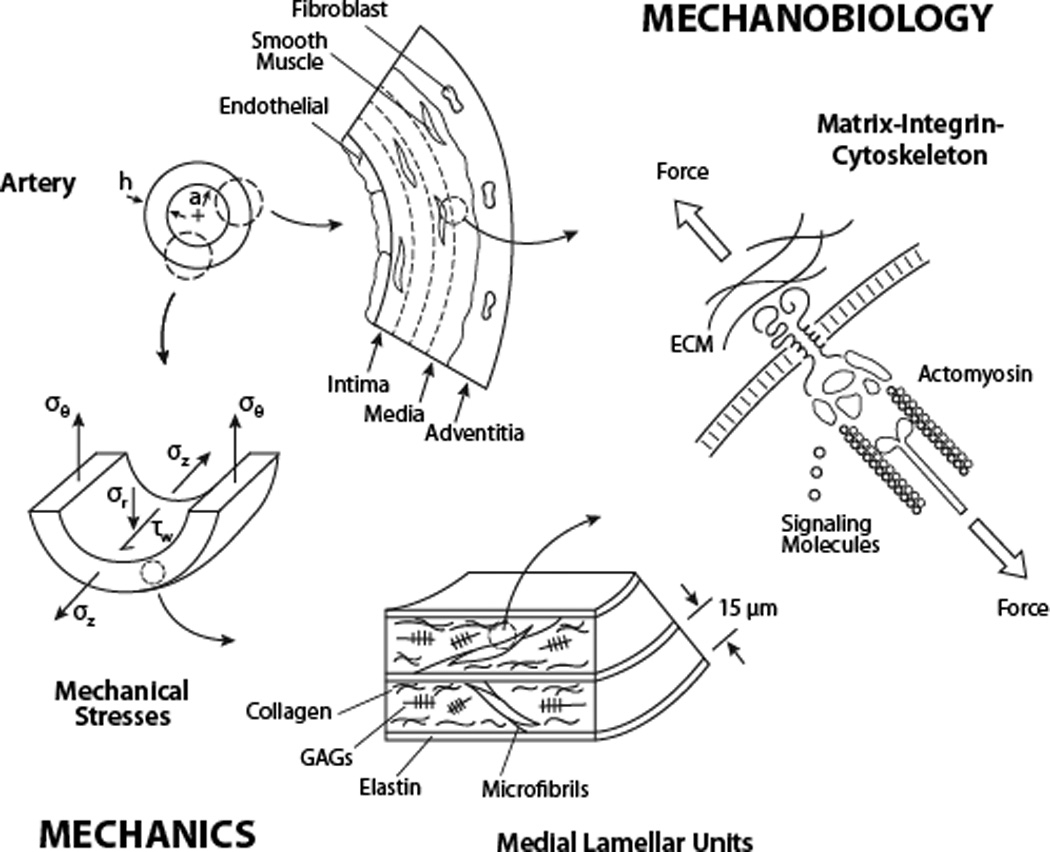
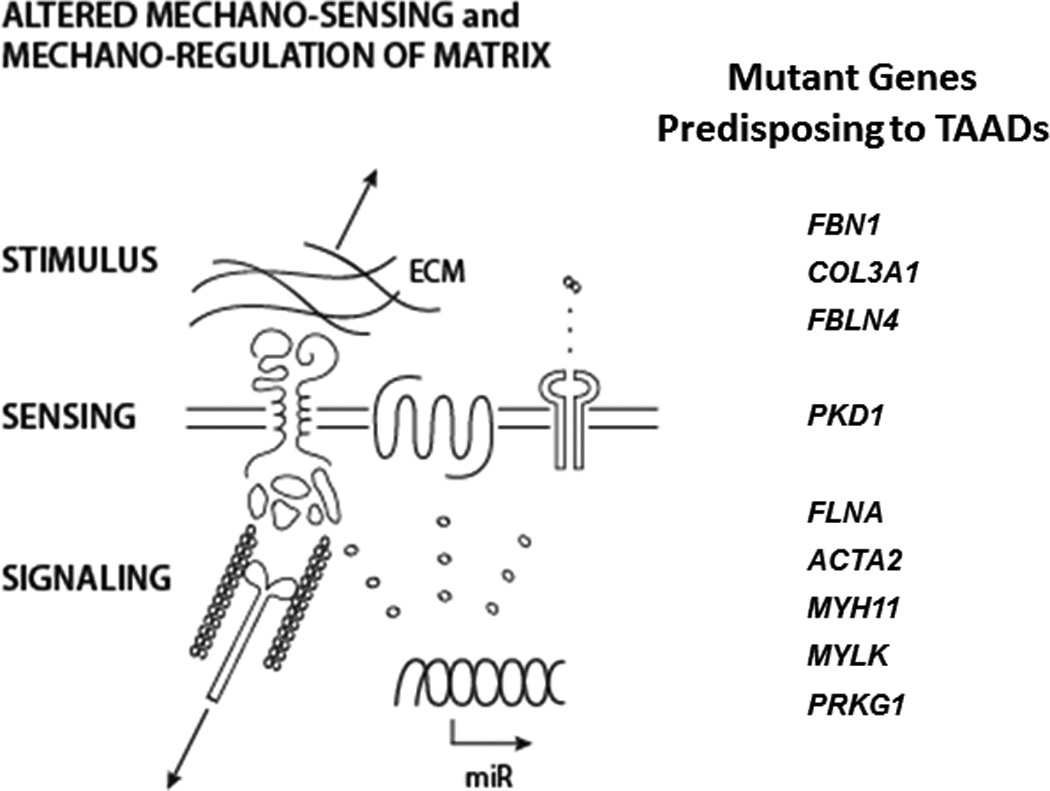
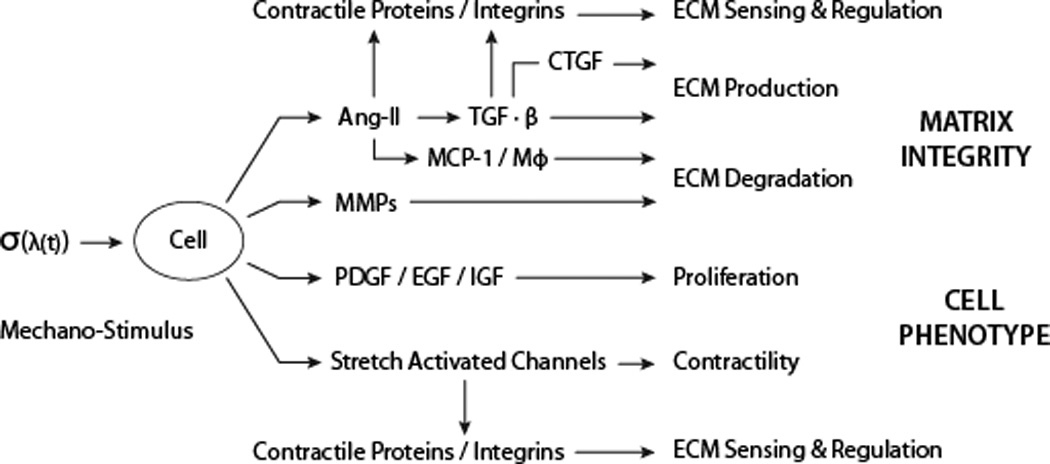
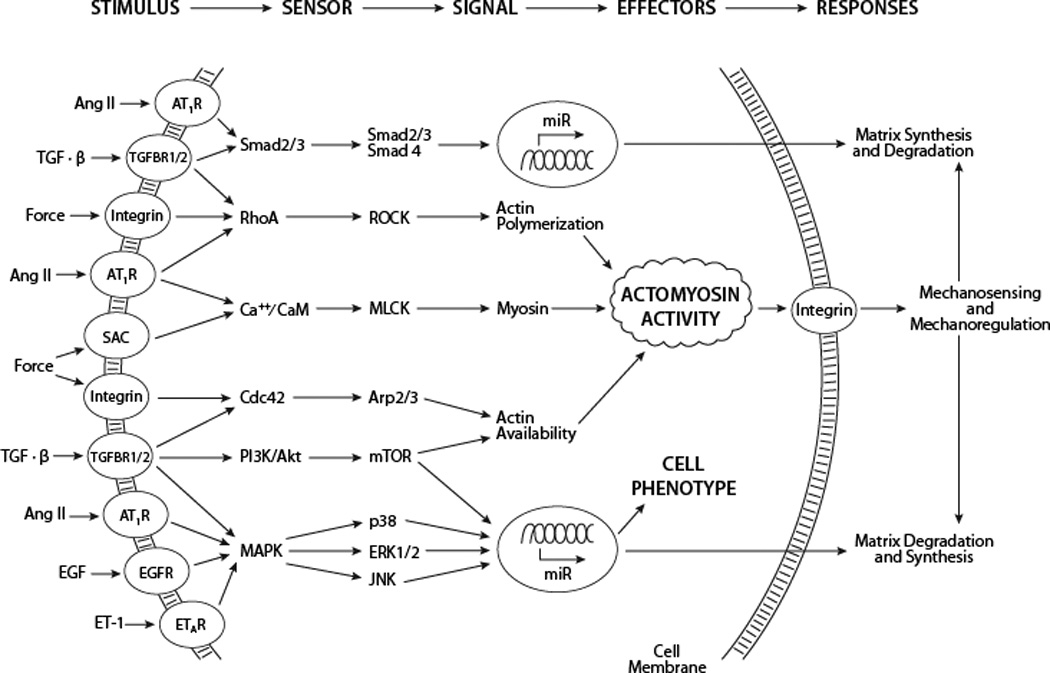
Thoracic aortic diseases that involve progressive enlargement, acute dissection, or rupture are influenced by the hemodynamic loads and mechanical properties of the wall. We have only limited understanding, however, of the mechanobiological processes that lead to these potentially lethal conditions. Homeostasis requires that intramural cells sense their local chemomechanical environment and establish, maintain, remodel, or repair the extracellular matrix to provide suitable compliance and yet sufficient strength. Proper sensing, in turn, necessitates both receptors that connect the extracellular matrix to intracellular actomyosin filaments and signaling molecules that transmit the related information to the nucleus. Thoracic aortic aneurysms and dissections are associated with poorly controlled hypertension and mutations in genes for extracellular matrix constituents, membrane receptors, contractile proteins, and associated signaling molecules. This grouping of factors suggests that these thoracic diseases result, in part, from dysfunctional mechanosensing and mechanoregulation of the extracellular matrix by the intramural cells, which leads to a compromised structural integrity of the wall. Thus, improved understanding of the mechanobiology of aortic cells could lead to new therapeutic strategies for thoracic aortic aneurysms and dissections.
涉及进行性扩张、急性夹层形成或破裂的胸主动脉疾病受血流动力学负荷和血管壁力学特性的影响。然而,我们对导致这些潜在致命情况的机械生物学过程的了解有限。内环境稳态要求壁内细胞感知其局部化学机械环境,并建立、维持、重塑或修复细胞外基质,以提供合适的顺应性和足够的强度。反过来,正确的感知既需要将细胞外基质与细胞内肌动球蛋白丝连接的受体,也需要将相关信息传递到细胞核的信号分子。胸主动脉瘤和夹层与控制不佳的高血压以及细胞外基质成分、膜受体、收缩蛋白和相关信号分子的基因突变有关。这些因素的组合表明,这些胸主动脉疾病部分是由壁内细胞对细胞外基质的机械感知和机械调节功能失调导致的,这会导致血管壁结构完整性受损。因此,更好地理解主动脉细胞的机械生物学可能会带来针对胸主动脉瘤和夹层的新治疗策略。