Perra Oliver, Phillips Rebecca, Fyfield Rhiannon, Waters Cerith, Hay Dale F
School of Nursing and Midwifery, Queen's University, Belfast, Northern Ireland, UK.
Department of Psychology, University of Exeter, Exeter, UK.
J Child Psychol Psychiatry. 2015 Nov;56(11):1231-8. doi: 10.1111/jcpp.12413. Epub 2015 Apr 10.
Links between mothers' postnatal depression (PND) and children's cognition have been identified in several samples, but the evidence is inconsistent. We hypothesized that PND may specifically interfere with infants' imitation, an early learning ability that features in early mother-infant interaction and is linked to memory, causal understanding and joint attention.
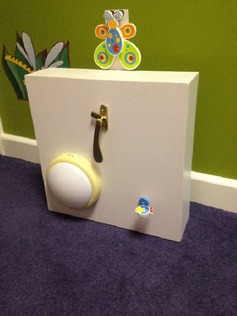
A randomly controlled experiment on imitation was embedded into a longitudinal study of a representative sample of firstborn British infants, whose mothers were assessed for depression using the SCAN interview during pregnancy and at 6 months postpartum. At a mean of 12.8 months, 253 infants were presented with two imitation tasks that varied in difficulty, in counterbalanced order.
The infants of mothers who experienced PND were significantly less likely than other infants in the sample to imitate the modelled actions, showing a 72% reduction in the likelihood of imitation. The association with PND was not explained by sociodemographic adversity, or a history of depression during pregnancy or prior to conception. Mothers' references to infants' internal states during mother-infant interaction at 6 months facilitated imitation at 12 months, but did not explain the link with PND.
The findings support the hypothesis that associations between PND and later cognitive outcomes may partly derive from effects of the mother's illness on infants' early learning abilities. Support for infants' learning should be considered as an age-appropriate, child-focused component of interventions designed to ameliorate the effects of PND.
在多个样本中已发现母亲产后抑郁症(PND)与儿童认知之间的联系,但证据并不一致。我们推测,产后抑郁症可能会特别干扰婴儿的模仿能力,模仿是一种早期学习能力,在早期母婴互动中具有重要作用,并且与记忆、因果理解和共同注意相关。
一项关于模仿的随机对照实验被纳入对英国头胎婴儿代表性样本的纵向研究中,这些婴儿的母亲在孕期和产后6个月通过SCAN访谈进行抑郁症评估。在平均12.8个月时,253名婴儿被依次呈现两个难度不同的模仿任务。
患有产后抑郁症的母亲的婴儿比样本中的其他婴儿模仿示范动作的可能性显著降低,模仿可能性降低了72%。与产后抑郁症的关联无法用社会人口学逆境、孕期或孕前的抑郁病史来解释。母亲在6个月时母婴互动中提及婴儿内部状态有助于12个月时的模仿,但无法解释与产后抑郁症的联系。
研究结果支持这样的假设,即产后抑郁症与后期认知结果之间的关联可能部分源于母亲疾病对婴儿早期学习能力的影响。对婴儿学习的支持应被视为旨在减轻产后抑郁症影响的干预措施中适合年龄、以儿童为重点的组成部分。