Liu Yaoping, Shetty Amol C, Schwartz Jennifer A, Bradford L Latey, Xu Wenjie, Phan Qyunh T, Kumari Priti, Mahurkar Anup, Mitchell Aaron P, Ravel Jacques, Fraser Claire M, Filler Scott G, Bruno Vincent M
Division of Infectious Diseases, Los Angeles Biomedical Research Institute at Harbor-UCLA Medical Center, Torrance, California 90509, USA;
Institute for Genome Sciences, University of Maryland School of Medicine, Baltimore, Maryland 21201, USA;
Genome Res. 2015 May;25(5):679-89. doi: 10.1101/gr.187427.114. Epub 2015 Apr 9.
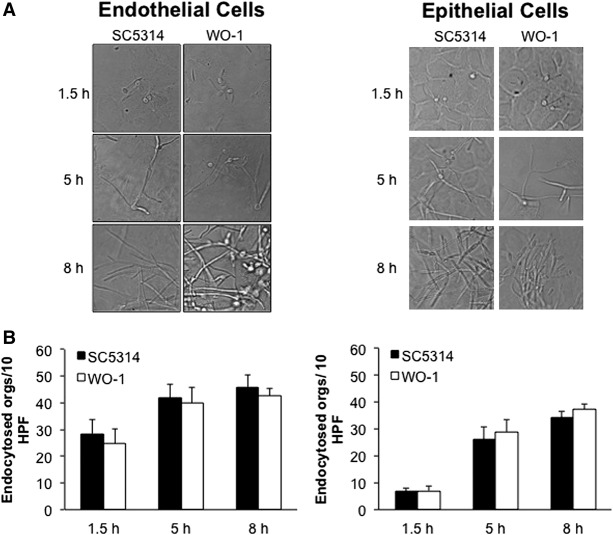
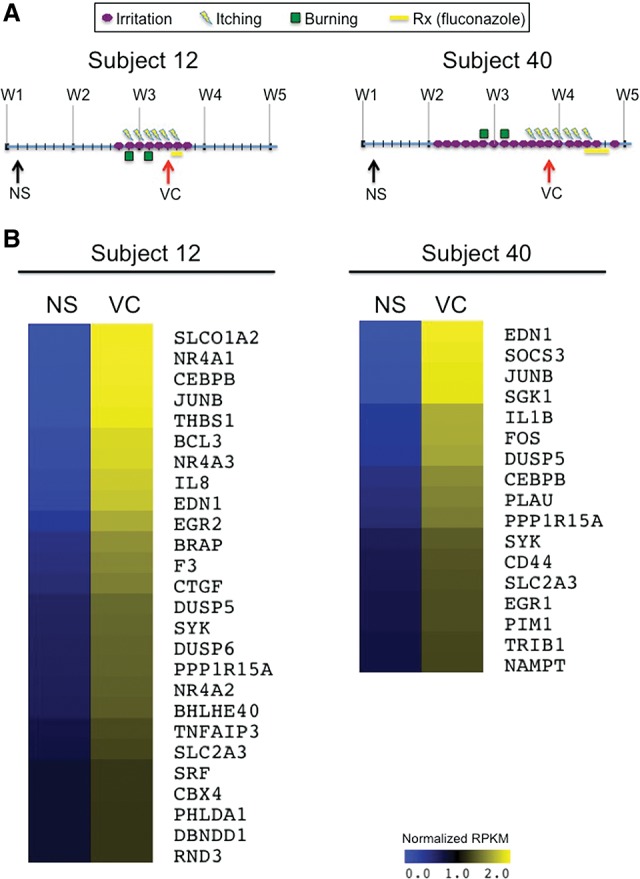
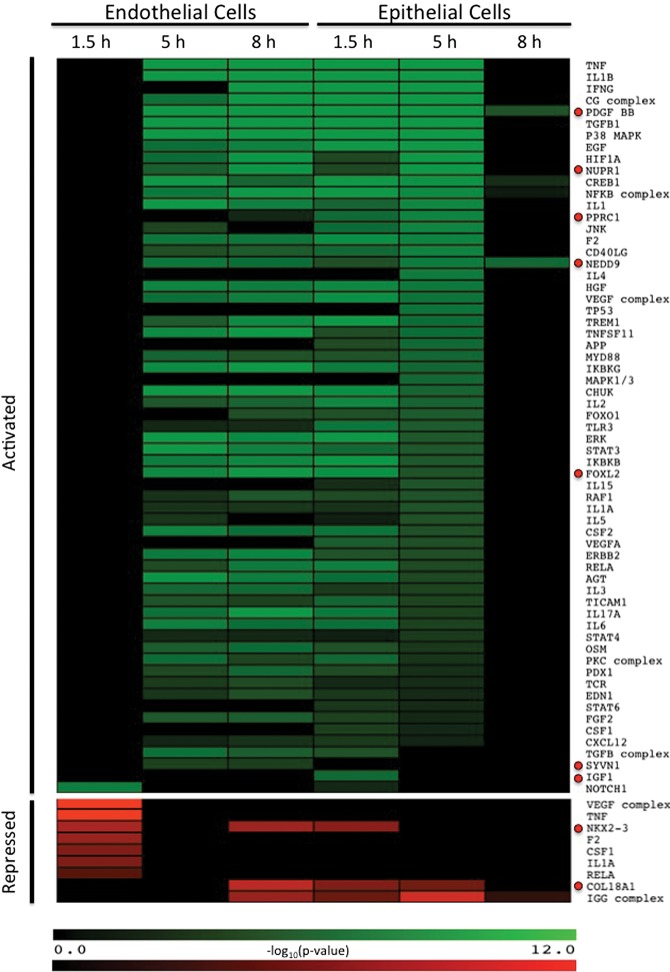
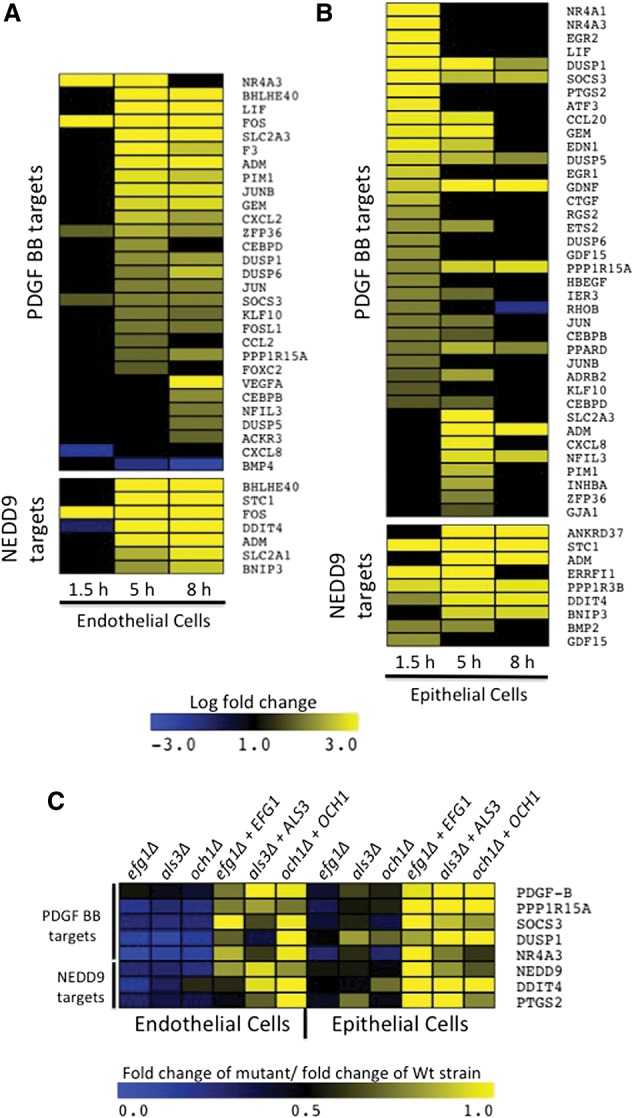
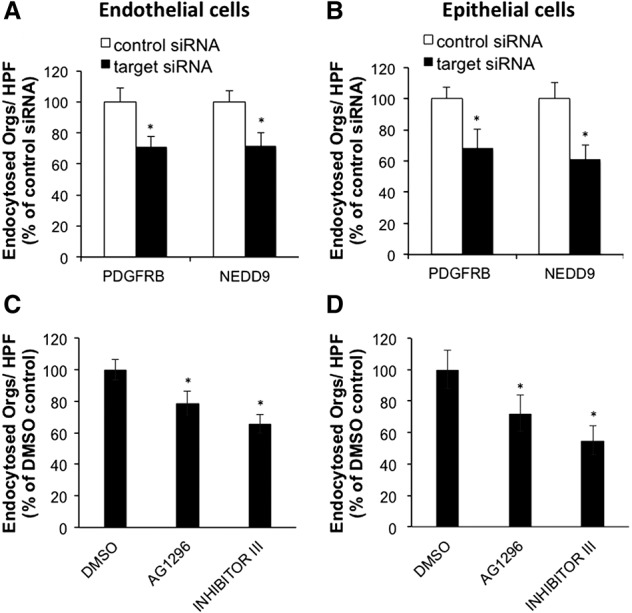
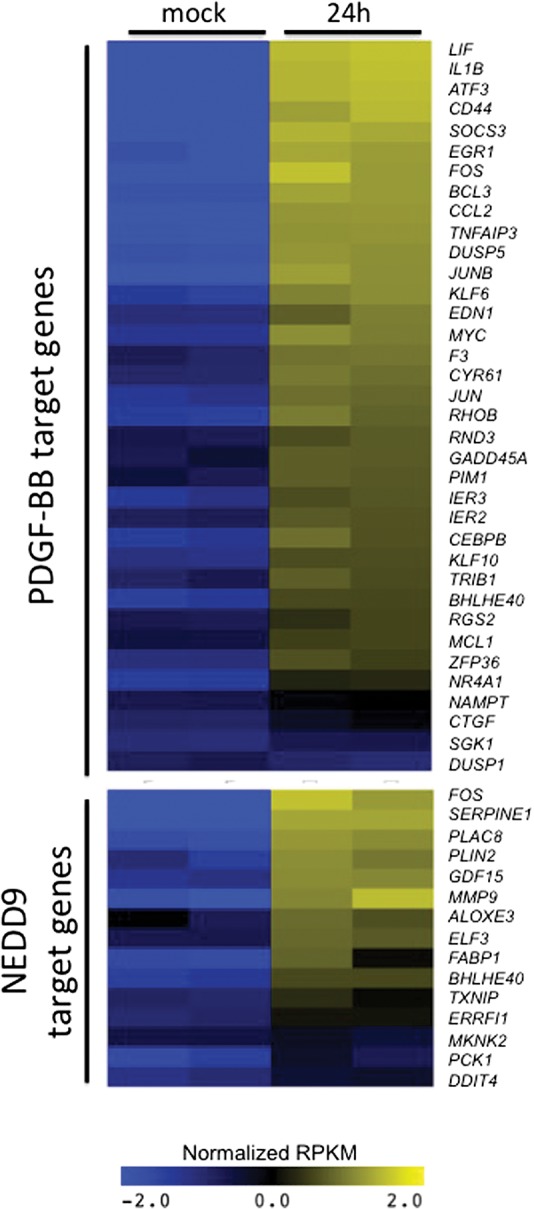
Candida albicans, the major invasive fungal pathogen of humans, can cause both debilitating mucosal infections and fatal invasive infections. Understanding the complex nature of the host-pathogen interaction in each of these contexts is essential to developing desperately needed therapies to treat fungal infections. RNA-seq enables a systems-level understanding of infection by facilitating comprehensive analysis of transcriptomes from multiple species (e.g., host and pathogen) simultaneously. We used RNA-seq to characterize the transcriptomes of both C. albicans and human endothelial cells or oral epithelial cells during in vitro infection. Network analysis of the differentially expressed genes identified the activation of several signaling pathways that have not previously been associated with the host response to fungal pathogens. Using an siRNA knockdown approach, we demonstrate that two of these pathways-platelet-derived growth factor BB (PDGF BB) and neural precursor-cell-expressed developmentally down-regulated protein 9 (NEDD9)-govern the host-pathogen interaction by regulating the uptake of C. albicans by host cells. Using RNA-seq analysis of a mouse model of hematogenously disseminated candidiasis (HDC) and episodes of vulvovaginal candidiasis (VVC) in humans, we found evidence that many of the same signaling pathways are activated during mucosal (VVC) and/or disseminated (HDC) infections in vivo. Our analyses have uncovered several signaling pathways at the interface between C. albicans and host cells in various contexts of infection, and suggest that PDGF BB and NEDD9 play important roles in this interaction. In addition, these data provide a valuable community resource for better understanding host-fungal pathogen interactions.
白色念珠菌是人类主要的侵袭性真菌病原体,可引起使人虚弱的黏膜感染和致命的侵袭性感染。了解在每种情况下宿主与病原体相互作用的复杂本质对于开发急需的治疗真菌感染的疗法至关重要。RNA测序通过促进对来自多个物种(例如宿主和病原体)的转录组进行全面分析,从而实现对感染的系统层面的理解。我们使用RNA测序来表征体外感染期间白色念珠菌以及人内皮细胞或口腔上皮细胞的转录组。对差异表达基因的网络分析确定了几种先前未与宿主对真菌病原体的反应相关联的信号通路的激活。使用小干扰RNA敲低方法,我们证明其中两条信号通路——血小板衍生生长因子BB(PDGF BB)和神经前体细胞表达的发育下调蛋白9(NEDD9)——通过调节宿主细胞对白念珠菌的摄取来控制宿主与病原体的相互作用。通过对血行播散性念珠菌病(HDC)小鼠模型和人类外阴阴道念珠菌病(VVC)发作进行RNA测序分析,我们发现有证据表明,在体内黏膜(VVC)和/或播散性(HDC)感染期间,许多相同的信号通路被激活。我们的分析揭示了在各种感染情况下白色念珠菌与宿主细胞之间界面处的几种信号通路,并表明PDGF BB和NEDD9在这种相互作用中发挥重要作用。此外,这些数据为更好地理解宿主-真菌病原体相互作用提供了宝贵的公共资源。