Pathak Rupak, Shao Lijian, Ghosh Sanchita P, Zhou Daohong, Boerma Marjan, Weiler Hartmut, Hauer-Jensen Martin
Division of Radiation Health, Department of Pharmaceutical Sciences, College of Pharmacy, University of Arkansas for Medical Sciences, Little Rock, AR, United States of America.
Armed Forces Radiobiology Research Institute, USUHS, Bethesda, MD, United States of America.
PLoS One. 2015 Apr 10;10(4):e0122511. doi: 10.1371/journal.pone.0122511. eCollection 2015.
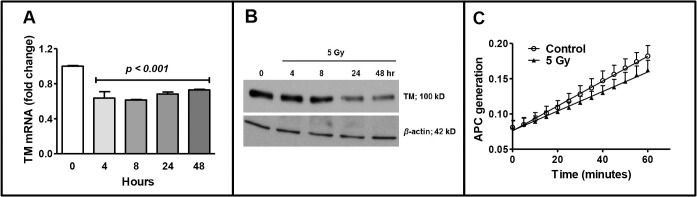
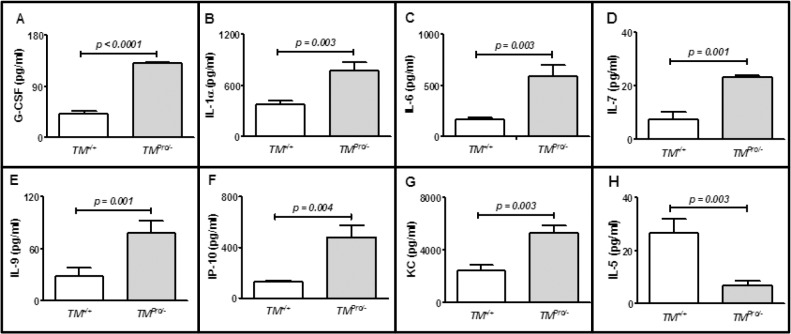
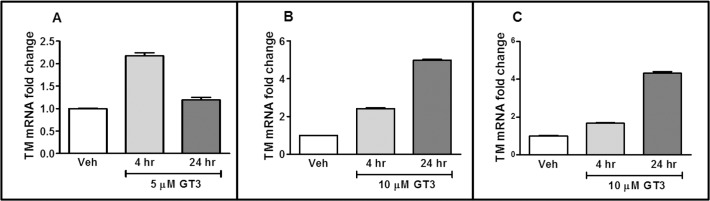
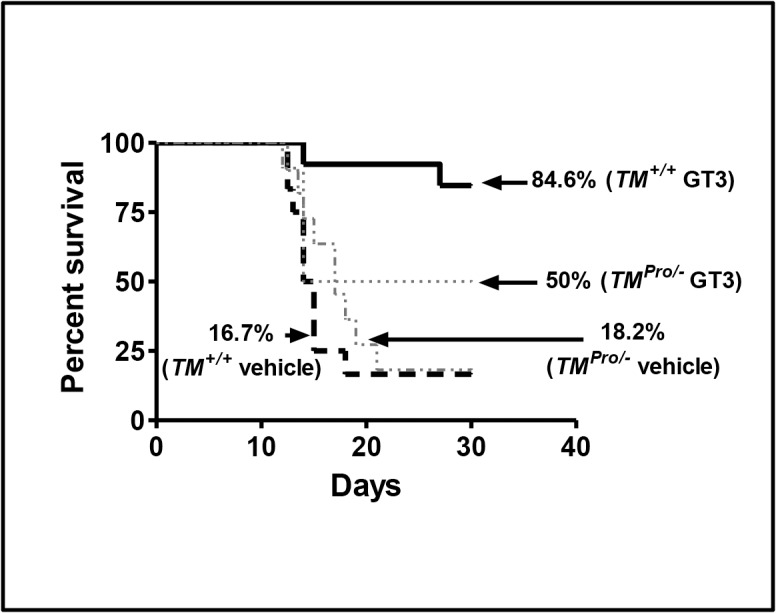
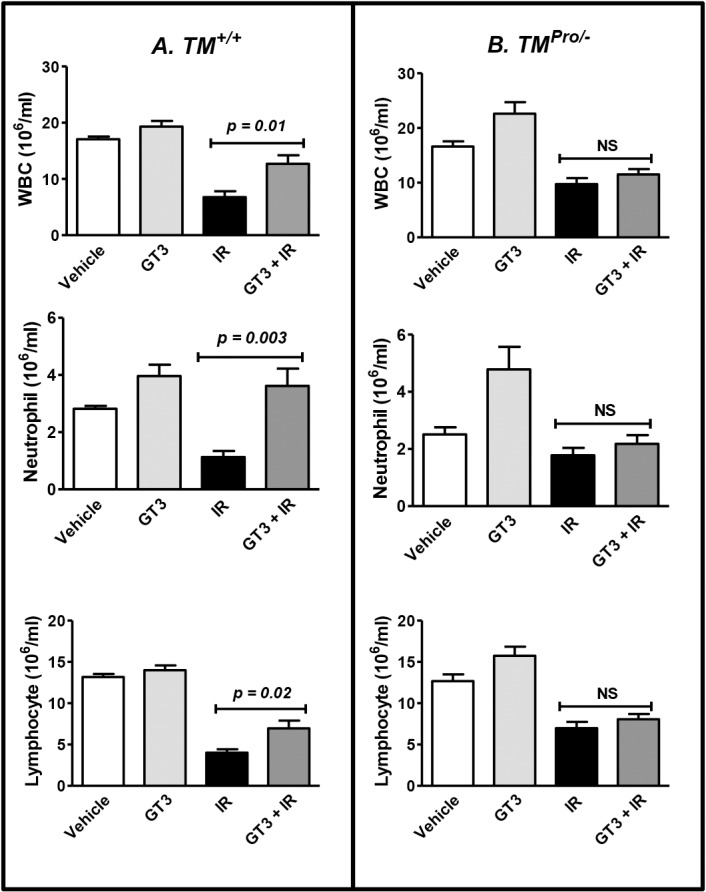
Systemic administration of recombinant thrombomodulin (TM) confers radiation protection partly by accelerating hematopoietic recovery. The uniquely potent radioprotector gamma tocotrienol (GT3), in addition to being a strong antioxidant, inhibits the enzyme hydroxy-methyl-glutaryl-coenzyme A reductase (HMGCR) and thereby likely modulates the expression of TM. We hypothesized that the mechanism underlying the exceptional radioprotective properties of GT3 partly depends on the presence of endothelial TM. In vitro studies confirmed that ionizing radiation suppresses endothelial TM (about 40% at 4 hr after 5 Gy γ-irradiation) and that GT3 induces TM expression (about 2 fold at the mRNA level after 5 μM GT3 treatment for 4 hr). In vivo survival studies showed that GT3 was significantly more effective as a radioprotector in TM wild type (TM+/+) mice than in mice with low TM function (TMPro/-). After exposure to 9 Gy TBI, GT3 pre-treatment conferred 85% survival in TM+/+ mice compared to only 50% in TMPro/-. Thus, GT3-mediated radiation lethality protection is partly dependent on endothelial TM. Significant post-TBI recovery of hematopoietic cells, particularly leukocytes, was observed in TM+/+ mice (p = 0.003), but not in TMPro/- mice, despite the fact that GT3 induced higher levels of granulocyte colony stimulating factor (G-CSF) in TMPro/- mice (p = 0.0001). These data demonstrate a critical, G-CSF-independent, role for endothelial TM in GT3-mediated lethality protection and hematopoietic recovery after exposure to TBI and may point to new strategies to enhance the efficacy of current medical countermeasures in radiological/nuclear emergencies.
重组血栓调节蛋白(TM)的全身给药通过加速造血恢复部分地赋予辐射防护作用。独特强效的辐射防护剂γ-生育三烯酚(GT3),除了是一种强抗氧化剂外,还抑制羟甲基戊二酰辅酶A还原酶(HMGCR),从而可能调节TM的表达。我们假设GT3卓越的辐射防护特性背后的机制部分取决于内皮TM的存在。体外研究证实,电离辐射会抑制内皮TM(5 Gy γ射线照射后4小时约降低40%),而GT3可诱导TM表达(5 μM GT3处理4小时后,mRNA水平约增加2倍)。体内生存研究表明,GT3作为辐射防护剂在TM野生型(TM+/+)小鼠中比在TM功能低下的小鼠(TMPro/-)中显著更有效。暴露于9 Gy全身照射后,GT3预处理使TM+/+小鼠的存活率达到85%,而TMPro/-小鼠仅为50%。因此,GT3介导的辐射致死性防护部分依赖于内皮TM。在TM+/+小鼠中观察到全身照射后造血细胞,特别是白细胞有显著恢复(p = 0.003),而在TMPro/-小鼠中未观察到,尽管GT3在TMPro/-小鼠中诱导了更高水平的粒细胞集落刺激因子(G-CSF)(p = 0.0001)。这些数据证明了内皮TM在GT3介导的致死性防护和全身照射后造血恢复中具有关键的、不依赖G-CSF的作用,并可能为提高当前放射/核紧急情况下医疗对策的疗效指明新策略。