Goetze Stephan, Zhang Yi, An Qi, Averina Viktoria, Lambiase Pier, Schilling Richard, Trappe Hans-Joachim, Winter Siegmund, Wold Nicholas, Manola Ljubomir, Kestens Dries
German Heart Institute, Berlin, Germany,
J Interv Card Electrophysiol. 2015 Jun;43(1):21-9. doi: 10.1007/s10840-015-9983-6. Epub 2015 Apr 12.
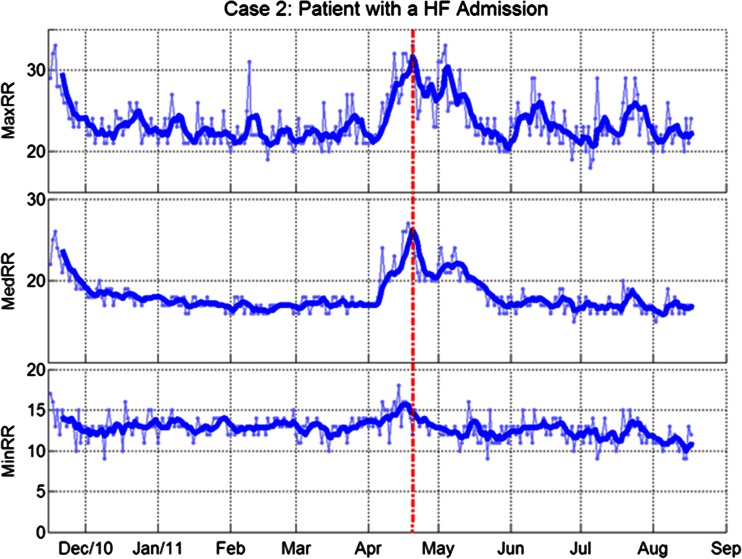
Respiratory distress is the primary driver for heart failure (HF) hospitalization. Implantable pacemakers and defibrillators are capable of monitoring respiratory rate (RR) in ambulatory HF patients. We investigated changes in RR prior to HF hospitalizations and its near-term risk stratification power.
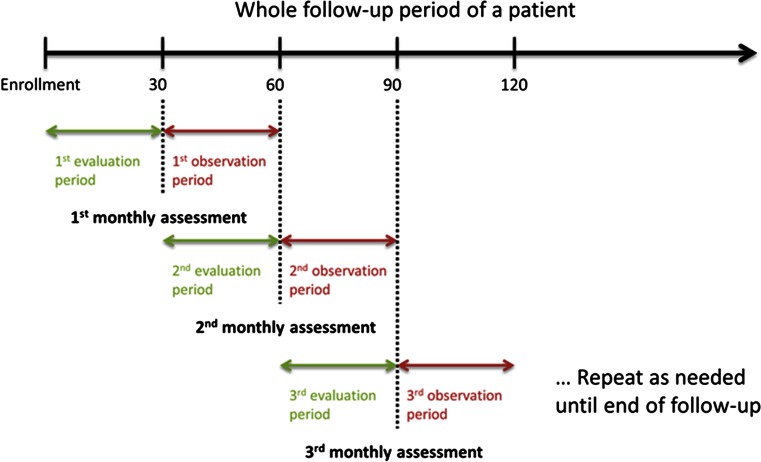
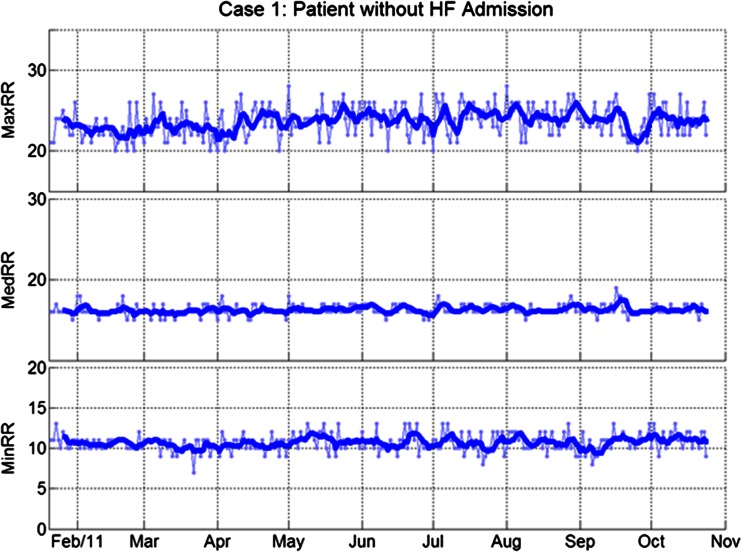
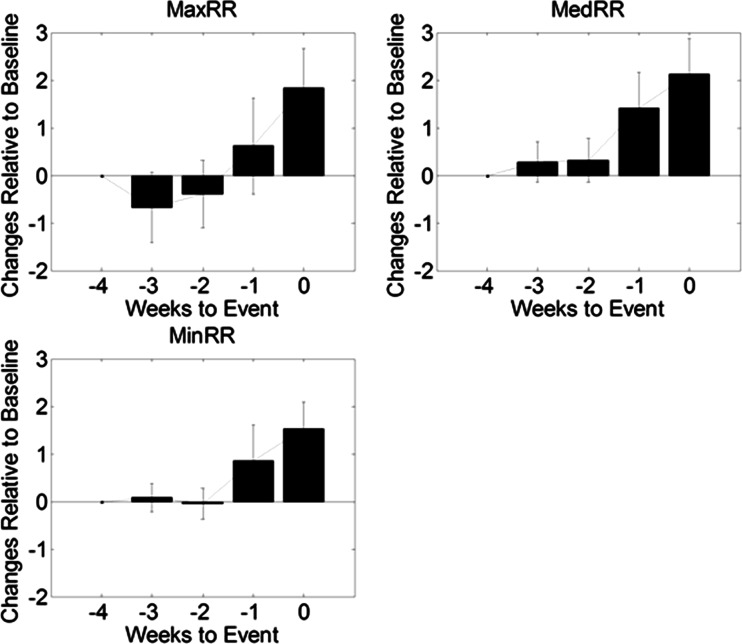
NOTICE-HF was an international multi-center study. Patients were implanted with an implantable cardioverter defibrillator or cardiac resynchronization therapy defibrillator, capable of trending daily maximum, median, and minimum RR (maxRR, medRR, minRR). RR from 120 patients with 9 months of follow-up was analyzed. One-tailed Student's t test was used to compare RR values prior to HF events to baseline defined as 4 weeks prior to the events. A Cox regression model was used to calculate the hazard ratios (HR) for the 30-day HF hospitalization risk based on RR values in the preceding month.
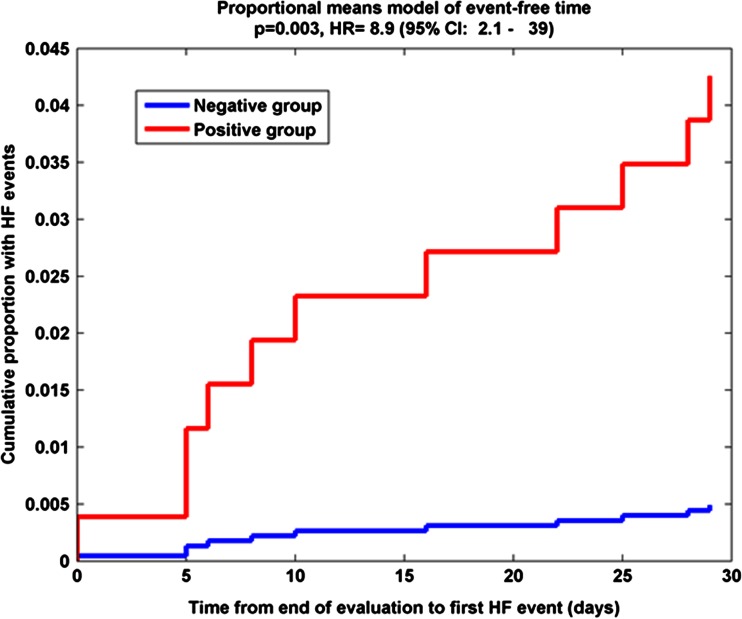
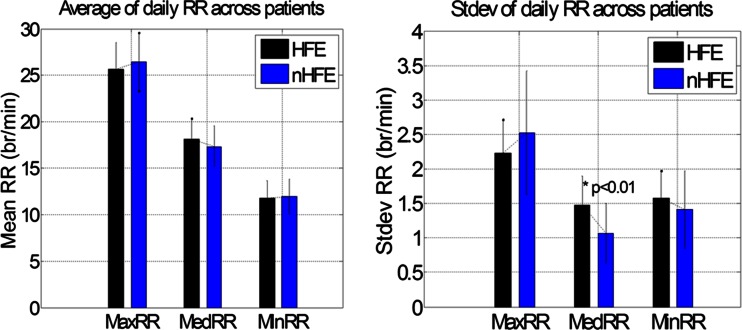
Daily maxRR, medRR, and minRR were significantly elevated prior to HF events compared to baseline (ΔmaxRR 1.8 ± 3.0; p = 0.02; ΔmedRR, 2.1 ± 2.8; p = 0.007; ΔminRR, 1.5 ± 2.1, p = 0.008). Risk of experiencing HF events within 30-days was increased if the standard deviation of medRR over the preceding month was above 1.0 br/min (HR = 12.3, 95 % confidence interval (CI) 2.57-59, p = 0.002). The risk remained high after adjusting for clinical variables that differed at enrollment.
Ambulatory daily respiratory rate trends may be a valuable addition to standard management for HF patients.
呼吸窘迫是心力衰竭(HF)住院治疗的主要驱动因素。植入式起搏器和除颤器能够监测门诊HF患者的呼吸频率(RR)。我们研究了HF住院前RR的变化及其近期风险分层能力。
NOTICE-HF是一项国际多中心研究。患者植入了可植入式心脏复律除颤器或心脏再同步治疗除颤器,能够记录每日最大、中位数和最小RR(maxRR、medRR、minRR)的变化趋势。对120例随访9个月的患者的RR进行了分析。采用单尾学生t检验比较HF事件前的RR值与事件前4周定义的基线值。使用Cox回归模型根据前一个月的RR值计算30天HF住院风险的风险比(HR)。
与基线相比,HF事件前每日maxRR、medRR和minRR显著升高(ΔmaxRR 1.8±3.0;p = 0.02;ΔmedRR,2.1±2.8;p = 0.007;ΔminRR,1.5±2.1,p = 0.008)。如果前一个月medRR的标准差高于1.0次/分钟,则30天内发生HF事件的风险增加(HR = 12.3,95%置信区间(CI)2.57-59,p = 0.002)。在校正入组时不同的临床变量后,风险仍然很高。
门诊每日呼吸频率趋势可能是HF患者标准管理的一个有价值的补充。