Fujita Katsuhide, Fukuda Makiko, Endoh Shigehisa, Maru Junko, Kato Haruhisa, Nakamura Ayako, Shinohara Naohide, Uchino Kanako, Honda Kazumasa
Research Institute of Science for Safety and Sustainability (RISS), National Institute of Advanced Industrial Science and Technology (AIST) , Tsukuba, Ibaraki , Japan .
Inhal Toxicol. 2015 Mar;27(4):207-23. doi: 10.3109/08958378.2015.1026620. Epub 2015 Apr 13.
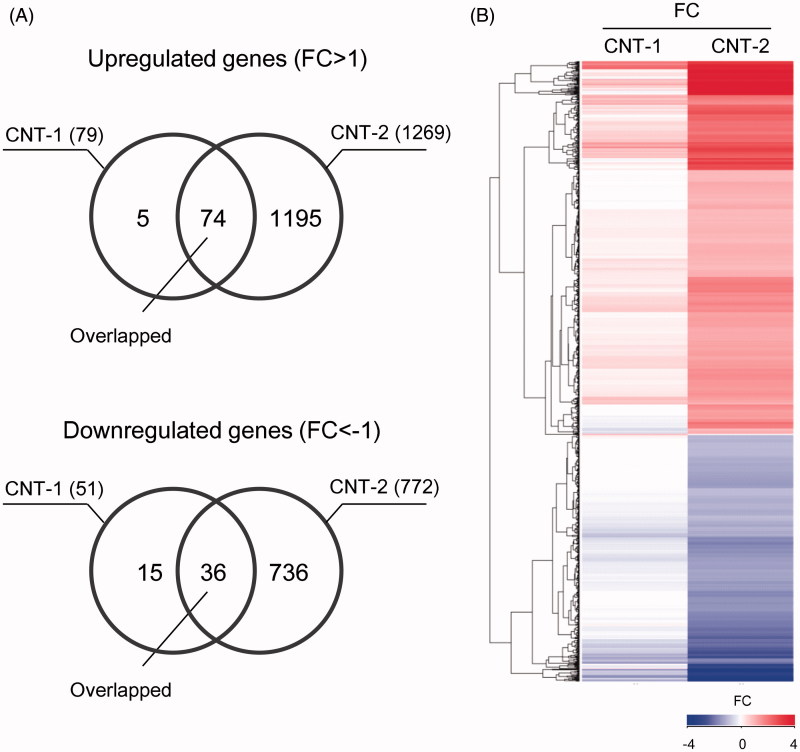
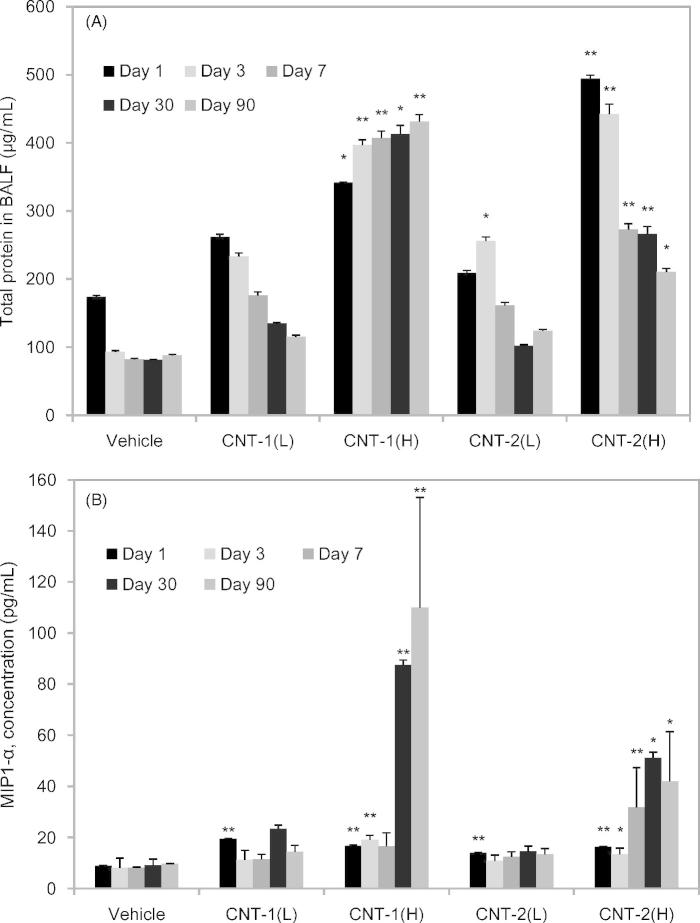
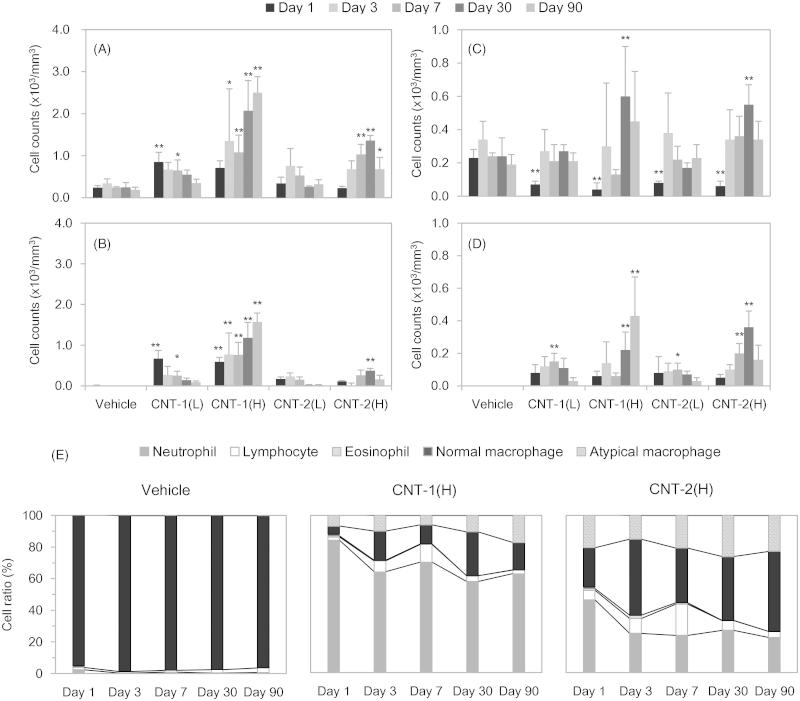
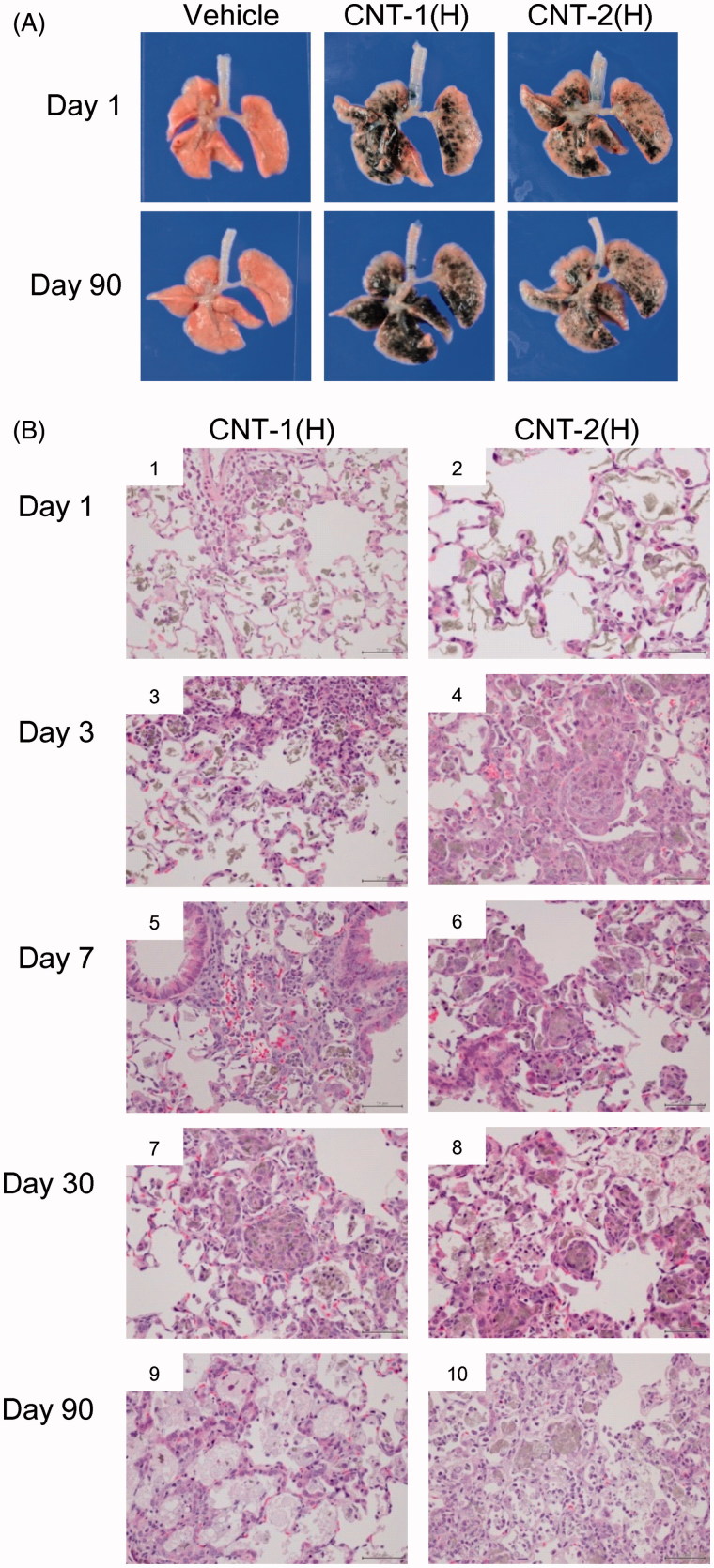
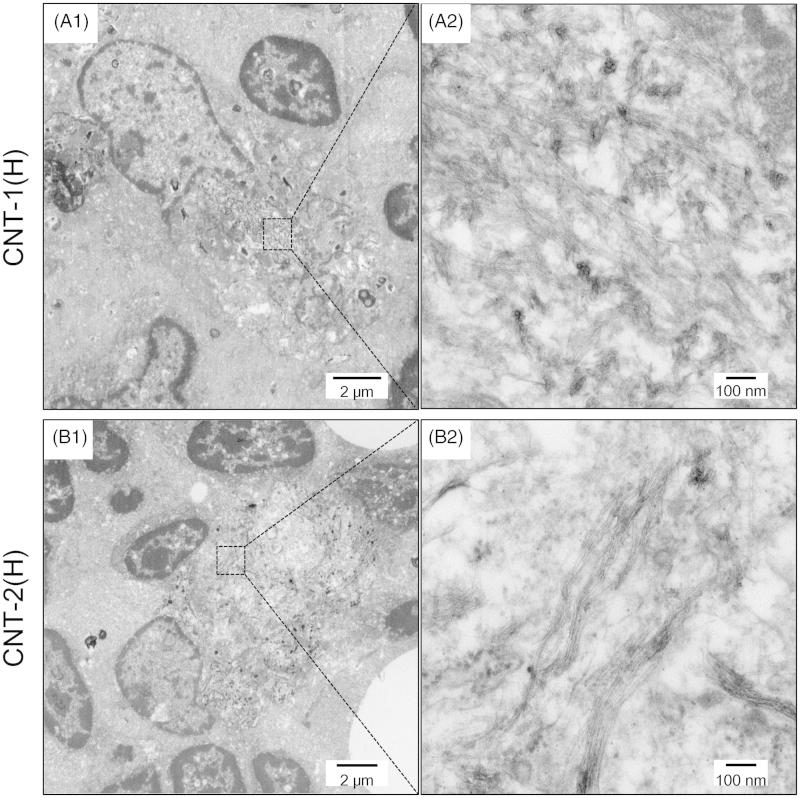
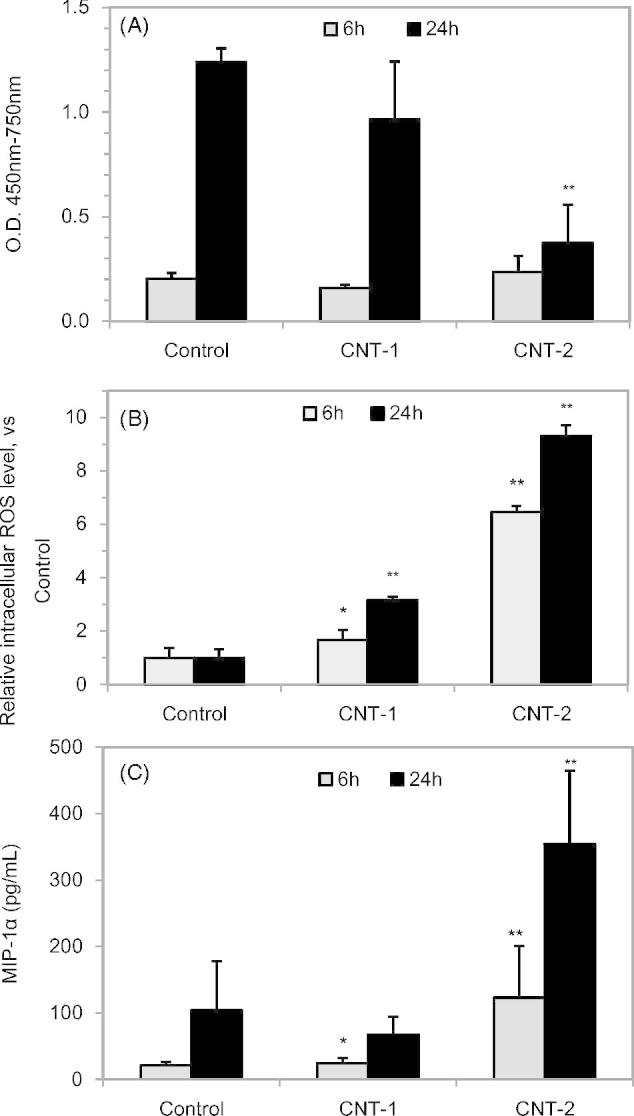
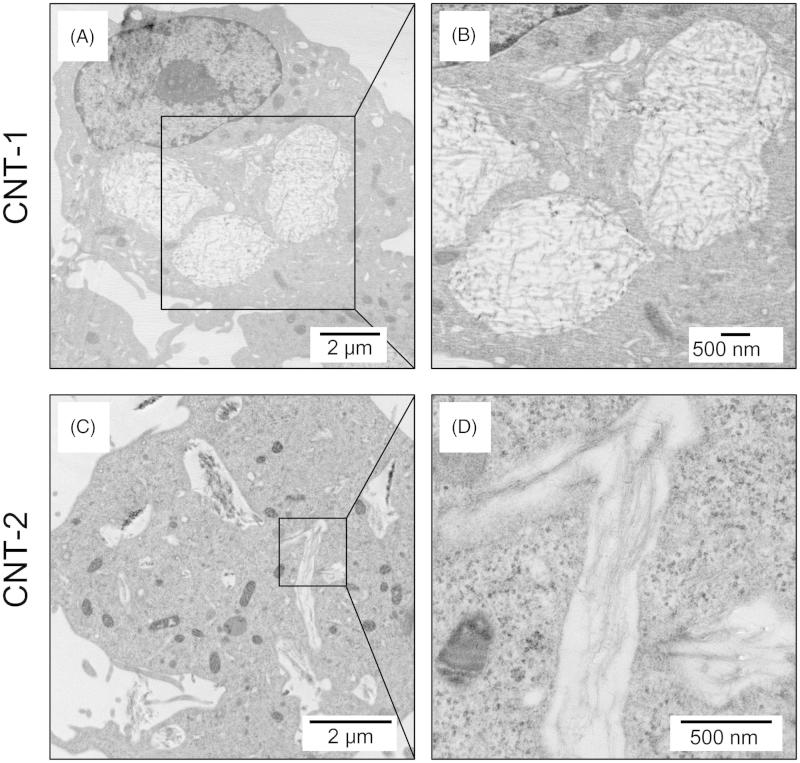
To elucidate the effect of size on the pulmonary toxicity of single-wall carbon nanotubes (SWCNTs), we prepared two types of dispersed SWCNTs, namely relatively thin bundles with short linear shapes (CNT-1) and thick bundles with long linear shapes (CNT-2), and conducted rat intratracheal instillation tests and in vitro cell-based assays using NR8383 rat alveolar macrophages. Total protein levels, MIP-1α expression, cell counts in BALF, and histopathological examinations revealed that CNT-1 caused pulmonary inflammation and slower recovery and that CNT-2 elicited acute lung inflammation shortly after their instillation. Comprehensive gene expression analysis confirmed that CNT-1-induced genes were strongly associated with inflammatory responses, cell proliferation, and immune system processes at 7 or 30 d post-instillation. Numerous genes were significantly upregulated or downregulated by CNT-2 at 1 d post-instillation. In vitro assays demonstrated that CNT-1 and CNT-2 SWCNTs were phagocytized by NR8383 cells. CNT-2 treatment induced cell growth inhibition, reactive oxygen species production, MIP-1α expression, and several genes involved in response to stimulus, whereas CNT-1 treatment did not exert a significant impact in these regards. These results suggest that SWCNTs formed as relatively thin bundles with short linear shapes elicited delayed pulmonary inflammation with slower recovery. In contrast, SWCNTs with a relatively thick bundle and long linear shapes sensitively induced cellular responses in alveolar macrophages and elicited acute lung inflammation shortly after inhalation. We conclude that the pulmonary toxicity of SWCNTs is closely associated with the size of the bundles. These physical parameters are useful for risk assessment and management of SWCNTs.
为阐明尺寸对单壁碳纳米管(SWCNTs)肺毒性的影响,我们制备了两种分散的SWCNTs,即具有短线性形状的相对细束(CNT-1)和具有长线性形状的粗束(CNT-2),并使用NR8383大鼠肺泡巨噬细胞进行了大鼠气管内滴注试验和体外细胞试验。总蛋白水平、MIP-1α表达、支气管肺泡灌洗液(BALF)中的细胞计数以及组织病理学检查表明,CNT-1引起肺部炎症且恢复较慢,而CNT-2在滴注后不久引发急性肺部炎症。综合基因表达分析证实,在滴注后7天或30天,CNT-1诱导的基因与炎症反应、细胞增殖和免疫系统过程密切相关。在滴注后1天,CNT-2使大量基因显著上调或下调。体外试验表明,CNT-1和CNT-2 SWCNTs被NR8383细胞吞噬。CNT-2处理诱导细胞生长抑制、活性氧生成、MIP-1α表达以及几个参与刺激反应的基因,而CNT-1处理在这些方面没有显著影响。这些结果表明,形成具有短线性形状的相对细束的SWCNTs引发延迟性肺部炎症且恢复较慢。相比之下,具有相对粗束和长线性形状的SWCNTs在肺泡巨噬细胞中敏感地诱导细胞反应,并在吸入后不久引发急性肺部炎症。我们得出结论,SWCNTs的肺毒性与束的尺寸密切相关。这些物理参数有助于SWCNTs的风险评估和管理。