Wing Rena R, Tate Deborah, LaRose Jessica Gokee, Gorin Amy A, Erickson Karen, Robichaud Erica Ferguson, Perdue Letitia, Bahnson Judy, Espeland Mark A
The Miriam Hospital/Brown University, Providence, Rhode Island, USA.
Obesity (Silver Spring). 2015 May;23(5):943-9. doi: 10.1002/oby.21064. Epub 2015 Apr 10.
Frequent self-weighing is linked with weight management success, but concern has been raised about its possible association with unhealthy practices. This study examined the association of self-weighing with other weight control behaviors in a sample for whom frequent weighing might be questioned--namely, normal-weight or overweight (BMI of 21-29.9) young adults (age 18-35).
Participants (N = 583; mean [SD] age = 27.7 [4.4]; BMI = 25.4 [2.6]) entering the Study of Novel Approaches to Weight Gain Prevention (SNAP) completed objective measures of weight and physical activity and self-reported weight history, use of healthy and unhealthy weight control strategies, depressive symptoms, and dietary intake.
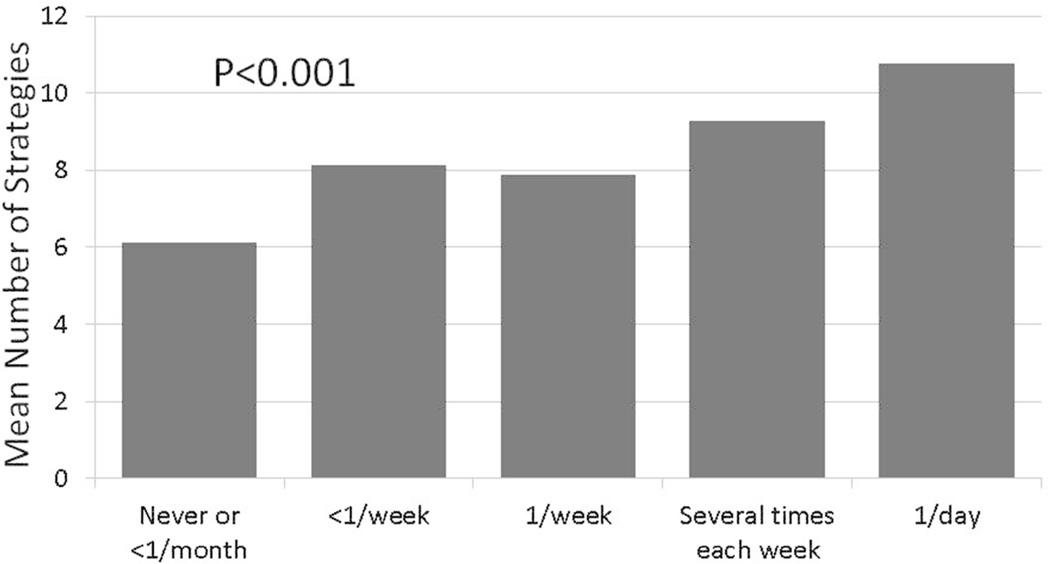
Daily self-weighing was reported by 11% of participants, and 23% weighed several times per week. Frequent weighing was not associated with current BMI, gender, or age but was associated with being further below one's highest weight, history of dieting, and perceived difficulty maintaining weight. Frequent weighing was associated with healthy weight management strategies, but not with unhealthy practices or depressive symptoms.
In this sample, frequent self-weighing appears to be part of a constellation of healthy weight control behaviors used to counteract a perceived tendency toward weight gain. SNAP follow-up will determine whether frequent self-weighing helps prevent weight gain.
频繁自我称重与体重管理的成功相关,但人们对其可能与不健康行为的关联表示担忧。本研究在一个频繁称重可能受到质疑的样本中,即体重正常或超重(BMI为21 - 29.9)的18至35岁年轻成年人中,考察了自我称重与其他体重控制行为之间的关联。
参与预防体重增加新方法研究(SNAP)的参与者(N = 583;平均[标准差]年龄 = 27.7[4.4];BMI = 25.4[2.6])完成了体重和身体活动的客观测量,以及自我报告的体重史、健康和不健康体重控制策略的使用情况、抑郁症状和饮食摄入量。
11%的参与者报告每天自我称重,23%的参与者每周称重几次。频繁称重与当前BMI、性别或年龄无关,但与比自己最高体重更低、节食史以及感知到的维持体重困难有关。频繁称重与健康的体重管理策略相关,但与不健康行为或抑郁症状无关。
在这个样本中,频繁自我称重似乎是一系列用于应对感知到的体重增加趋势的健康体重控制行为的一部分。SNAP随访将确定频繁自我称重是否有助于预防体重增加。