Pozzilli Paolo, Battelino Tadej, Danne Thomas, Hovorka Roman, Jarosz-Chobot Przemyslawa, Renard Eric
Area of Endocrinology and Diabetes, University Campus Bio-Medico, Rome, Italy.
Department of Endocrinology, Diabetes and Metabolic Diseases, University Children's Hospital Ljubljana, Ljubljana, Slovenia.
Diabetes Metab Res Rev. 2016 Jan;32(1):21-39. doi: 10.1002/dmrr.2653. Epub 2015 Jun 22.
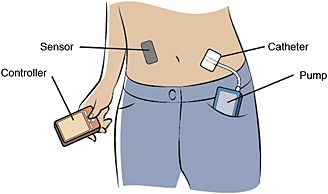
The level of glycaemic control necessary to achieve optimal short-term and long-term outcomes in subjects with type 1 diabetes mellitus (T1DM) typically requires intensified insulin therapy using multiple daily injections or continuous subcutaneous insulin infusion. For continuous subcutaneous insulin infusion, the insulins of choice are the rapid-acting insulin analogues, insulin aspart, insulin lispro and insulin glulisine. The advantages of continuous subcutaneous insulin infusion over multiple daily injections in adult and paediatric populations with T1DM include superior glycaemic control, lower insulin requirements and better health-related quality of life/patient satisfaction. An association between continuous subcutaneous insulin infusion and reduced hypoglycaemic risk is more consistent in children/adolescents than in adults. The use of continuous subcutaneous insulin infusion is widely recommended in both adult and paediatric T1DM populations but is limited in pregnant patients and those with type 2 diabetes mellitus. All available rapid-acting insulin analogues are approved for use in adult, paediatric and pregnant populations. However, minimum patient age varies (insulin lispro: no minimum; insulin aspart: ≥2 years; insulin glulisine: ≥6 years) and experience in pregnancy ranges from extensive (insulin aspart, insulin lispro) to limited (insulin glulisine). Although more expensive than multiple daily injections, continuous subcutaneous insulin infusion is cost-effective in selected patient groups. This comprehensive review focuses on the European situation and summarises evidence for the efficacy and safety of continuous subcutaneous insulin infusion, particularly when used with rapid-acting insulin analogues, in adult, paediatric and pregnant populations. The review also discusses relevant European guidelines; reviews issues that surround use of this technology; summarises the effects of continuous subcutaneous insulin infusion on patients' health-related quality of life; reviews relevant pharmacoeconomic data; and discusses recent advances in pump technology, including the development of closed-loop 'artificial pancreas' systems. © 2015 The Authors. Diabetes/Metabolism Research and Reviews Published by John Wiley & Sons Ltd.
为使1型糖尿病(T1DM)患者获得最佳短期和长期治疗效果,通常需要强化胰岛素治疗,采用每日多次注射或持续皮下胰岛素输注。对于持续皮下胰岛素输注,首选的胰岛素是速效胰岛素类似物、门冬胰岛素、赖脯胰岛素和谷赖胰岛素。在患有T1DM的成人和儿童群体中,持续皮下胰岛素输注相较于每日多次注射的优势包括血糖控制更佳、胰岛素需求量更低以及与健康相关的生活质量/患者满意度更高。持续皮下胰岛素输注与降低低血糖风险之间的关联在儿童/青少年中比在成人中更为一致。持续皮下胰岛素输注在成人和儿童T1DM群体中均被广泛推荐,但在孕妇和2型糖尿病患者中使用受限。所有可用的速效胰岛素类似物均被批准用于成人、儿童和孕妇群体。然而,最小适用患者年龄有所不同(赖脯胰岛素:无最小年龄限制;门冬胰岛素:≥2岁;谷赖胰岛素:≥6岁),在妊娠方面的经验从丰富(门冬胰岛素、赖脯胰岛素)到有限(谷赖胰岛素)不等。尽管持续皮下胰岛素输注比每日多次注射更昂贵,但在特定患者群体中具有成本效益。本综述聚焦于欧洲的情况,总结了持续皮下胰岛素输注,特别是与速效胰岛素类似物联合使用时,在成人、儿童和孕妇群体中的疗效和安全性证据。该综述还讨论了相关的欧洲指南;回顾了围绕该技术使用的问题;总结了持续皮下胰岛素输注对患者与健康相关生活质量的影响;回顾了相关的药物经济学数据;并讨论了泵技术的最新进展,包括闭环 “人工胰腺” 系统的开发。© 2015作者。由John Wiley & Sons Ltd出版的《糖尿病/代谢研究与评论》