Moens Ugo, Rasheed Kashif, Abdulsalam Ibrahim, Sveinbjørnsson Baldur
University of Tromsø, Faculty of Health Sciences, Institute of Medical Biology, NO-9037 Tromsø, Norway.
Viruses. 2015 Apr 10;7(4):1871-901. doi: 10.3390/v7041871.
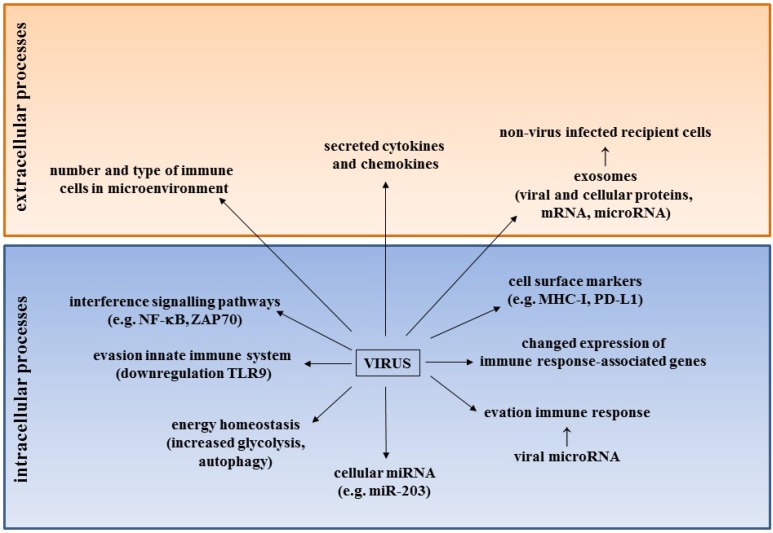
Polyomaviruses are non-enveloped, dsDNA viruses that are common in mammals, including humans. All polyomaviruses encode the large T-antigen and small t-antigen proteins that share conserved functional domains, comprising binding motifs for the tumor suppressors pRb and p53, and for protein phosphatase 2A, respectively. At present, 13 different human polyomaviruses are known, and for some of them their large T-antigen and small t-antigen have been shown to possess oncogenic properties in cell culture and animal models, while similar functions are assumed for the large T- and small t-antigen of other human polyomaviruses. However, so far the Merkel cell polyomavirus seems to be the only human polyomavirus associated with cancer. The large T- and small t-antigen exert their tumorigenic effects through classical hallmarks of cancer: inhibiting tumor suppressors, activating tumor promoters, preventing apoptosis, inducing angiogenesis and stimulating metastasis. This review elaborates on the putative roles of human polyomaviruses in some of the emerging hallmarks of cancer. The reciprocal interactions between human polyomaviruses and the immune system response are discussed, a plausible role of polyomavirus-encoded and polyomavirus-induced microRNA in cancer is described, and the effect of polyomaviruses on energy homeostasis and exosomes is explored. Therapeutic strategies against these emerging hallmarks of cancer are also suggested.
多瘤病毒是无包膜的双链DNA病毒,在包括人类在内的哺乳动物中很常见。所有多瘤病毒都编码大T抗原和小t抗原蛋白,它们共享保守的功能域,分别包含与肿瘤抑制因子pRb和p53以及蛋白磷酸酶2A的结合基序。目前,已知有13种不同的人类多瘤病毒,其中一些病毒的大T抗原和小t抗原在细胞培养和动物模型中已显示出致癌特性,其他人类多瘤病毒的大T抗原和小t抗原也被认为具有类似功能。然而,到目前为止,默克尔细胞多瘤病毒似乎是唯一与癌症相关的人类多瘤病毒。大T抗原和小t抗原通过癌症的经典特征发挥其致瘤作用:抑制肿瘤抑制因子、激活肿瘤促进因子、防止细胞凋亡、诱导血管生成和刺激转移。本综述阐述了人类多瘤病毒在一些新出现的癌症特征中的假定作用。讨论了人类多瘤病毒与免疫系统反应之间的相互作用,描述了多瘤病毒编码的和多瘤病毒诱导的微小RNA在癌症中的可能作用,并探讨了多瘤病毒对能量稳态和外泌体的影响。还提出了针对这些新出现的癌症特征的治疗策略。