Kuroki H, Hayashi H, Nakagawa S, Sakamoto K, Higashi T, Nitta H, Hashimoto D, Chikamoto A, Beppu T, Baba H
Department of Gastroenterological Surgery, Graduate School of Medical Sciences, Kumamoto University, 1-1-1 Honjo, Kumamoto 860-8556, Japan.
Br J Surg. 2015 Jun;102(7):813-25. doi: 10.1002/bjs.9765. Epub 2015 Apr 13.
A strategy for accelerating liver regeneration after hepatectomy would offer great benefits in preventing postoperative liver failure and improving surgical outcomes. Transforming growth factor (TGF) β is a potent inhibitor of hepatocyte proliferation. Recently, thrombospondin (TSP) 1 has been identified as a negative regulator of liver regeneration by activation of local TGF-β signals. This study aimed to clarify whether the LSKL (leucine-serine-lysine-leucine) peptide, which inhibits TSP-1-mediated TGF-β activation, promotes liver regeneration after hepatectomy in mice.
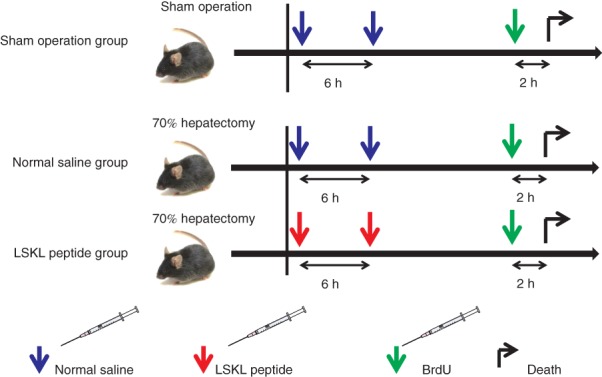
Mice were operated on with a 70 per cent hepatectomy or sham procedure. Operated mice received either LSKL peptide or normal saline intraperitoneally at abdominal closure and 6 h after hepatectomy. Perioperative plasma TSP-1 levels were measured by enzyme-linked immunosorbent assay in patients undergoing hepatectomy.
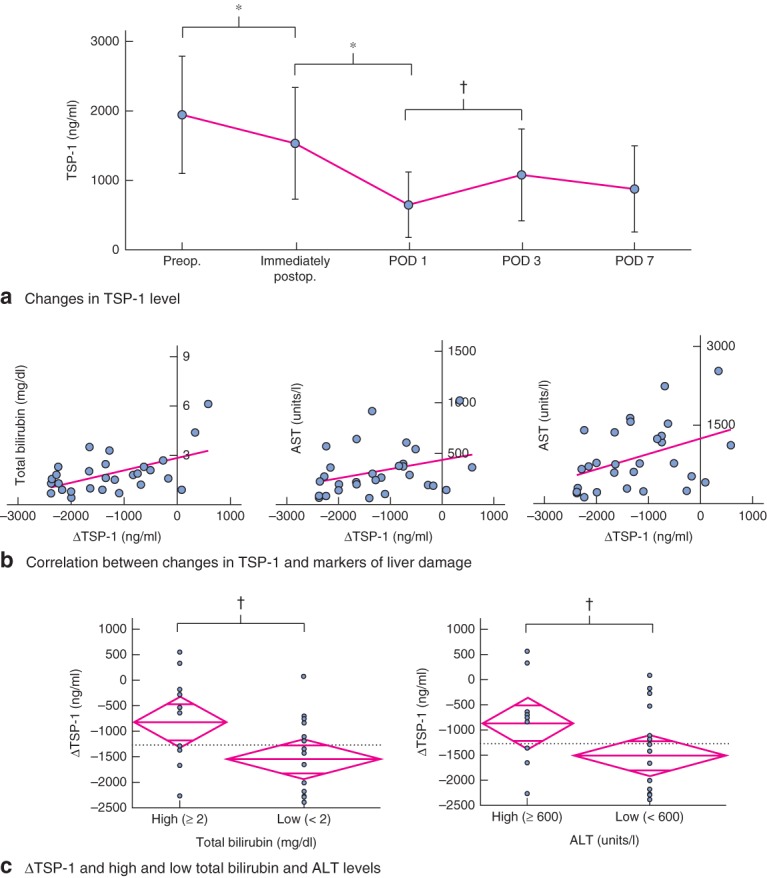
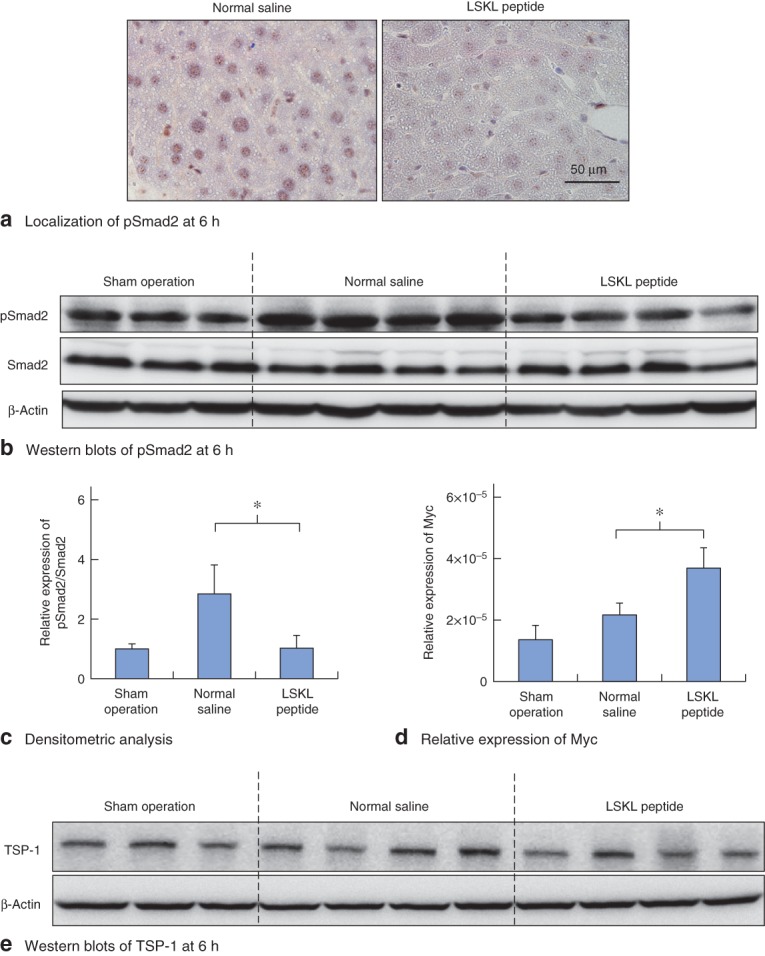
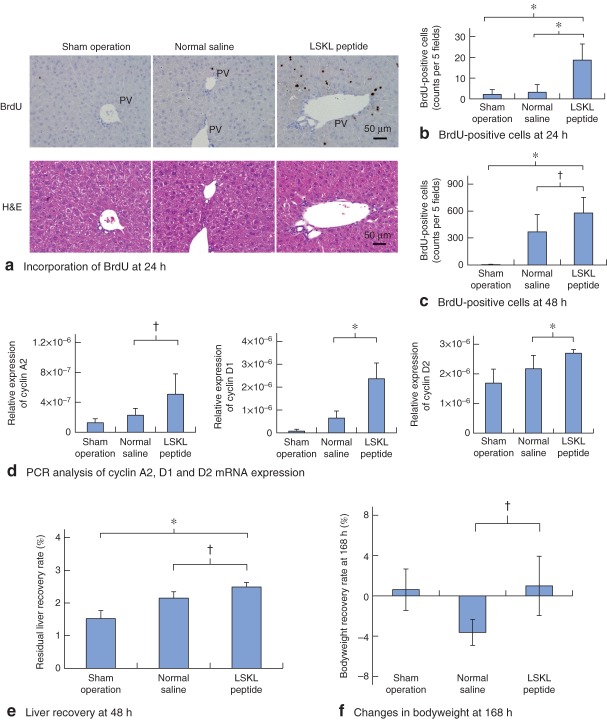
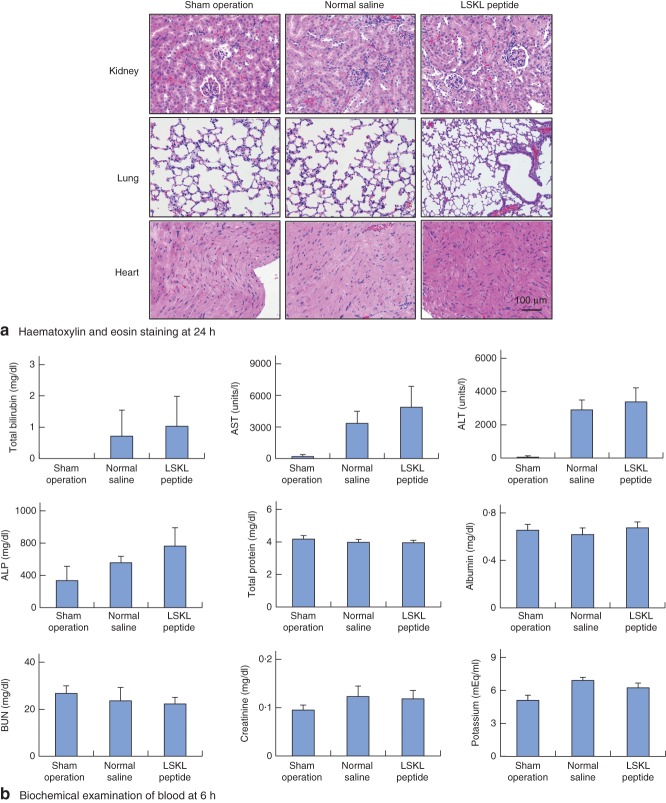
Administration of LSKL peptide attenuated Smad2 phosphorylation at 6 h. S-phase entry of hepatocytes was accelerated at 24 and 48 h by LSKL peptide, which resulted in faster recovery of the residual liver and bodyweight. Haematoxylin and eosin tissue staining and blood biochemical examinations revealed no significant adverse effects following the two LSKL peptide administrations. In the clinical setting, plasma TSP-1 levels were lowest on the first day after hepatectomy. However, plasma TSP-1 levels at this stage were significantly higher in patients with subsequent liver dysfunction compared with levels in those without liver dysfunction following hepatectomy.
Only two doses of LSKL peptide during the early period after hepatectomy can promote liver regeneration. The transient inhibition of TSP-1/TGF-β signal activation using LSKL peptide soon after hepatectomy may be a promising strategy to promote subsequent liver regeneration. Surgical relevance Although the mechanisms of liver regeneration after hepatectomy have been explored intensively in vivo, no therapeutic tools are thus far available to accelerate liver regeneration after hepatectomy in the clinical setting. Recently, the matricellular protein thrombospondin (TSP) 1, a major activator of latent transforming growth factor (TGF) β1, has been identified as a negative regulator of liver regeneration after hepatectomy. In this study, the inhibition of TSP-1-mediated TGF-β signal activation by LSKL (leucine-serine-lysine-leucine) peptide in the early period after hepatectomy accelerated liver regeneration without any adverse effects. In addition, continuous high plasma TSP-1 levels after hepatectomy were associated with liver damage in humans. The transient inhibition of TSP-1/TGF-β signal activation using LSKL peptide in the early period after hepatectomy could be a novel therapeutic strategy to accelerate liver regeneration after hepatectomy.
一种加速肝切除术后肝再生的策略对于预防术后肝衰竭和改善手术结果将大有裨益。转化生长因子(TGF)β是肝细胞增殖的强效抑制剂。最近,血小板反应蛋白(TSP)1已被确定为通过激活局部TGF-β信号来负向调节肝再生。本研究旨在阐明抑制TSP-1介导的TGF-β激活的亮氨酸-丝氨酸-赖氨酸-亮氨酸(LSKL)肽是否能促进小鼠肝切除术后的肝再生。
对小鼠进行70%肝切除术或假手术。手术小鼠在关腹时及肝切除术后6小时经腹腔注射LSKL肽或生理盐水。通过酶联免疫吸附测定法测量肝切除患者围手术期血浆TSP-1水平。
注射LSKL肽在6小时时减弱了Smad2磷酸化。LSKL肽在24小时和48小时时加速了肝细胞进入S期,这导致残余肝脏和体重恢复更快。苏木精和伊红组织染色及血液生化检查显示两次注射LSKL肽后无明显不良反应。在临床环境中,肝切除术后第一天血浆TSP-1水平最低。然而,与肝切除术后无肝功能障碍的患者相比,随后出现肝功能障碍的患者在此阶段的血浆TSP-1水平显著更高。
肝切除术后早期仅注射两剂LSKL肽就能促进肝再生。肝切除术后不久使用LSKL肽短暂抑制TSP-1/TGF-β信号激活可能是促进后续肝再生的一种有前景的策略。手术相关性 尽管在体内已深入探究了肝切除术后肝再生的机制,但迄今为止在临床环境中尚无加速肝切除术后肝再生的治疗工具。最近,基质细胞蛋白血小板反应蛋白(TSP)1作为潜在转化生长因子(TGF)β1的主要激活剂,已被确定为肝切除术后肝再生的负向调节因子。在本研究中,肝切除术后早期通过LSKL(亮氨酸-丝氨酸-赖氨酸-亮氨酸)肽抑制TSP-1介导的TGF-β信号激活可加速肝再生且无任何不良反应。此外,肝切除术后持续高血浆TSP-1水平与人类肝损伤相关。肝切除术后早期使用LSKL肽短暂抑制TSP-1/TGF-β信号激活可能是加速肝切除术后肝再生的一种新的治疗策略。