Schennach Moritz, Breuker Kathrin
Institute of Organic Chemistry and Center for Molecular Biosciences Innsbruck (CMBI), University of Innsbruck, Innrain 80/82, 6020, Innsbruck, Austria.
J Am Soc Mass Spectrom. 2015 Jul;26(7):1059-67. doi: 10.1007/s13361-015-1088-z. Epub 2015 Apr 14.
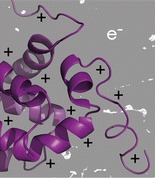
The established methods for the study of atom-detailed protein structure in the condensed phases, X-ray crystallography and nuclear magnetic resonance spectroscopy, have recently been complemented by new techniques by which nearly or fully desolvated protein structures are probed in gas-phase experiments. Electron capture dissociation (ECD) is unique among these as it provides residue-specific, although indirect, structural information. In this Critical Insight article, we discuss the development of ECD for the structural probing of gaseous protein ions, its potential, and limitations.
用于研究凝聚相中原子细节蛋白质结构的既定方法,即X射线晶体学和核磁共振光谱学,最近得到了新技术的补充,通过这些新技术可以在气相实验中探测几乎或完全去溶剂化的蛋白质结构。电子捕获解离(ECD)在这些技术中独树一帜,因为它提供了残基特异性的结构信息,尽管是间接的。在这篇重要见解文章中,我们讨论了用于气态蛋白质离子结构探测的ECD的发展、其潜力和局限性。