Yang Tao, Santisteban Monica M, Rodriguez Vermali, Li Eric, Ahmari Niousha, Carvajal Jessica Marulanda, Zadeh Mojgan, Gong Minghao, Qi Yanfei, Zubcevic Jasenka, Sahay Bikash, Pepine Carl J, Raizada Mohan K, Mohamadzadeh Mansour
From the Department of Infectious Diseases and Pathology, College of Veterinary Medicine (T.Y., M.Z., M.G., B.S., M.M.), Division of Gastroenterology, Hematology and Nutrition, Department of Medicine (T.Y., M.Z., M.G., B.S., M.M.), Department of Physiology and Functional Genomics (M.M.S., V.R., J.M.C., M.K.R.), College of Medicine, Division of Cardiovascular Medicine, Department of Medicine (V.R., Y.Q., C.J.P.), Division of Infectious Diseases and Global Medicine, Department of Medicine (E.L.), and Department of Physiological Sciences, College of Veterinary Medicine (N.A., J.Z.), University of Florida, Gainesville.
Hypertension. 2015 Jun;65(6):1331-40. doi: 10.1161/HYPERTENSIONAHA.115.05315. Epub 2015 Apr 13.
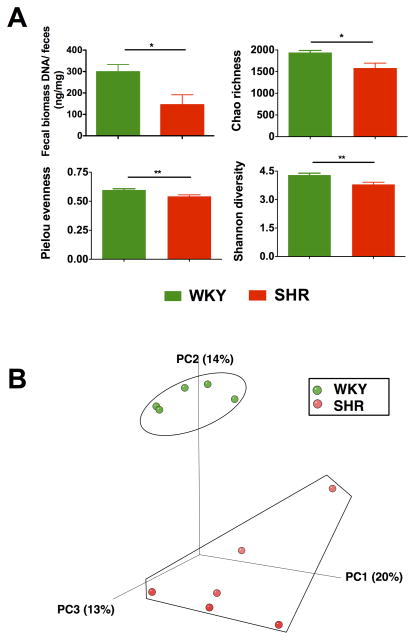
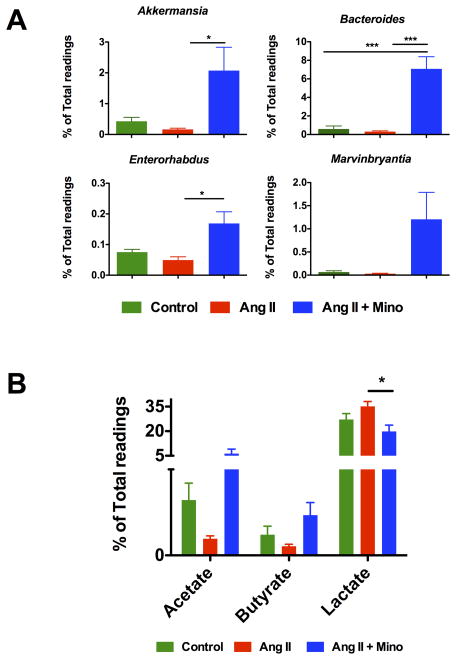
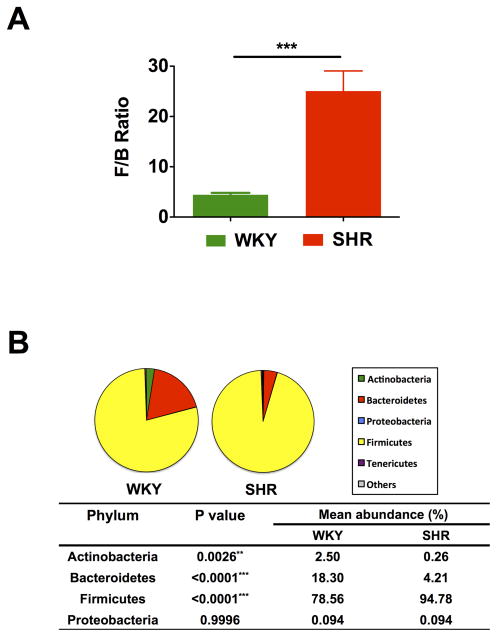
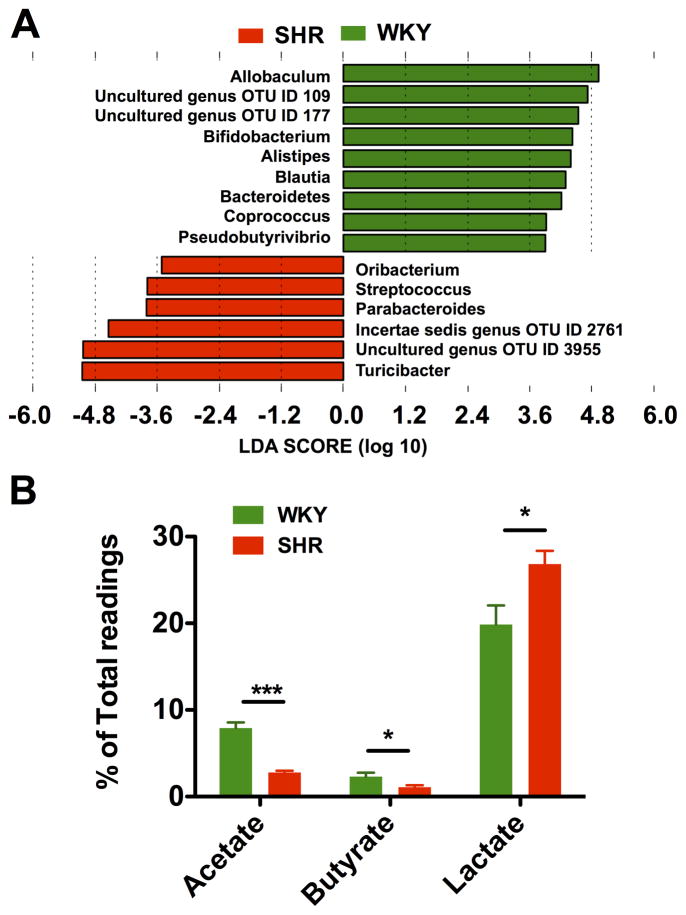
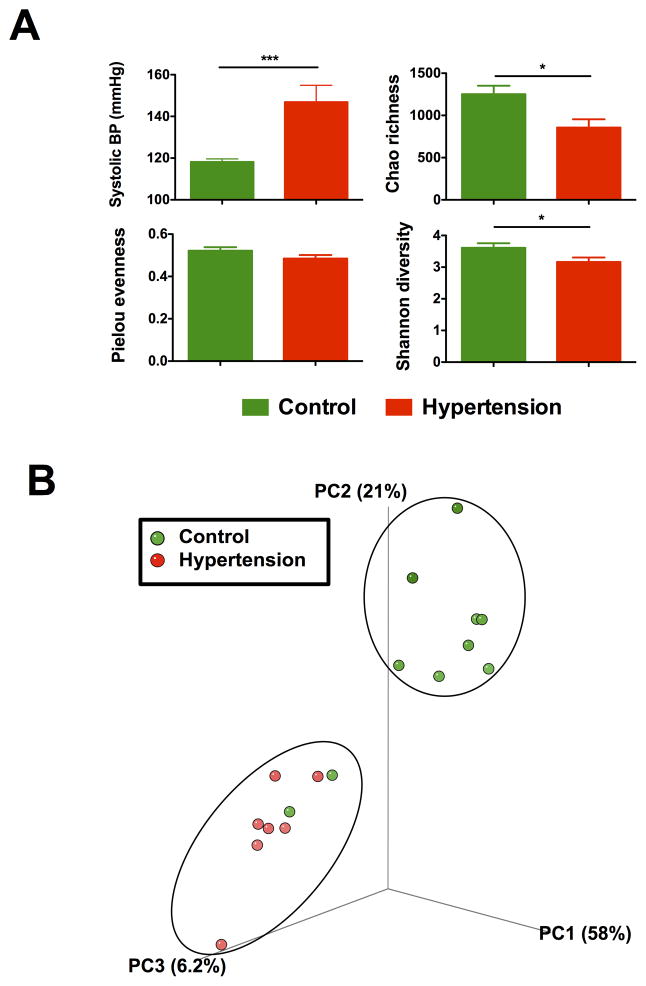
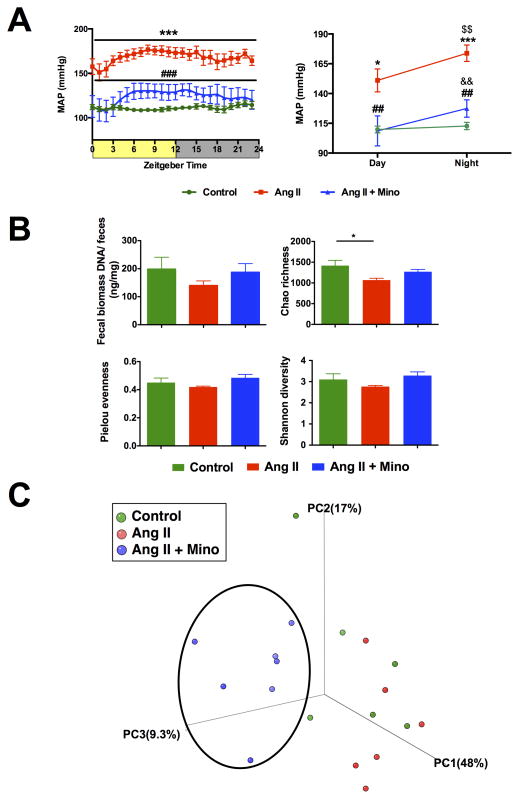
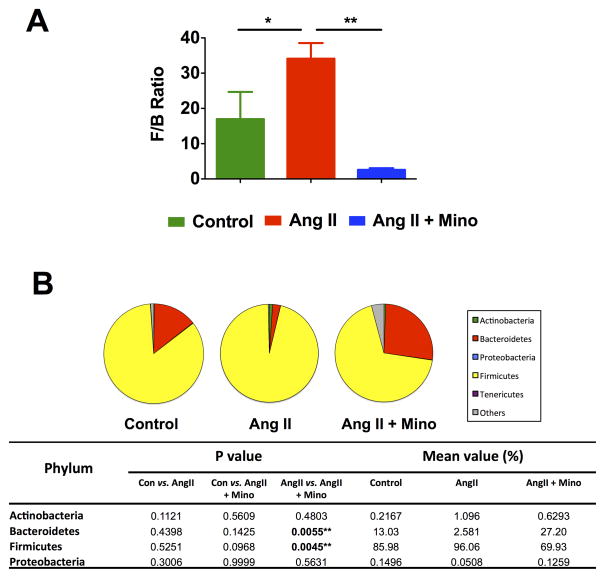
Emerging evidence suggests that gut microbiota is critical in the maintenance of physiological homeostasis. This study was designed to test the hypothesis that dysbiosis in gut microbiota is associated with hypertension because genetic, environmental, and dietary factors profoundly influence both gut microbiota and blood pressure. Bacterial DNA from fecal samples of 2 rat models of hypertension and a small cohort of patients was used for bacterial genomic analysis. We observed a significant decrease in microbial richness, diversity, and evenness in the spontaneously hypertensive rat, in addition to an increased Firmicutes/Bacteroidetes ratio. These changes were accompanied by decreases in acetate- and butyrate-producing bacteria. In addition, the microbiota of a small cohort of human hypertensive patients was found to follow a similar dysbiotic pattern, as it was less rich and diverse than that of control subjects. Similar changes in gut microbiota were observed in the chronic angiotensin II infusion rat model, most notably decreased microbial richness and an increased Firmicutes/Bacteroidetes ratio. In this model, we evaluated the efficacy of oral minocycline in restoring gut microbiota. In addition to attenuating high blood pressure, minocycline was able to rebalance the dysbiotic hypertension gut microbiota by reducing the Firmicutes/Bacteroidetes ratio. These observations demonstrate that high blood pressure is associated with gut microbiota dysbiosis, both in animal and human hypertension. They suggest that dietary intervention to correct gut microbiota could be an innovative nutritional therapeutic strategy for hypertension.
新出现的证据表明,肠道微生物群在维持生理稳态中起着关键作用。本研究旨在验证以下假设:肠道微生物群失调与高血压有关,因为遗传、环境和饮食因素会深刻影响肠道微生物群和血压。来自2种高血压大鼠模型和一小群患者粪便样本的细菌DNA用于细菌基因组分析。我们观察到,自发性高血压大鼠的微生物丰富度、多样性和均匀度显著降低,此外厚壁菌门与拟杆菌门的比例增加。这些变化伴随着产乙酸和丁酸细菌的减少。此外,一小群人类高血压患者的微生物群也呈现出类似的失调模式,其丰富度和多样性低于对照组。在慢性输注血管紧张素II的大鼠模型中也观察到了类似的肠道微生物群变化,最显著的是微生物丰富度降低和厚壁菌门与拟杆菌门的比例增加。在该模型中,我们评估了口服米诺环素恢复肠道微生物群的效果。除了减轻高血压外,米诺环素还能够通过降低厚壁菌门与拟杆菌门的比例来重新平衡失调的高血压肠道微生物群。这些观察结果表明,高血压与动物和人类高血压中的肠道微生物群失调有关。它们表明,通过饮食干预纠正肠道微生物群可能是一种创新的高血压营养治疗策略。