
接受锑剂治疗的皮肤利什曼病患者中,细胞凋亡以及总CD8 + T淋巴细胞和效应CD8 + T淋巴细胞的频率。
Apoptosis and frequency of total and effector CD8+ T lymphocytes from cutaneous leishmaniasis patients during antimonial therapy.
作者信息
Ferraz Raquel, Cunha Clarissa F, Gomes-Silva Adriano, Schubach Armando O, Pimentel Maria Inês F, Lyra Marcelo Rosandiski, Mendonça Sergio Cf, Valete-Rosalino Cláudia M, Da-Cruz Alda Maria, Bertho Álvaro Luiz
出版信息
BMC Infect Dis. 2015 Feb 19;15:74. doi: 10.1186/s12879-015-0799-x.
BACKGROUND
Leishmaniasis is an important parasitic disease affecting millions worldwide. Human cutaneous leishmaniasis (CL) is endemic in Rio de Janeiro, Brazil, where is caused by Leishmania braziliensis. The adaptive immune response is accountable for the healing of CL and despite of key role of CD8+ T cells in this immune response little is known about the CD8+ T lymphocytes frequencies, apoptosis and antigen-responsive CD8+ T lymphocytes of CL patients during antimonial therapy.
METHODS
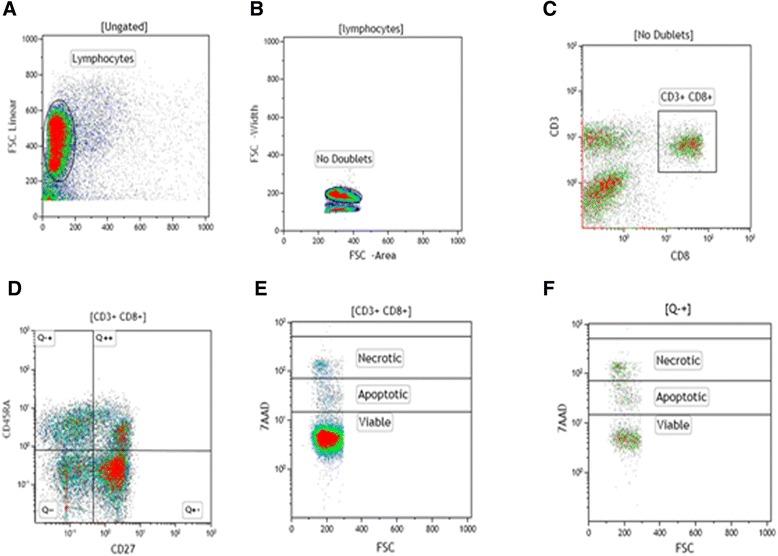
Using flow cytometry, we examined total and effector CD8+ T cells from CL patients before (PBT), during (PDT) and after (PAT) treatment for apoptosis and frequencies upon isolation and after in vitro L. braziliensis antigens (LbAg)-stimulation culture. Besides, a correlation study between immunological findings and lesion size was done.
RESULTS
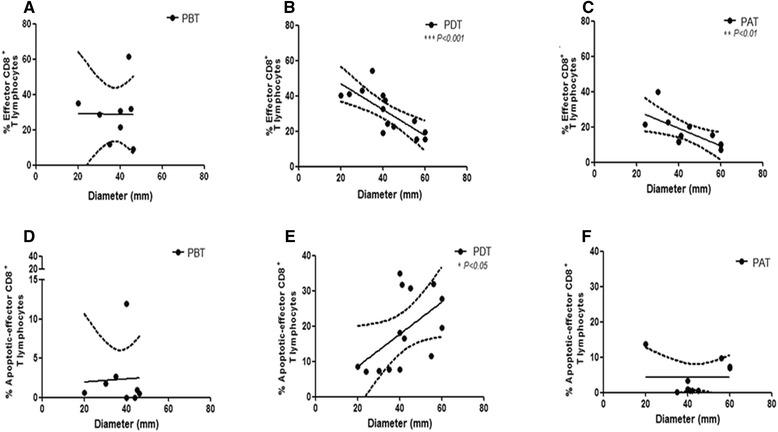
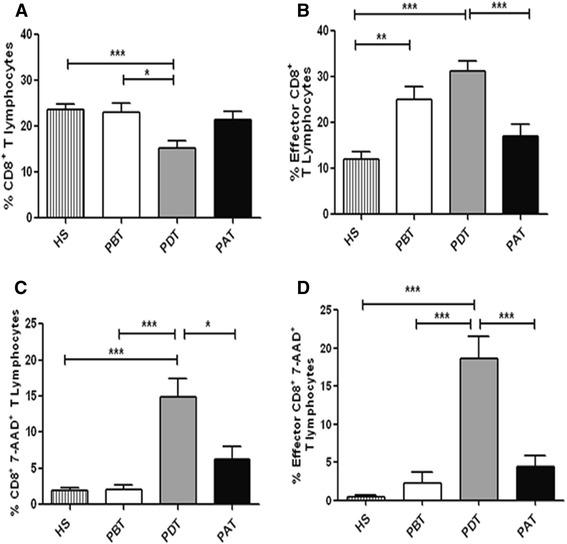
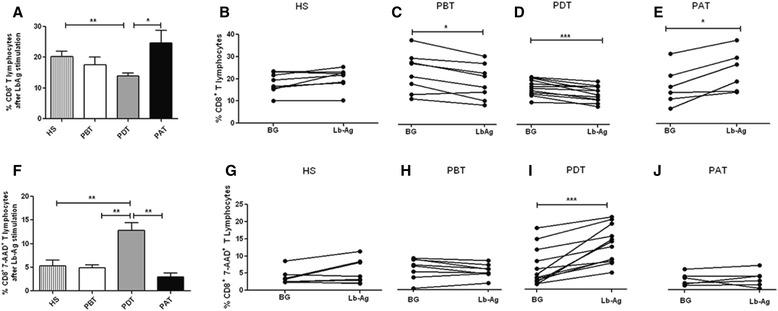
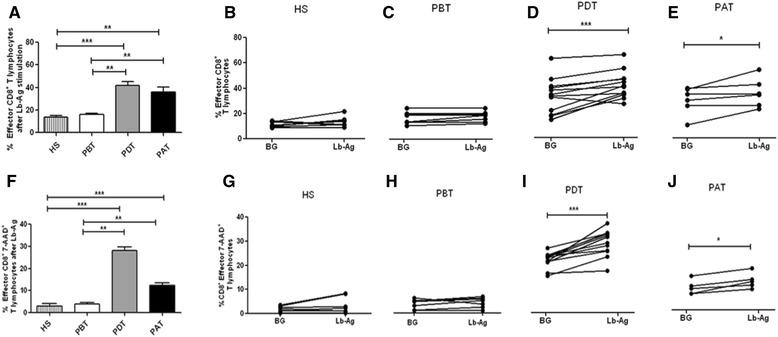
PDT showed lower frequencies of total CD8+ T lymphocytes and higher levels of apoptosis of these cells, which were also observed following LbAg-stimulation culture. Regarding effector CD8+ T cells, high frequencies were observed in PDT, while lower frequencies were observed in PAT. Interestingly, PDT showed higher frequencies of apoptotic-effector CD8+ T lymphocytes. Similar results were seen after in vitro antigenic-stimulation assays. Correlation analysis showed that the greater the size of lesion, the smaller the frequency of effector CD8+ T lymphocytes in PDT and PAT, as well as a positive correlation between apoptotic-effector CD8+ T cells frequency and lesion size of PDT.
CONCLUSIONS
Changes in effector CD8+ T-lymphocyte frequencies, during and after treatment, seem to represent a critical stage to generate an efficient immune response and suggest that these cells would be evolved in the triggering or in the resolution of lesion, under the influence of therapy. This hypothesis opens new perspectives to clarify controversial statements about the protective or deleterious role of CD8+ T cells in the cure or aggravation of CL and the new approach of evaluating patients during treatment proved to be of utmost importance for understanding the immune response in the healing process of human CL.
背景
利什曼病是一种影响全球数百万人的重要寄生虫病。人类皮肤利什曼病(CL)在巴西里约热内卢为地方病,由巴西利什曼原虫引起。适应性免疫反应负责CL的愈合,尽管CD8 + T细胞在这种免疫反应中起关键作用,但对于接受锑剂治疗期间CL患者的CD8 + T淋巴细胞频率、凋亡情况及抗原反应性CD8 + T淋巴细胞知之甚少。
方法
我们使用流式细胞术,检测了CL患者在治疗前(PBT)、治疗期间(PDT)和治疗后(PAT)的总CD8 + T细胞和效应性CD8 + T细胞的凋亡情况以及分离时和体外巴西利什曼原虫抗原(LbAg)刺激培养后的频率。此外,还进行了免疫学结果与病变大小之间的相关性研究。
结果
PDT显示总CD8 + T淋巴细胞频率较低,且这些细胞的凋亡水平较高,在LbAg刺激培养后也观察到了同样情况。关于效应性CD8 + T细胞,在PDT中观察到高频率,而在PAT中观察到较低频率。有趣的是,PDT显示凋亡效应性CD8 + T淋巴细胞频率较高。体外抗原刺激试验后也得到了类似结果。相关性分析表明,病变越大,PDT和PAT中效应性CD8 + T淋巴细胞的频率越低,且凋亡效应性CD8 + T细胞频率与PDT的病变大小呈正相关。
结论
治疗期间及治疗后效应性CD8 + T淋巴细胞频率的变化似乎代表了产生有效免疫反应的关键阶段,并表明这些细胞在治疗影响下会在病变的触发或消退过程中发生演变。这一假设为阐明关于CD8 + T细胞在CL治愈或加重过程中的保护或有害作用的争议性观点开辟了新视角,并且在治疗期间评估患者的新方法被证明对于理解人类CL愈合过程中的免疫反应至关重要。
 Zotero 插件