Cui He, Wang Ling, Gong Pihai, Zhao Chengcheng, Zhang Shaodan, Zhang Kun, Zhou Rongping, Zhao Zhujiang, Fan Hong
Department of Medical Genetics and Developmental Biology, Medical School of Southeast University, The Key Laboratory of Developmental Genes and Human Diseases, Ministry of Education, Southeast University, Nanjing, 210009, China.
The 3rd Affiliated Hospital of Harbin Medical University (Harbin Medical University Cancer Hospital), Harbin, 150081, China.
PLoS One. 2015 Apr 15;10(4):e0123926. doi: 10.1371/journal.pone.0123926. eCollection 2015.
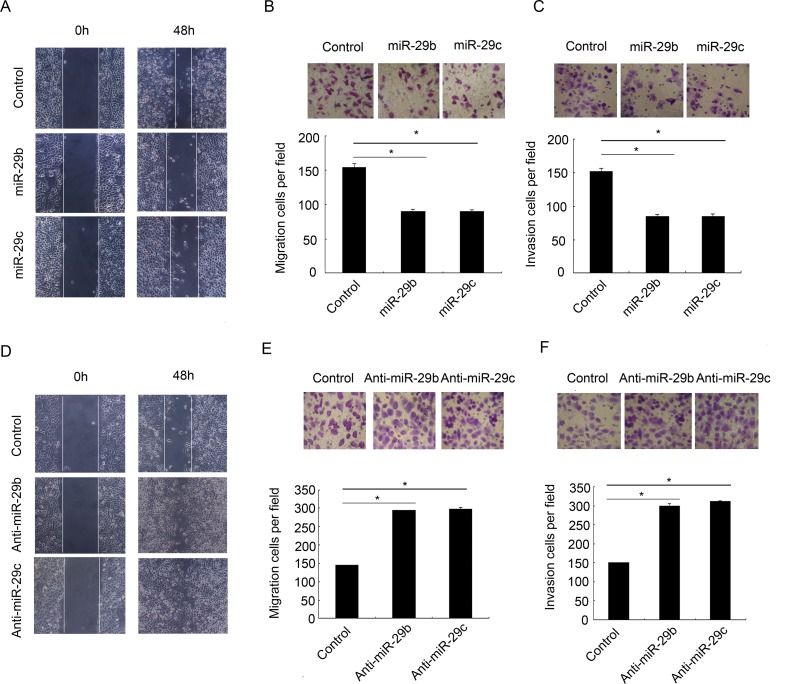
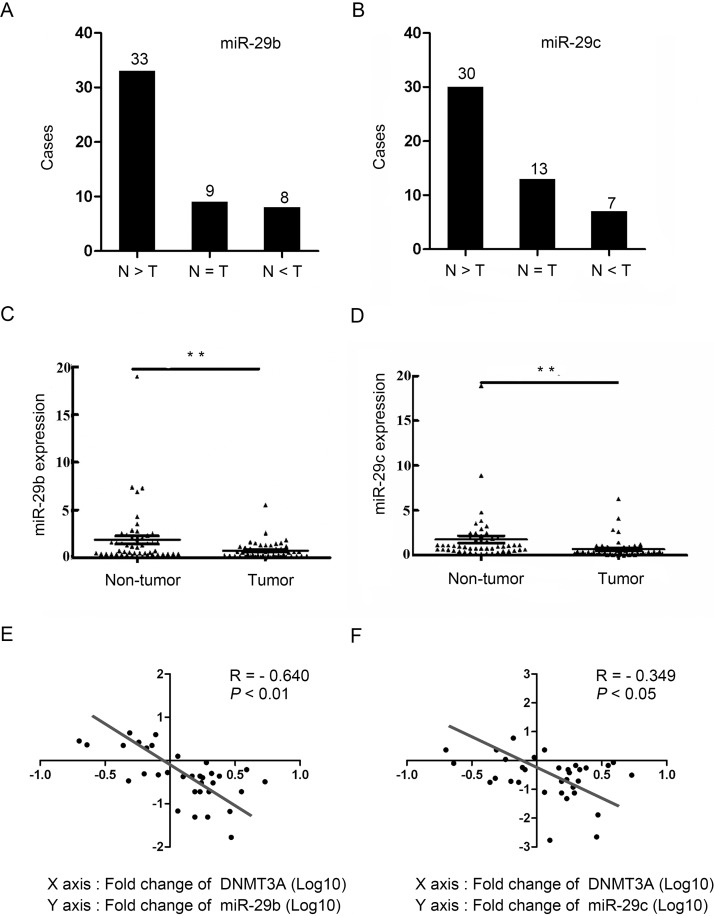
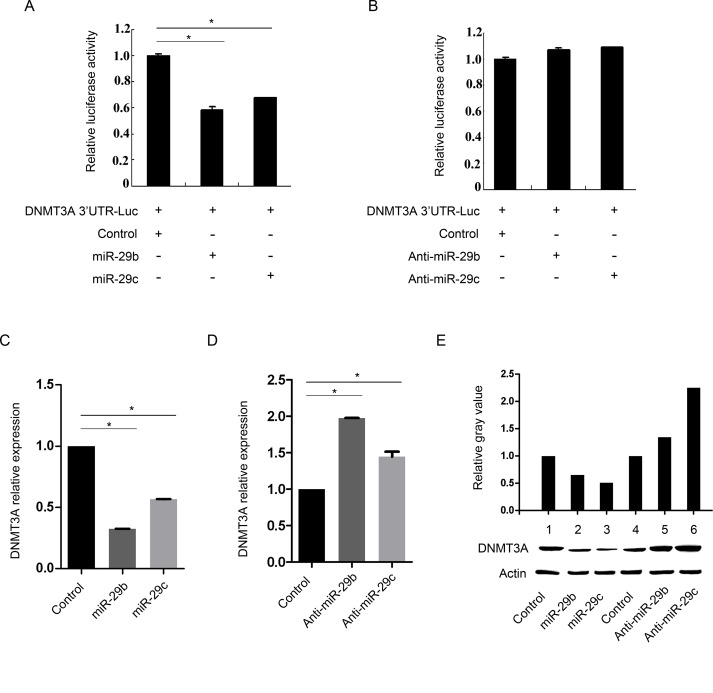
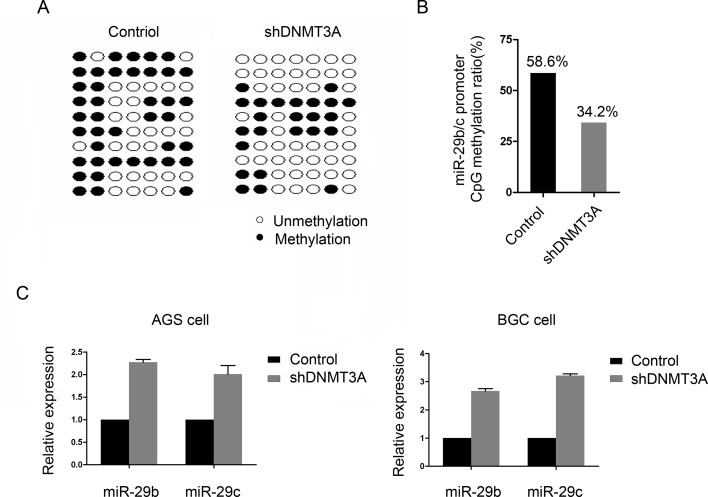
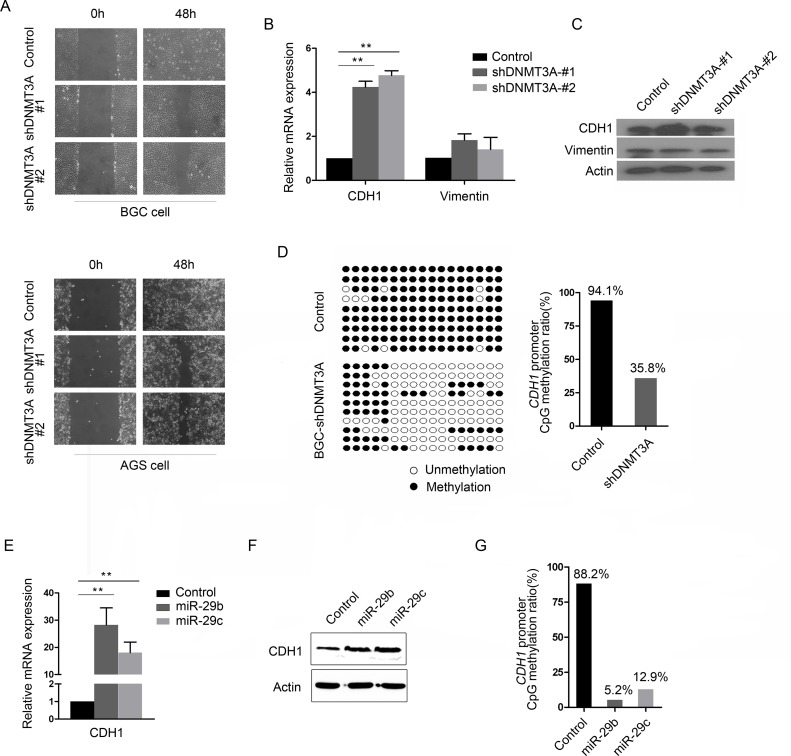
The de-regulation of the miR-29 family and DNA methyltransferase 3A (DNMT3A) is associated with gastric cancer (GC). While increasing evidence indicates miR-29b/c could regulate DNA methylation by targeting DNMT3A, it is currently unknown if epigenetic silencing of miR-29b/c via promoter hypermethylation in GC is caused by abnormal expression of DNMT3A. Thus, we aimed to evaluate whether cross-talk regulation exists between miR-29b/c and DNMT3A and whether it is associated with a malignant phenotype in GC. First, wound healing and Transwell assays revealed that miR-29b/c suppresses tumor metastasis in GC. A luciferase reporter assay demonstrated that DNMT3A is a direct target of miR-29b/c. We used bisulfite genomic sequencing to analyze the DNA methylation status of miR-29b/c. The percentage of methylated CpGs was significantly decreased in DNMT3A-depleted cells compared to the controls. Furthermore, the involvement of DNMT3A in promoting GC cell migration was associated with the promoter methylation-mediated repression of CDH1. In 50 paired clinical GC tissue specimens, decreased miR-29b/c was significantly correlated with the degree of differentiation and invasion of the cells and was negatively correlated with DNMT3A expression. Together, our preliminary results suggest that the following process may be involved in GC tumorigenesis. miR-29b/c suppresses the downstream gene DNMT3A, and in turn, miR-29b/c is suppressed by DNMT3A in a DNA methylation-dependent manner. The de-regulation of both of miR-29b/c and DNMT3A leads to the epigenetic silencing of CDH1 and contributes to the metastasis phenotype in GC. This finding reveals that DNA methylation-associated silencing of miR-29b/c is critical for GC development and thus may be a therapeutic target.
miR-29家族和DNA甲基转移酶3A(DNMT3A)的失调与胃癌(GC)相关。虽然越来越多的证据表明miR-29b/c可通过靶向DNMT3A来调节DNA甲基化,但目前尚不清楚GC中通过启动子高甲基化导致的miR-29b/c表观遗传沉默是否由DNMT3A的异常表达引起。因此,我们旨在评估miR-29b/c与DNMT3A之间是否存在相互调控,以及这是否与GC中的恶性表型相关。首先,伤口愈合和Transwell实验表明miR-29b/c抑制GC中的肿瘤转移。荧光素酶报告基因实验证明DNMT3A是miR-29b/c的直接靶点。我们使用亚硫酸氢盐基因组测序来分析miR-29b/c的DNA甲基化状态。与对照相比,DNMT3A缺失细胞中甲基化CpG的百分比显著降低。此外,DNMT3A促进GC细胞迁移与启动子甲基化介导的CDH1抑制有关。在50对临床GC组织标本中,miR-29b/c表达降低与细胞分化程度和侵袭显著相关,且与DNMT3A表达呈负相关。总之,我们的初步结果表明,以下过程可能参与GC的肿瘤发生。miR-29b/c抑制下游基因DNMT3A,反过来,miR-29b/c又以DNA甲基化依赖的方式被DNMT3A抑制。miR-29b/c和DNMT3A的失调均导致CDH1的表观遗传沉默,并促成GC中的转移表型。这一发现表明,miR-29b/c的DNA甲基化相关沉默对GC的发展至关重要,因此可能是一个治疗靶点。