Florsheim Esther, Yu Shuang, Bragatto Ivan, Faustino Lucas, Gomes Eliane, Ramos Rodrigo N, Barbuto José Alexandre M, Medzhitov Ruslan, Russo Momtchilo
Department of Immunology, Institute of Biomedical Sciences, University of Sao Paulo, Sao Paulo, 05508-000 SP Brazil; Department of Immunobiology, Howard Hughes Medical Institute, Yale University School of Medicine, New Haven, CT 06510; and.
Department of Immunobiology, Howard Hughes Medical Institute, Yale University School of Medicine, New Haven, CT 06510; and.
J Immunol. 2015 May 15;194(10):4621-30. doi: 10.4049/jimmunol.1402493. Epub 2015 Apr 15.
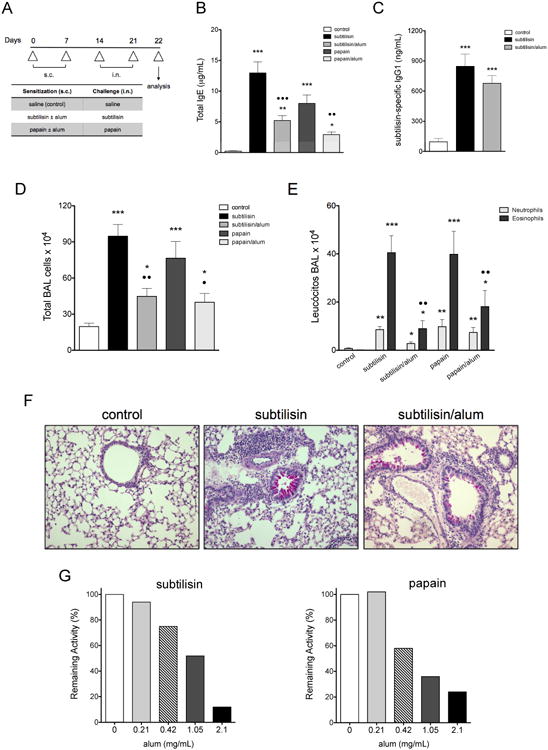
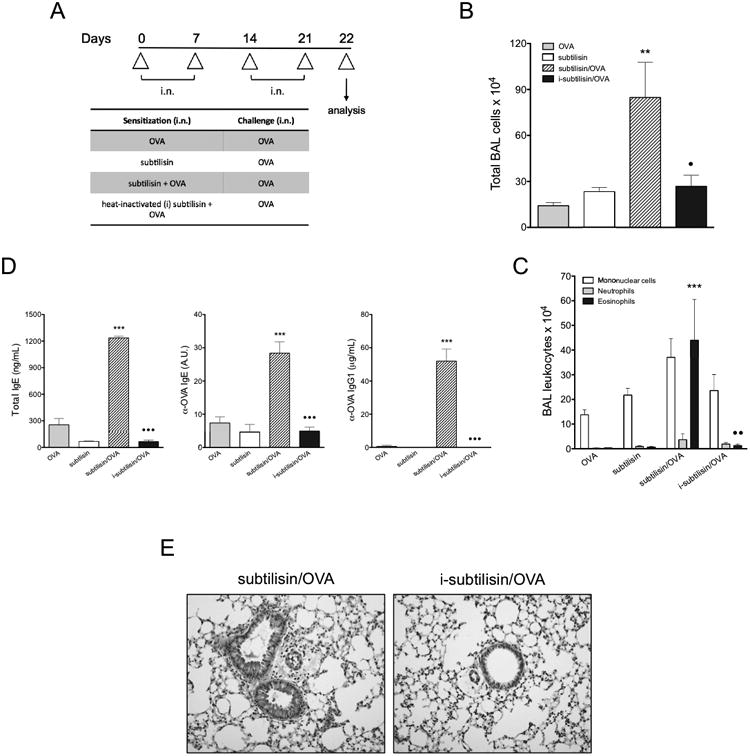
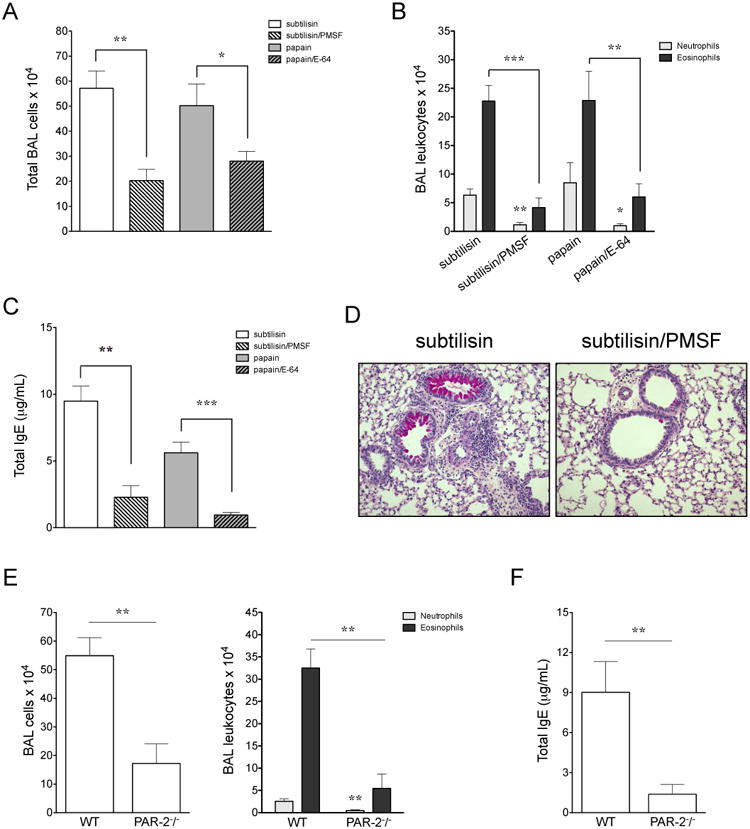
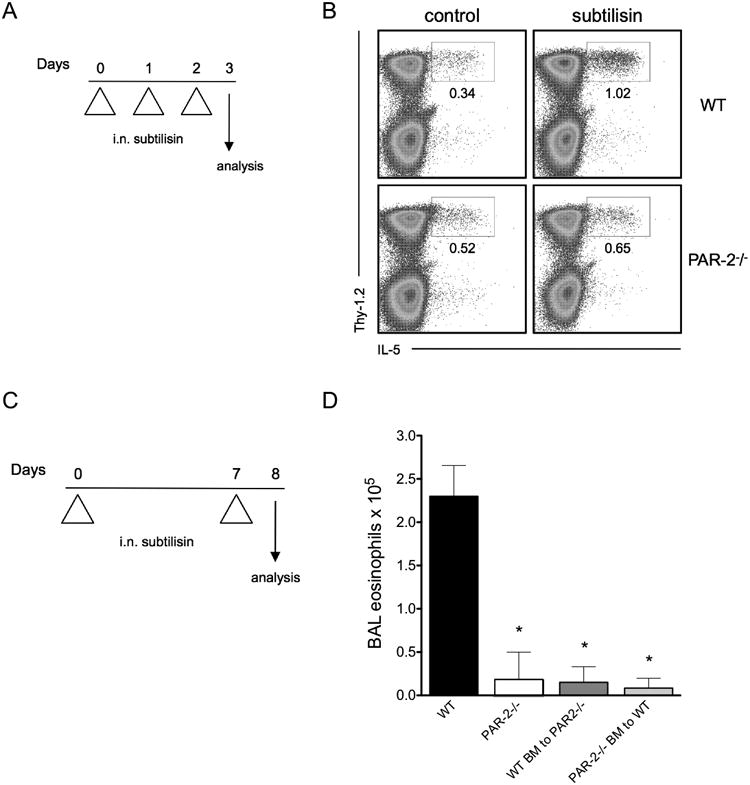
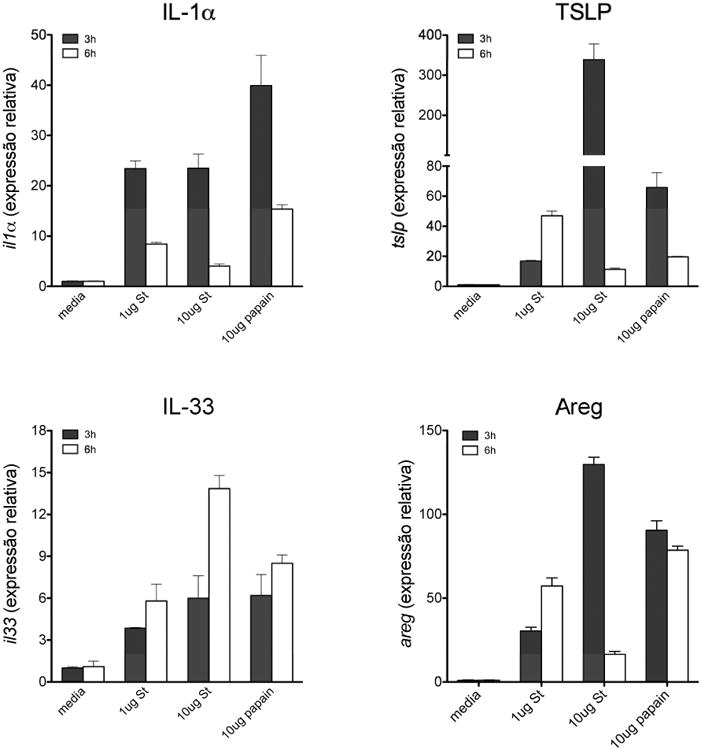
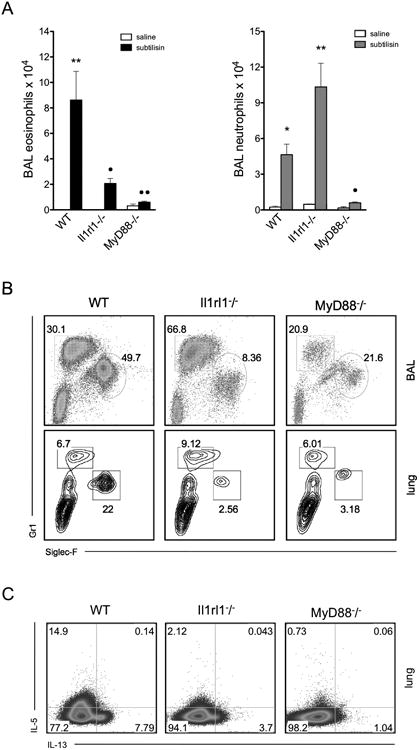
Proteases are recognized environmental allergens, but little is known about the mechanisms responsible for sensing enzyme activity and initiating the development of allergic inflammation. Because usage of the serine protease subtilisin in the detergent industry resulted in an outbreak of occupational asthma in workers, we sought to develop an experimental model of allergic lung inflammation to subtilisin and to determine the immunological mechanisms involved in type 2 responses. By using a mouse model of allergic airway disease, we have defined in this study that s.c. or intranasal sensitization followed by airway challenge to subtilisin induces prototypic allergic lung inflammation, characterized by airway eosinophilia, type 2 cytokine release, mucus production, high levels of serum IgE, and airway reactivity. These allergic responses were dependent on subtilisin protease activity, protease-activated receptor-2, IL-33R ST2, and MyD88 signaling. Also, subtilisin stimulated the expression of the proallergic cytokines IL-1α, IL-33, thymic stromal lymphopoietin, and the growth factor amphiregulin in a human bronchial epithelial cell line. Notably, acute administration of subtilisin into the airways increased lung IL-5-producing type 2 innate lymphoid cells, which required protease-activated receptor-2 expression. Finally, subtilisin activity acted as a Th2 adjuvant to an unrelated airborne Ag-promoting allergic inflammation to inhaled OVA. Therefore, we established a murine model of occupational asthma to a serine protease and characterized the main molecular pathways involved in allergic sensitization to subtilisin that potentially contribute to initiate allergic airway disease.
蛋白酶是公认的环境过敏原,但对于感知酶活性并引发过敏性炎症发展的机制却知之甚少。由于洗涤剂行业使用丝氨酸蛋白酶枯草杆菌蛋白酶导致工人爆发职业性哮喘,我们试图建立一种针对枯草杆菌蛋白酶的过敏性肺部炎症实验模型,并确定参与2型反应的免疫机制。通过使用过敏性气道疾病小鼠模型,我们在本研究中确定,皮下或鼻内致敏后气道接触枯草杆菌蛋白酶可诱导典型的过敏性肺部炎症,其特征为气道嗜酸性粒细胞增多、2型细胞因子释放、黏液分泌、血清IgE水平升高以及气道反应性增强。这些过敏反应依赖于枯草杆菌蛋白酶的活性、蛋白酶激活受体-2、IL-33R ST2和MyD88信号传导。此外,枯草杆菌蛋白酶可刺激人支气管上皮细胞系中促过敏细胞因子IL-1α、IL-33、胸腺基质淋巴细胞生成素以及生长因子双调蛋白的表达。值得注意的是,将枯草杆菌蛋白酶急性注入气道会增加肺部产生IL-5的2型固有淋巴细胞,这需要蛋白酶激活受体-2的表达。最后,枯草杆菌蛋白酶的活性作为一种Th2佐剂,促进对无关空气传播抗原的过敏炎症反应,增强对吸入卵清蛋白的过敏反应。因此,我们建立了一种针对丝氨酸蛋白酶的职业性哮喘小鼠模型,并确定了参与对枯草杆菌蛋白酶过敏致敏的主要分子途径,这些途径可能有助于引发过敏性气道疾病。