Nagarajan M, Kuruvilla Gina R, Kumar K Subrahmanya, Venkatasubramanian Padma
Centre for Pharmacognosy, Pharmaceutics and Pharmacology, Institute of Trans-Disciplinary Health Sciences and Technology, Foundation for Revitalisation of Local Health Traditions, Bengaluru, Karnataka, India.
Research Scholar, Manipal University, Karnataka, India.
J Ayurveda Integr Med. 2015 Jan-Mar;6(1):53-63. doi: 10.4103/0975-9476.146550.
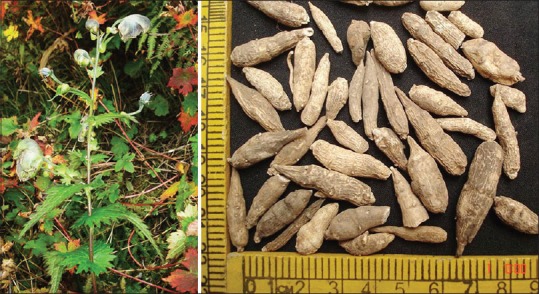
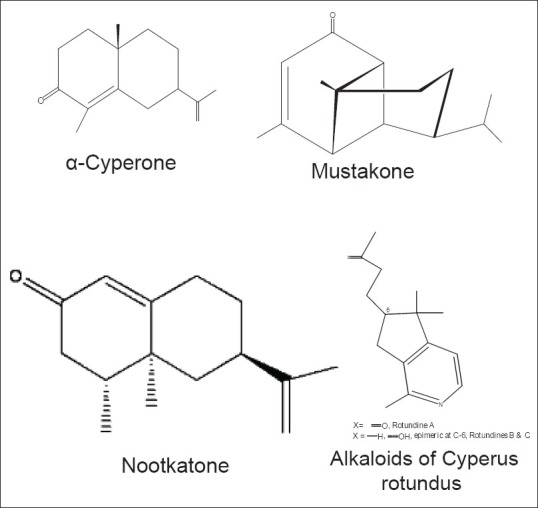
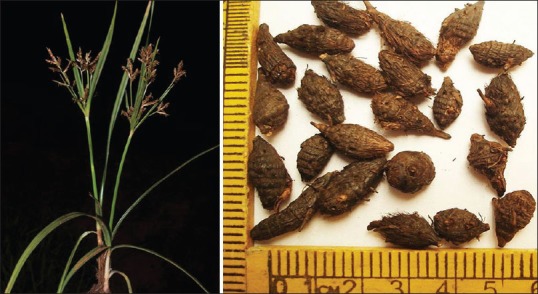
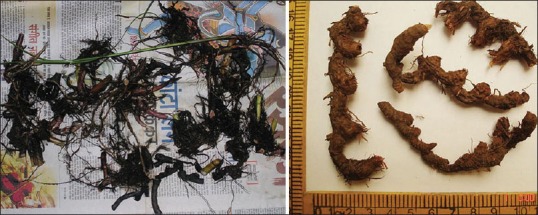
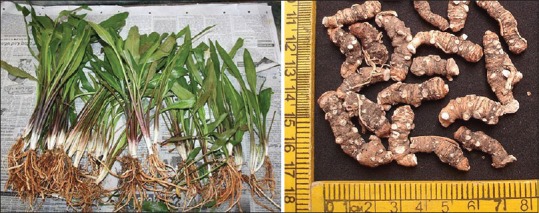
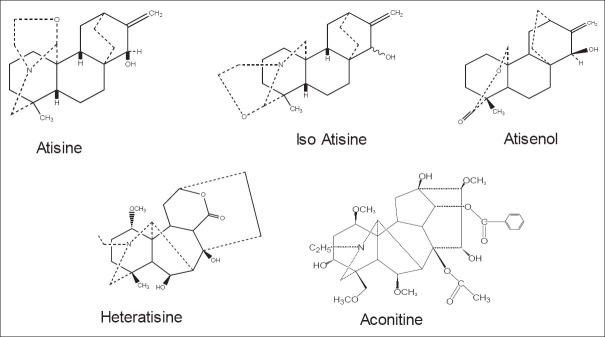
Authentic Ativisha (Aconitum heterophyllum) is a rare, endangered Himalayan species. Ayurveda classical texts of c. 15(th)-16(th) century, introduced "abhava-pratinidhi dravya" concept, wherein Ativisha was categorized as an abhava dravya (unavailable drug) and Musta (Cyperus rotundus) was suggested as a pratinidhi dravya (substitute) for it. C. rotundus is a weed, abundantly available pan-India. Cryptocoryne spiralis (Naattu Athividayam) and Cyperus scariosus (Nagarmotha) are also traded as Ativisha and Musta, respectively. Yet, there are no scientific studies to validate the use of substitutes. A. heterophyllum bears no similarity in terms of botanical classification with the other candidates. This article reviews published literature with an emphasis to look for similar phytochemicals or groups of phytochemicals in the species that could contribute to similar pharmacological activities, thereby supporting the drug substitution from a bio-medical perspective. Alkaloids like atisine were found to be the main focus of studies on A. heterophyllum, whereas for the Cyperus spp., it was terpenoids like cyperene. Although alkaloids and terpenoids were reported from both species, alkaloids in C. rotundus and terpenoids in A. heterophyllum were minor constituents. Reports on phytochemicals on Cryptocoryne spiralis and C. scariosus were very limited. Despite no significant similarities in chemical profiles reported, the dravyaguna (Ayurvedic drug classification) of Ativisha and Musta was quite similar warranting further exploration into the bio-functional aspects of the drug materials.
正宗的阿蒂维莎(喜马拉雅乌头)是一种珍稀濒危的喜马拉雅物种。公元15至16世纪的阿育吠陀经典文献引入了“无有替代药物”的概念,其中阿蒂维莎被归类为无有药物(不可用药物),而香附子被建议作为其替代药物。香附子是一种杂草,在全印度都很常见。螺旋隐棒花(本地阿蒂维达亚姆)和细秆莎草(长穗莎草)也分别作为阿蒂维莎和香附子进行交易。然而,尚无科学研究来验证这些替代品的使用。喜马拉雅乌头在植物分类学上与其他候选植物没有相似之处。本文回顾已发表的文献,重点寻找这些物种中可能具有相似药理活性的相似植物化学物质或植物化学物质组,从而从生物医学角度支持药物替代。诸如阿替生之类的生物碱是对喜马拉雅乌头研究的主要焦点,而对于莎草属植物来说,则是如蒈烯之类的萜类化合物。尽管在这两个物种中都报道了生物碱和萜类化合物,但香附子中的生物碱和喜马拉雅乌头中的萜类化合物是次要成分。关于螺旋隐棒花和细秆莎草植物化学物质的报道非常有限。尽管所报道的化学特征没有显著相似之处,但阿蒂维莎和香附子的药物属性(阿育吠陀药物分类)相当相似,这值得进一步探索这些药物材料的生物功能方面。