Slininger Patricia J, Shea-Andersh Maureen A, Thompson Stephanie R, Dien Bruce S, Kurtzman Cletus P, Balan Venkatesh, da Costa Sousa Leonardo, Uppugundla Nirmal, Dale Bruce E, Cotta Michael A
Bioenergy Research Unit, National Center for Agricultural Utilization Research, USDA-ARS, 1815 N. University, Peoria, IL 61604 USA.
Bacterial Foodborne Pathogens and Mycology Research, National Center for Agricultural Utilization Research, USDA-ARS, 1815 N. University, Peoria, IL 61604 USA.
Biotechnol Biofuels. 2015 Apr 9;8:60. doi: 10.1186/s13068-015-0239-6. eCollection 2015.
Lignocellulosic biomass is an abundant, renewable feedstock useful for the production of fuel-grade ethanol via the processing steps of pretreatment, enzyme hydrolysis, and microbial fermentation. Traditional industrial yeasts do not ferment xylose and are not able to grow, survive, or ferment in concentrated hydrolyzates that contain enough sugar to support economical ethanol recovery since they are laden with toxic byproducts generated during pretreatment.
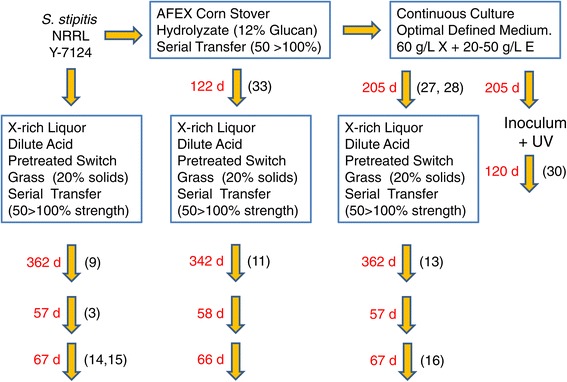
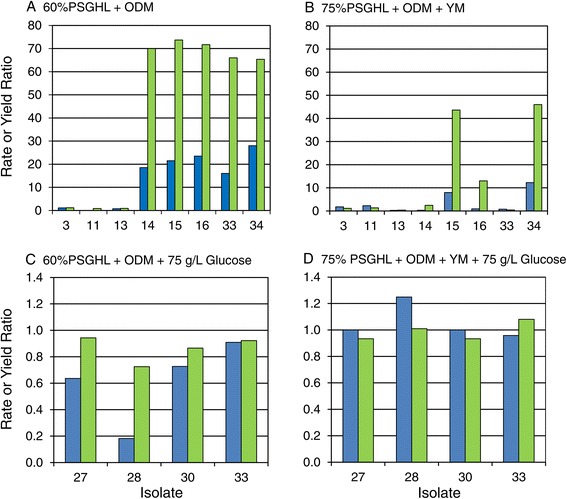
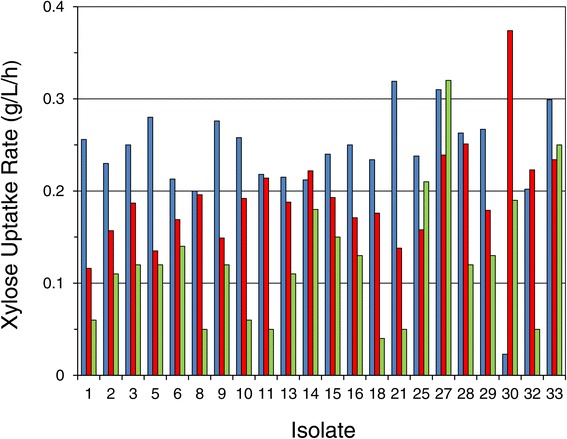
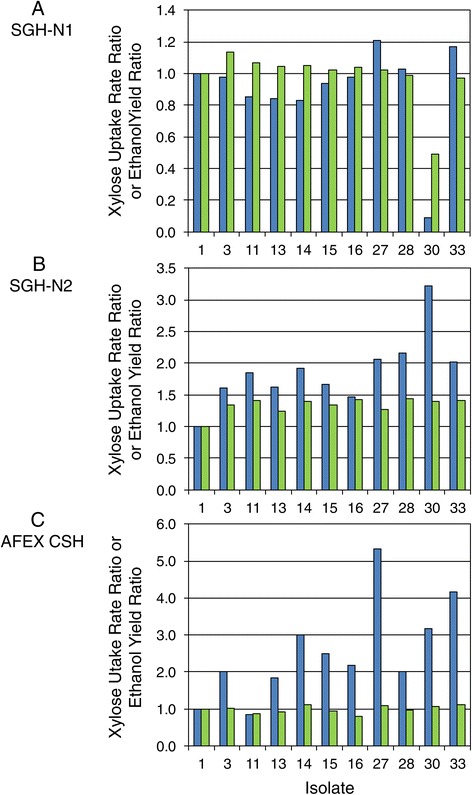
Repetitive culturing in two types of concentrated hydrolyzates was applied along with ethanol-challenged xylose-fed continuous culture to force targeted evolution of the native pentose fermenting yeast Scheffersomyces (Pichia) stipitis strain NRRL Y-7124 maintained in the ARS Culture Collection, Peoria, IL. Isolates collected from various enriched populations were screened and ranked based on relative xylose uptake rate and ethanol yield. Ranking on hydrolyzates with and without nutritional supplementation was used to identify those isolates with best performance across diverse conditions.
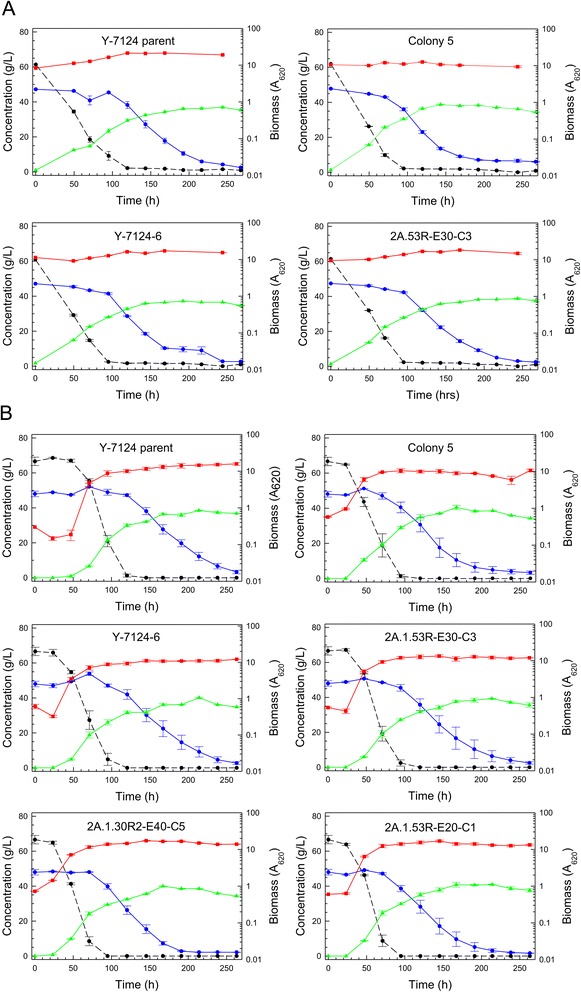
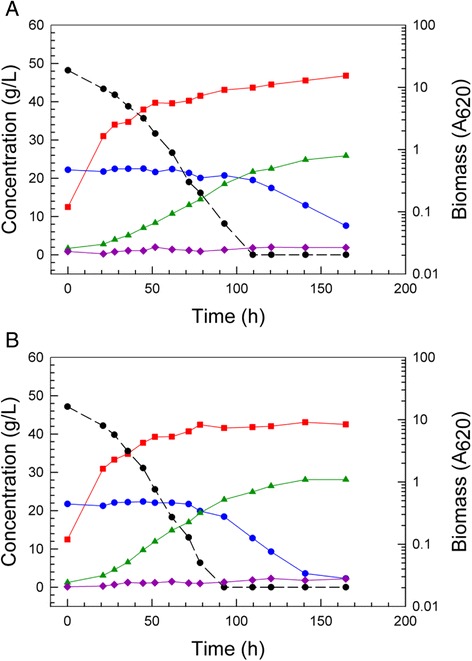
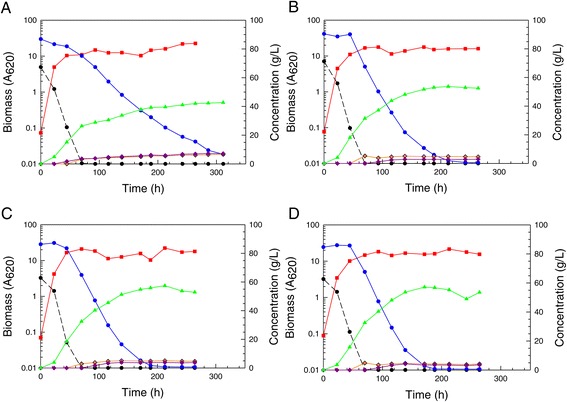
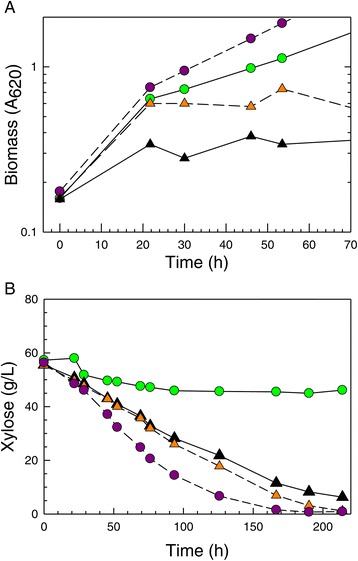
Robust S. stipitis strains adapted to perform very well in enzyme hydrolyzates of high solids loading ammonia fiber expansion-pretreated corn stover (18% weight per volume solids) and dilute sulfuric acid-pretreated switchgrass (20% w/v solids) were obtained. Improved features include reduced initial lag phase preceding growth, significantly enhanced fermentation rates, improved ethanol tolerance and yield, reduced diauxic lag during glucose-xylose transition, and ability to accumulate >40 g/L ethanol in <167 h when fermenting hydrolyzate at low initial cell density of 0.5 absorbance units and pH 5 to 6.
木质纤维素生物质是一种丰富的可再生原料,可通过预处理、酶水解和微生物发酵等加工步骤用于生产燃料级乙醇。传统工业酵母不能发酵木糖,并且在含有足以支持经济的乙醇回收的糖分的浓缩水解物中无法生长、存活或发酵,因为这些水解物中含有预处理过程中产生的有毒副产物。
将在两种类型的浓缩水解物中进行重复培养与乙醇挑战木糖补料连续培养相结合,以促使保藏于伊利诺伊州皮奥里亚的美国农业部农业研究局菌种保藏中心的天然戊糖发酵酵母树干毕赤酵母(Scheffersomyces (Pichia) stipitis)菌株NRRL Y-7124发生定向进化。对从各种富集群体中收集的分离株进行筛选,并根据相对木糖摄取率和乙醇产量进行排名。通过在添加和不添加营养补充剂的水解物上进行排名,以鉴定在不同条件下表现最佳的分离株。
获得了能够在高固含量氨纤维膨胀预处理玉米秸秆(18%重量/体积固体)和稀硫酸预处理柳枝稷(20%重量/体积固体)的酶水解物中表现良好的健壮树干毕赤酵母菌株。改进的特性包括生长前的初始延迟期缩短、发酵速率显著提高、乙醇耐受性和产量提高、葡萄糖-木糖转换期间的双相生长延迟减少,以及在初始细胞密度为0.5吸光度单位且pH为5至6的低初始细胞密度下发酵水解物时,能够在<167小时内积累>40 g/L乙醇。