Kweon Ohgew, Kim Seong-Jae, Blom Jochen, Kim Sung-Kwan, Kim Bong-Soo, Baek Dong-Heon, Park Su Inn, Sutherland John B, Cerniglia Carl E
Division of Microbiology, National Center for Toxicological Research/FDA, Jefferson, Arkansas, USA.
Center for Biotechnology, Bielefeld University, Bielefeld, Nordrhein-Westfalen, Germany.
BMC Evol Biol. 2015 Feb 14;15:21. doi: 10.1186/s12862-015-0302-8.
The bacterial genus Mycobacterium is of great interest in the medical and biotechnological fields. Despite a flood of genome sequencing and functional genomics data, significant gaps in knowledge between genome and phenome seriously hinder efforts toward the treatment of mycobacterial diseases and practical biotechnological applications. In this study, we propose the use of systematic, comparative functional pan-genomic analysis to build connections between genomic dynamics and phenotypic evolution in polycyclic aromatic hydrocarbon (PAH) metabolism in the genus Mycobacterium.
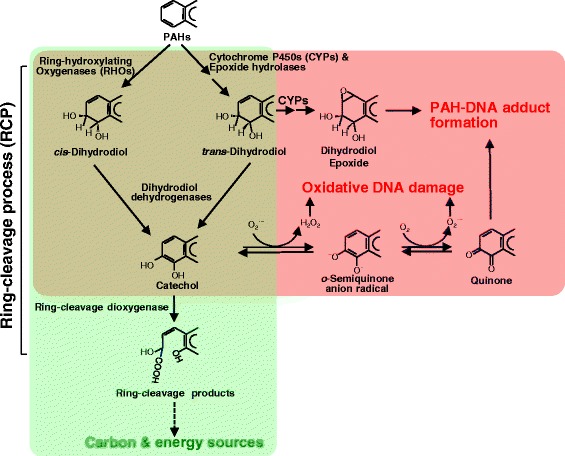
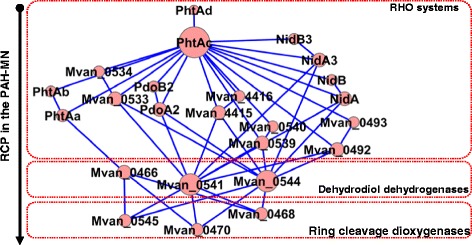
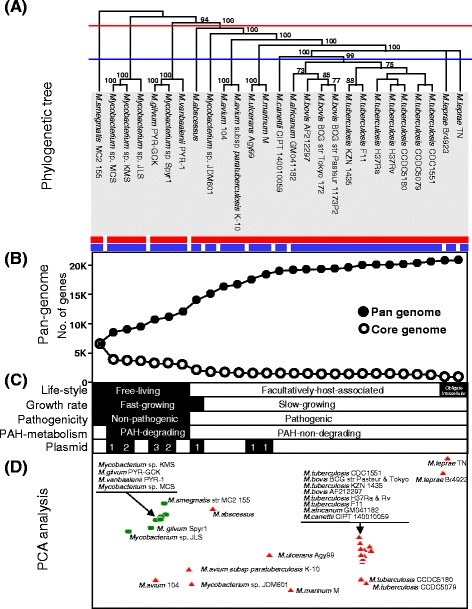
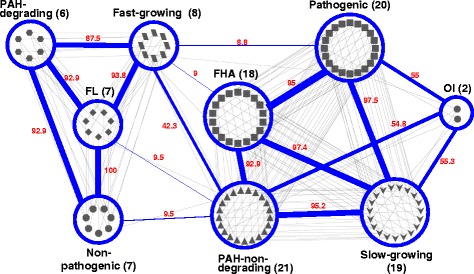
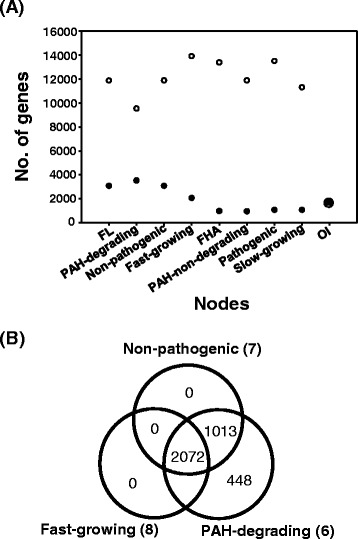
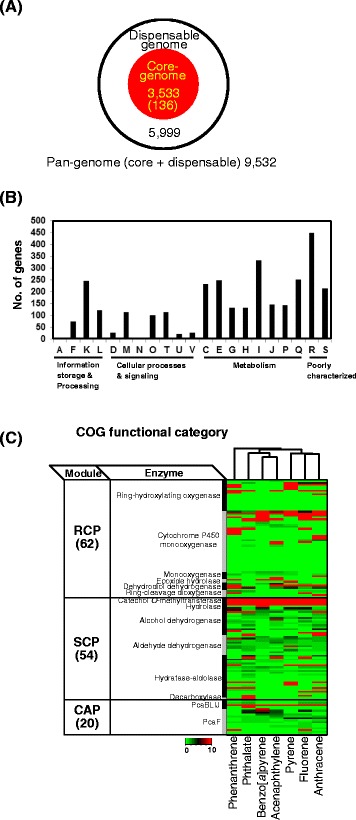
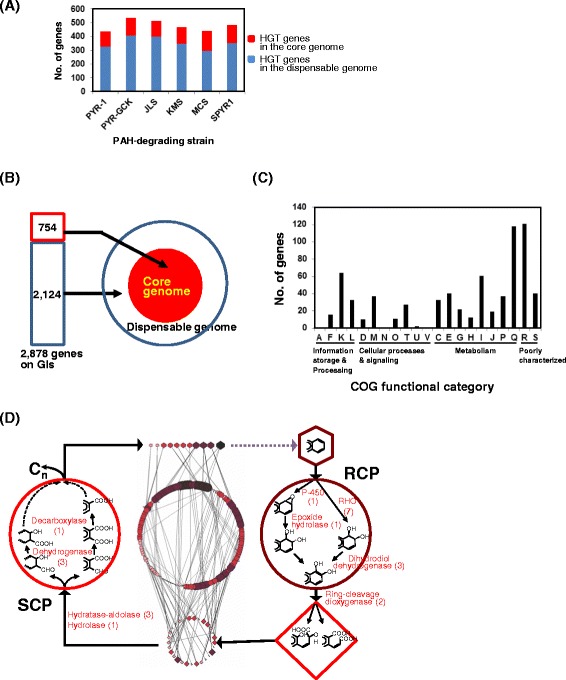
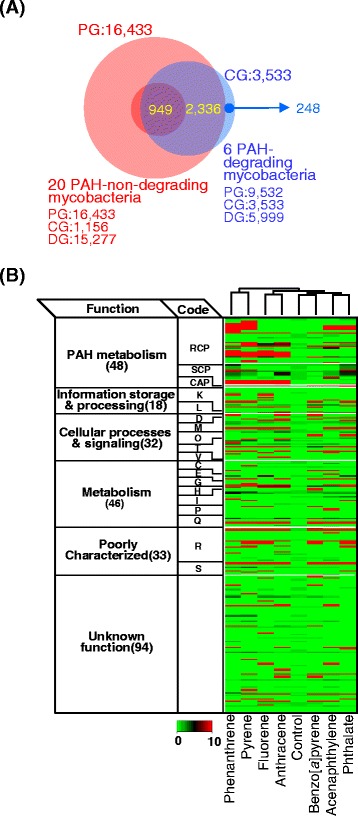
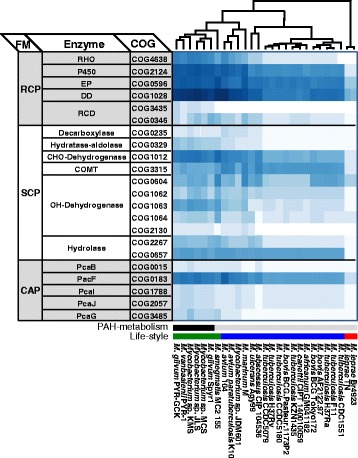
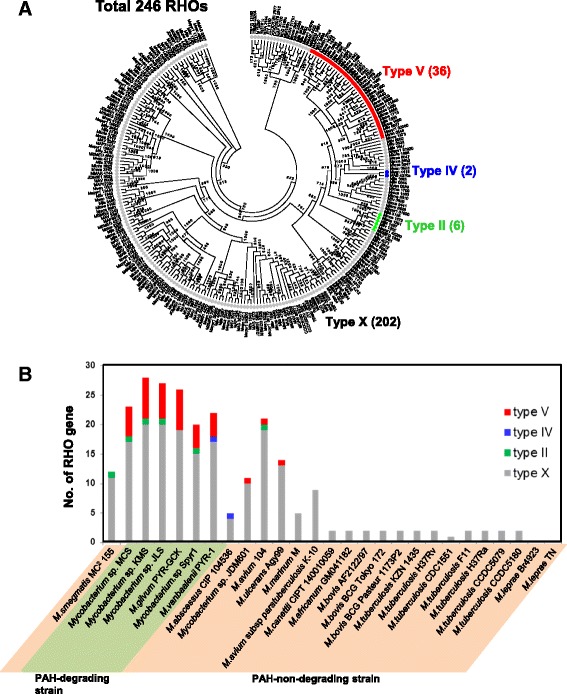
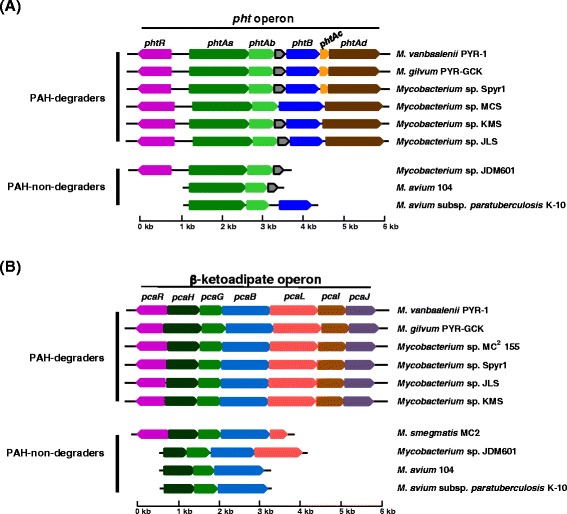
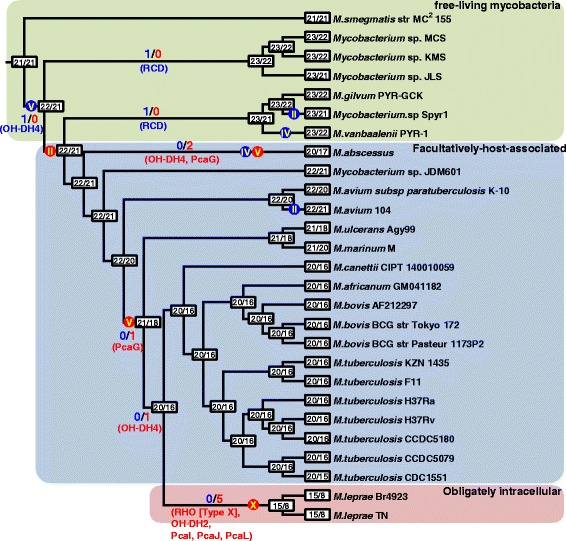
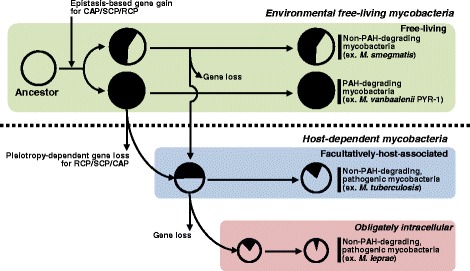
Phylogenetic, phenotypic, and genomic information for 27 completely genome-sequenced mycobacteria was systematically integrated to reconstruct a mycobacterial phenotype network (MPN) with a pan-genomic concept at a network level. In the MPN, mycobacterial phenotypes show typical scale-free relationships. PAH degradation is an isolated phenotype with the lowest connection degree, consistent with phylogenetic and environmental isolation of PAH degraders. A series of functional pan-genomic analyses provide conserved and unique types of genomic evidence for strong epistatic and pleiotropic impacts on evolutionary trajectories of the PAH-degrading phenotype. Under strong natural selection, the detailed gene gain/loss patterns from horizontal gene transfer (HGT)/deletion events hypothesize a plausible evolutionary path, an epistasis-based birth and pleiotropy-dependent death, for PAH metabolism in the genus Mycobacterium. This study generated a practical mycobacterial compendium of phenotypic and genomic changes, focusing on the PAH-degrading phenotype, with a pan-genomic perspective of the evolutionary events and the environmental challenges.
Our findings suggest that when selection acts on PAH metabolism, only a small fraction of possible trajectories is likely to be observed, owing mainly to a combination of the ambiguous phenotypic effects of PAHs and the corresponding pleiotropy- and epistasis-dependent evolutionary adaptation. Evolutionary constraints on the selection of trajectories, like those seen in PAH-degrading phenotypes, are likely to apply to the evolution of other phenotypes in the genus Mycobacterium.
分枝杆菌属细菌在医学和生物技术领域备受关注。尽管有大量的基因组测序和功能基因组学数据,但基因组与表型组之间的重大知识差距严重阻碍了分枝杆菌病治疗和实际生物技术应用的研究进展。在本研究中,我们建议使用系统的、比较性的功能泛基因组分析来建立分枝杆菌属中多环芳烃(PAH)代谢的基因组动态与表型进化之间的联系。
系统整合了27种全基因组测序分枝杆菌的系统发育、表型和基因组信息,以在网络水平上用泛基因组概念重建分枝杆菌表型网络(MPN)。在MPN中,分枝杆菌表型呈现典型的无标度关系。PAH降解是连接度最低的孤立表型,这与PAH降解菌的系统发育和环境隔离一致。一系列功能泛基因组分析为PAH降解表型的进化轨迹提供了保守和独特类型的基因组证据,证明了强上位性和多效性影响。在强烈的自然选择下,水平基因转移(HGT)/缺失事件导致的详细基因获得/丢失模式为分枝杆菌属中PAH代谢推测了一条合理的进化路径,即基于上位性的产生和多效性依赖的消亡。本研究生成了一份关于表型和基因组变化的实用分枝杆菌纲要,重点关注PAH降解表型,从泛基因组角度审视进化事件和环境挑战。
我们的研究结果表明,当选择作用于PAH代谢时,由于PAHs的表型效应不明确以及相应的多效性和上位性依赖的进化适应,可能仅能观察到一小部分可能的进化轨迹。对进化轨迹选择的进化限制,如在PAH降解表型中所见,可能适用于分枝杆菌属中其他表型的进化。