Sapkota Rumakanta, Nicolaisen Mogens
Department of Agroecology, Aarhus University, Faculty of Science and Technology, Forsøgsvej 1, DK-4200, Slagelse, Denmark.
BMC Ecol. 2015 Feb 12;15:3. doi: 10.1186/s12898-014-0034-4.
Nematodes are extremely diverse and numbers of species are predicted to be more than a million. Studies on nematode diversity are difficult and laborious using classical methods and therefore high-throughput sequencing is an attractive alternative. Primers that have been used in previous sequence-based studies are not nematode specific but also amplify other groups of organisms such as fungi and plantae, and thus require a nematode enrichment step that may introduce biases.
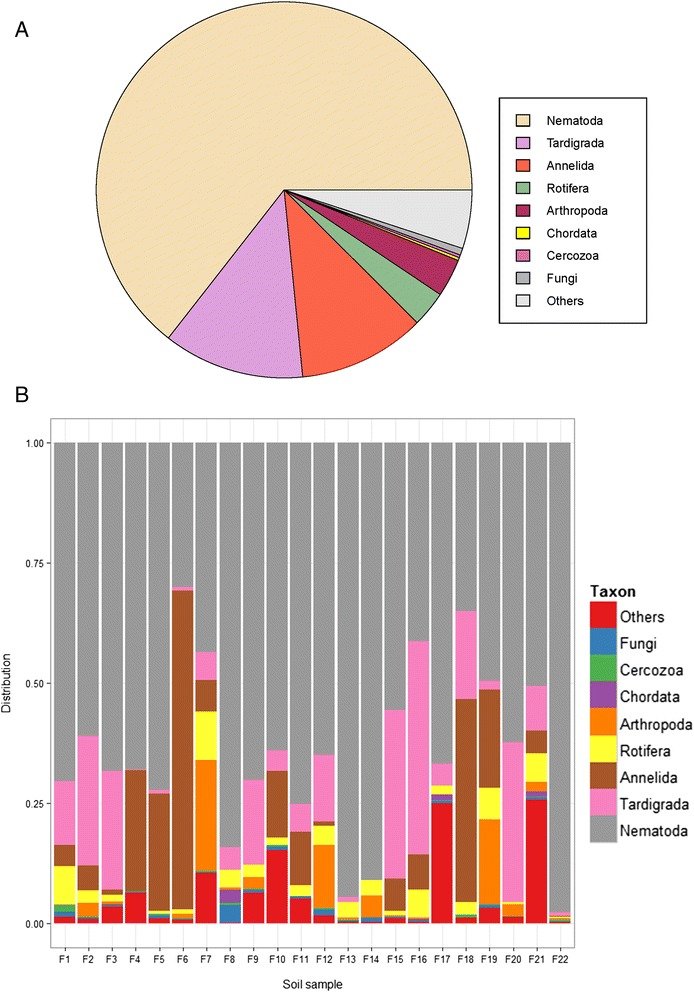
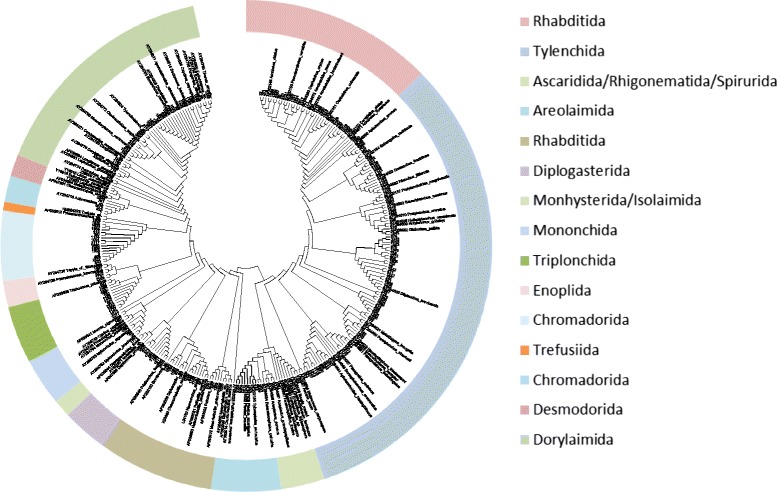
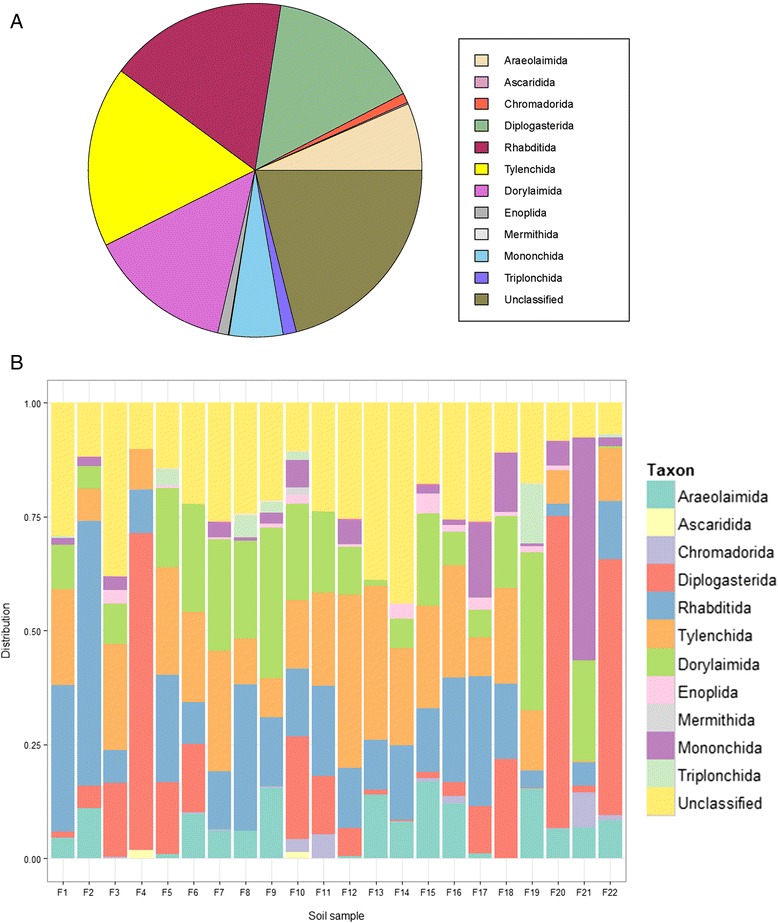
In this study an amplification strategy which selectively amplifies a fragment of the SSU from nematodes without the need for enrichment was developed. Using this strategy on DNA templates from a set of 22 agricultural soils, we obtained 64.4% sequences of nematode origin in total, whereas the remaining sequences were almost entirely from other metazoans. The nematode sequences were derived from a broad taxonomic range and most sequences were from nematode taxa that have previously been found to be abundant in soil such as Tylenchida, Rhabditida, Dorylaimida, Triplonchida and Araeolaimida.
Our amplification and sequencing strategy for assessing nematode diversity was able to collect a broad diversity without prior nematode enrichment and thus the method will be highly valuable in ecological studies of nematodes.
线虫种类极为多样,预计物种数量超过100万种。使用传统方法研究线虫多样性既困难又费力,因此高通量测序是一种颇具吸引力的替代方法。以往基于序列的研究中使用的引物并非线虫特异性的,还会扩增其他生物类群,如真菌和植物,因此需要一个线虫富集步骤,而这可能会引入偏差。
在本研究中,开发了一种无需富集即可选择性扩增线虫小亚基(SSU)片段的扩增策略。对来自22种农业土壤的DNA模板应用该策略,我们总共获得了64.4%的线虫来源序列,而其余序列几乎全部来自其他后生动物。线虫序列来自广泛的分类范围,大多数序列来自先前已发现的在土壤中丰富的线虫类群,如垫刃目、小杆目、矛线目、三矛线虫目和链环线虫目。
我们用于评估线虫多样性的扩增和测序策略能够在无需事先富集线虫的情况下收集广泛的多样性,因此该方法在对线虫的生态学研究中将具有很高的价值。