Dell'Anno Antonio, Carugati Laura, Corinaldesi Cinzia, Riccioni Giulia, Danovaro Roberto
Department of Life and Environmental Sciences, Polytechnic University of Marche, Via Brecce Bianche, 60131 Ancona, Italy.
Stazione Zoologica Anton Dohrn, Villa Comunale, Naples, Italy.
PLoS One. 2015 Dec 23;10(12):e0144928. doi: 10.1371/journal.pone.0144928. eCollection 2015.
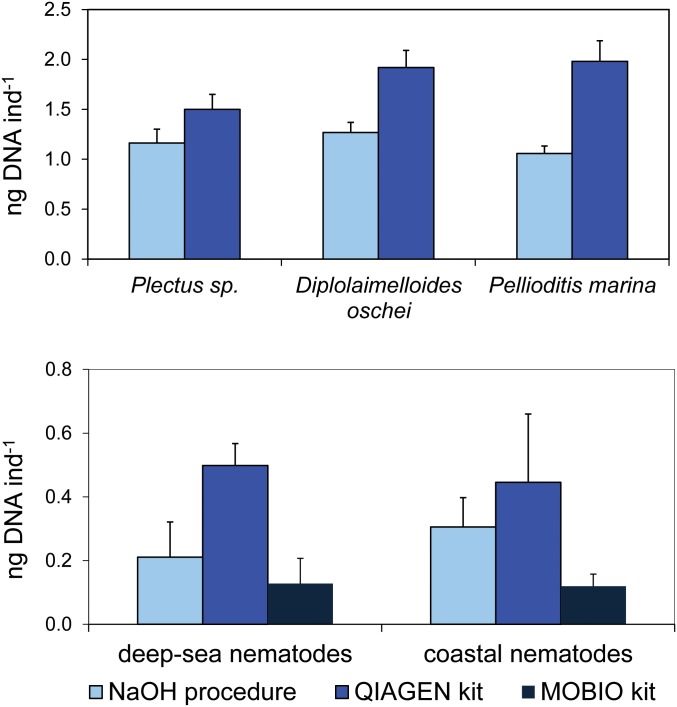
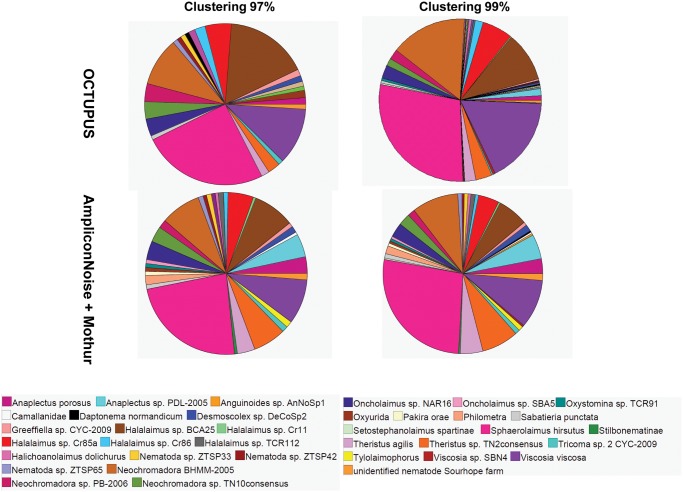
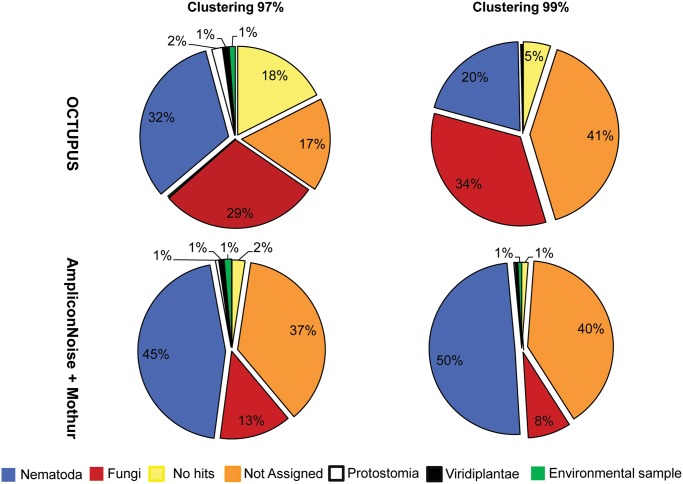
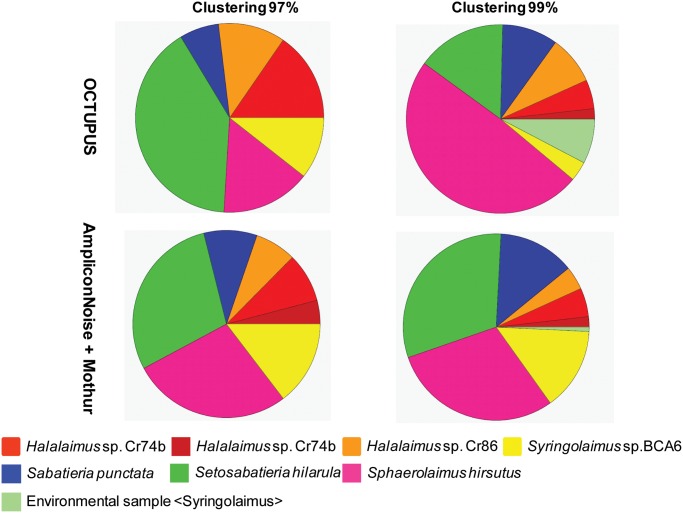
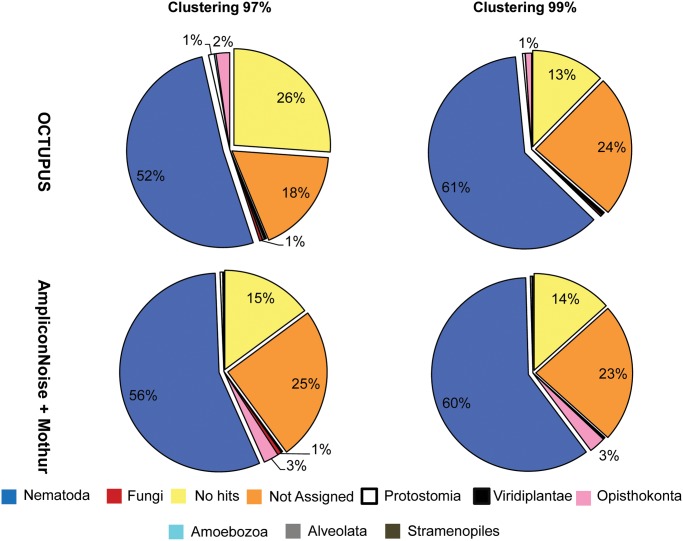
Nematodes inhabiting benthic deep-sea ecosystems account for >90% of the total metazoan abundances and they have been hypothesised to be hyper-diverse, but their biodiversity is still largely unknown. Metabarcoding could facilitate the census of biodiversity, especially for those tiny metazoans for which morphological identification is difficult. We compared, for the first time, different DNA extraction procedures based on the use of two commercial kits and a previously published laboratory protocol and tested their suitability for sequencing analyses of 18S rDNA of marine nematodes. We also investigated the reliability of Roche 454 sequencing analyses for assessing the biodiversity of deep-sea nematode assemblages previously morphologically identified. Finally, intra-genomic variation in 18S rRNA gene repeats was investigated by Illumina MiSeq in different deep-sea nematode morphospecies to assess the influence of polymorphisms on nematode biodiversity estimates. Our results indicate that the two commercial kits should be preferred for the molecular analysis of biodiversity of deep-sea nematodes since they consistently provide amplifiable DNA suitable for sequencing. We report that the morphological identification of deep-sea nematodes matches the results obtained by metabarcoding analysis only at the order-family level and that a large portion of Operational Clustered Taxonomic Units (OCTUs) was not assigned. We also show that independently from the cut-off criteria and bioinformatic pipelines used, the number of OCTUs largely exceeds the number of individuals and that 18S rRNA gene of different morpho-species of nematodes displayed intra-genomic polymorphisms. Our results indicate that metabarcoding is an important tool to explore the diversity of deep-sea nematodes, but still fails in identifying most of the species due to limited number of sequences deposited in the public databases, and in providing quantitative data on the species encountered. These aspects should be carefully taken into account before using metabarcoding in quantitative ecological research and monitoring programmes of marine biodiversity.
栖息于深海底栖生态系统的线虫占后生动物总丰度的90%以上,据推测它们具有高度多样性,但其生物多样性仍 largely未知。元条形码技术有助于生物多样性普查,特别是对于那些难以进行形态学鉴定的微小后生动物。我们首次比较了基于两种商业试剂盒和一种先前发表的实验室方案的不同DNA提取程序,并测试了它们对海洋线虫18S rDNA测序分析的适用性。我们还研究了罗氏454测序分析评估先前经形态学鉴定的深海线虫群落生物多样性的可靠性。最后,通过Illumina MiSeq研究了不同深海线虫形态种中18S rRNA基因重复序列的基因组内变异,以评估多态性对线虫生物多样性估计的影响。我们的结果表明,这两种商业试剂盒更适合用于深海线虫生物多样性的分子分析,因为它们始终能提供适合测序的可扩增DNA。我们报告称,深海线虫的形态学鉴定仅在目-科级水平上与元条形码分析结果相符,并且大部分操作分类单元(OCTUs)未被归类。我们还表明,无论使用何种截止标准和生物信息学流程,OCTUs的数量都大大超过个体数量,并且不同形态种的线虫18S rRNA基因显示出基因组内多态性。我们的结果表明,元条形码技术是探索深海线虫多样性的重要工具,但由于公共数据库中存储的序列数量有限,仍然无法识别大多数物种,也无法提供所遇到物种的定量数据。在将元条形码技术用于海洋生物多样性的定量生态研究和监测计划之前,应仔细考虑这些方面。