Yen Ching-Yu, Hou Ming-Feng, Yang Zhi-Wen, Tang Jen-Yang, Li Kun-Tzu, Huang Hurng-Wern, Huang Yu-Hsuan, Lee Sheng-Yang, Fu Tzu-Fun, Hsieh Che-Yu, Chen Bing-Hung, Chang Hsueh-Wei
Department of Oral and Maxillofacial Surgery Chi-Mei Medical Center, Tainan, Taiwan.
School of Dentistry, Taipei Medical University, Taipei, Taiwan.
BMC Complement Altern Med. 2015 Mar 29;15:94. doi: 10.1186/s12906-015-0621-8.
Grape seeds extract (GSE) is a famous health food supplement for its antioxidant property. Different concentrations of GSE may have different impacts on cellular oxidative/reduction homeostasis. Antiproliferative effect of GSE has been reported in many cancers but rarely in oral cancer.
The aim of this study is to examine the antioral cancer effects of different concentrations of GSE in terms of cell viability, apoptosis, reactive oxygen species (ROS), mitochondrial function, and DNA damage.
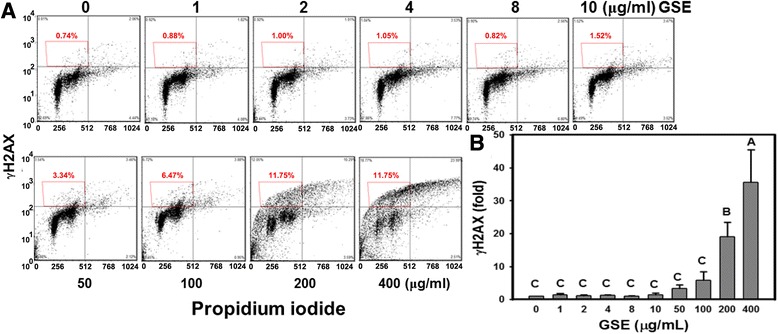
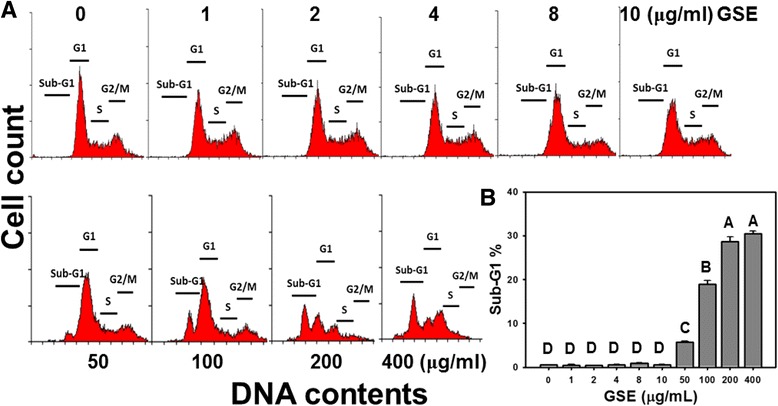
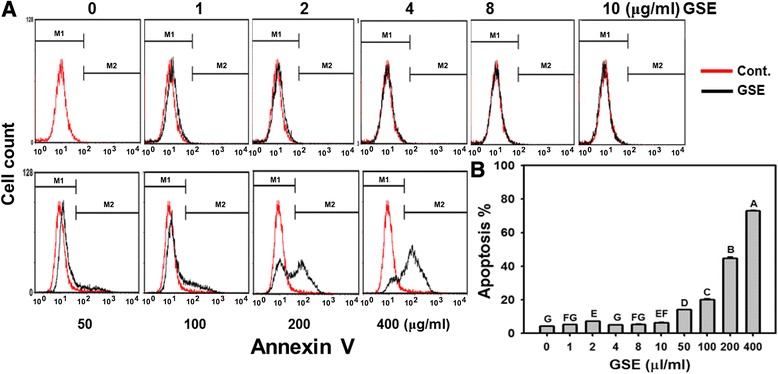
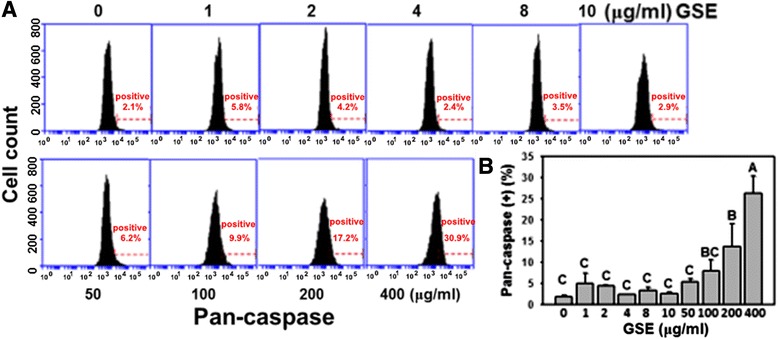
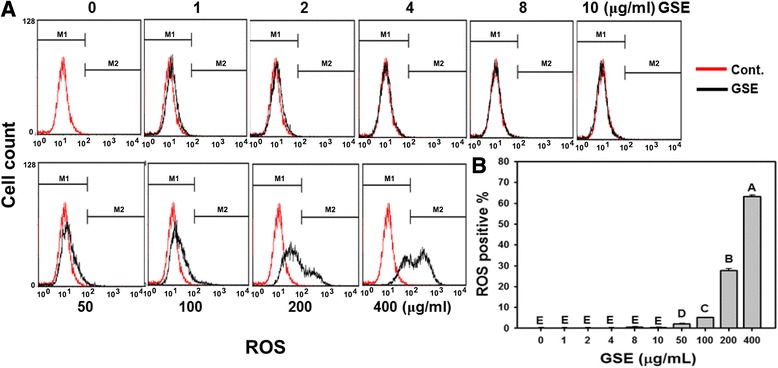
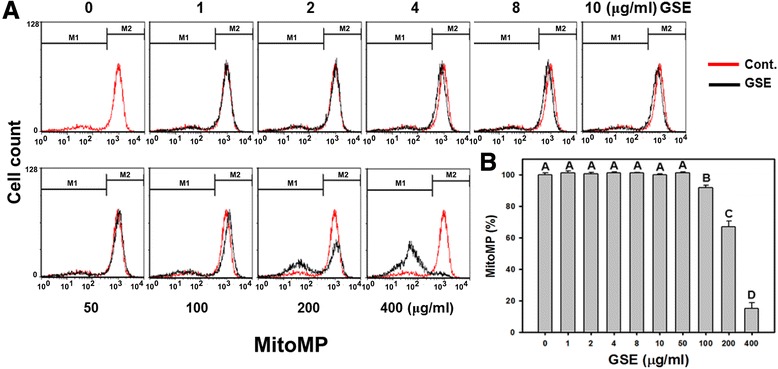
High concentrations (50-400 μg/ml) of GSE dose-responsively inhibited proliferation of oral cancer Ca9-22 cells but low concentrations (1-10 μg/ml) of GSE showed a mild effect in a MTS assay. For apoptosis analyses, subG1 population and annexin V intensity in high concentrations of GSE-treated Ca9-22 cells was increased but less so at low concentrations. ROS generation and mitochondrial depolarization increased dose-responsively at high concentrations but showed minor changes at low concentrations of GSE in Ca9-22 cells. Additionally, high concentrations of GSE dose-responsively induced more γH2AX-based DNA damage than low concentrations.
Differential concentrations of GSE may have a differentially antiproliferative function against oral cancer cells via differential apoptosis, oxidative stress and DNA damage.
葡萄籽提取物(GSE)因其抗氧化特性而成为一种著名的健康食品补充剂。不同浓度的GSE可能对细胞氧化/还原稳态有不同影响。GSE的抗增殖作用在许多癌症中都有报道,但在口腔癌中很少见。
本研究的目的是从细胞活力、凋亡、活性氧(ROS)、线粒体功能和DNA损伤方面检测不同浓度GSE的抗口腔癌作用。
在MTS试验中,高浓度(50 - 400μg/ml)的GSE剂量依赖性地抑制口腔癌Ca9 - 22细胞的增殖,但低浓度(1 - 10μg/ml)的GSE作用轻微。对于凋亡分析,高浓度GSE处理的Ca9 - 22细胞中G1期前亚群和膜联蛋白V强度增加,但低浓度时增加较少。在Ca9 - 22细胞中,高浓度GSE时ROS生成和线粒体去极化呈剂量依赖性增加,而低浓度时变化较小。此外,高浓度GSE比低浓度剂量依赖性地诱导更多基于γH2AX的DNA损伤。
不同浓度的GSE可能通过不同的凋亡、氧化应激和DNA损伤对口腔癌细胞具有不同的抗增殖功能。