Tanaka Kosei, Iwasaki Kana, Morimoto Takuya, Matsuse Takatsugu, Hasunuma Tomohisa, Takenaka Shinji, Chumsakul Onuma, Ishikawa Shu, Ogasawara Naotake, Yoshida Ken-ichi
Organization of Advanced Science and Technology, Kobe University, Kobe, Hyogo, Japan.
Department of Agrobioscience, Kobe University, Kobe, Hyogo, Japan.
BMC Microbiol. 2015 Feb 22;15:43. doi: 10.1186/s12866-015-0373-0.
The two-component regulatory system, involving the histidine sensor kinase DegS and response regulator DegU, plays an important role to control various cell processes in the transition phase of Bacillus subtilis. The degU32 allele in strain 1A95 is characterized by the accumulation of phosphorylated form of DegU (DegU-P).
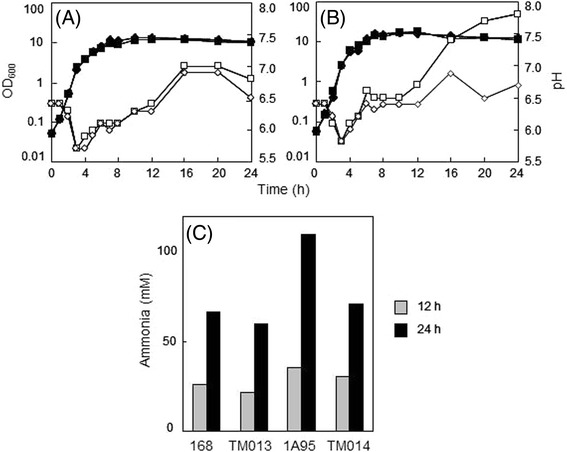
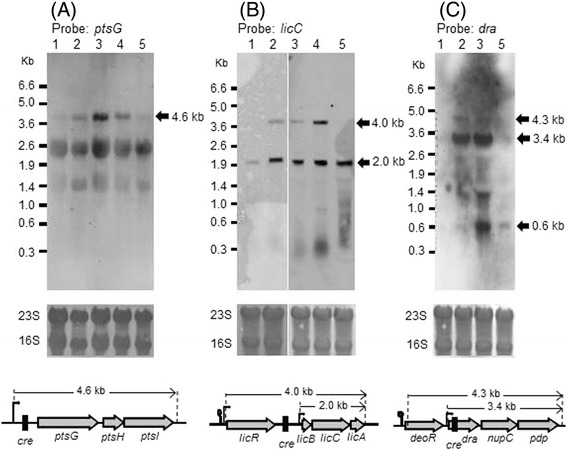
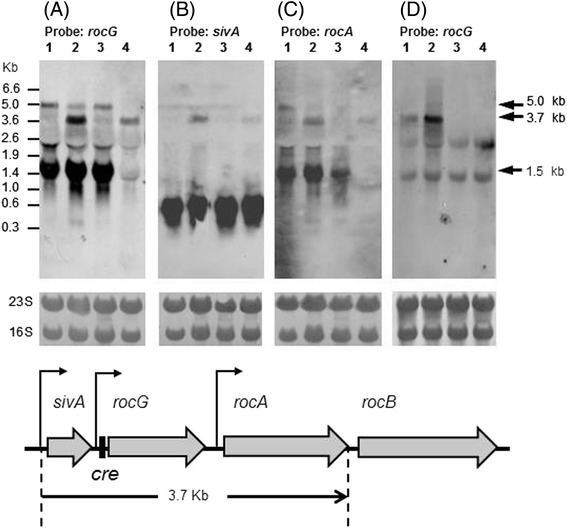
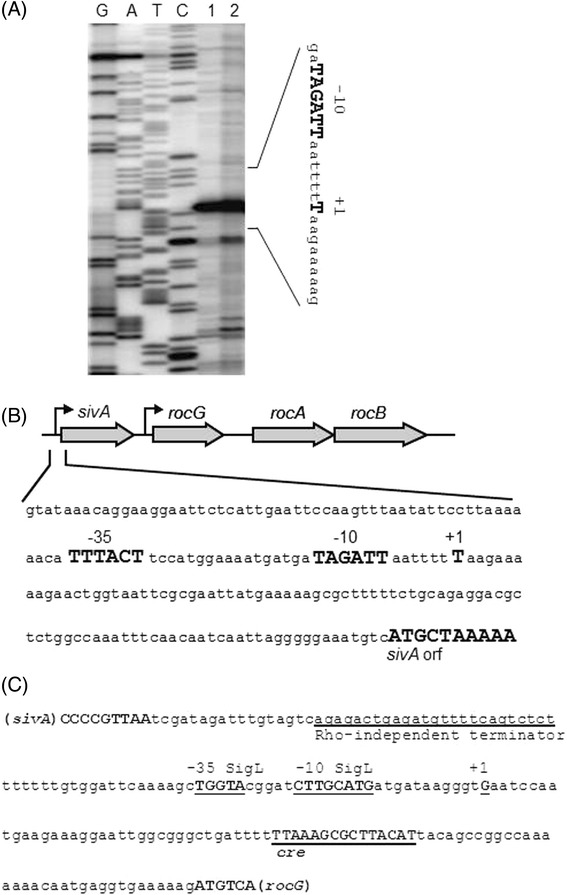
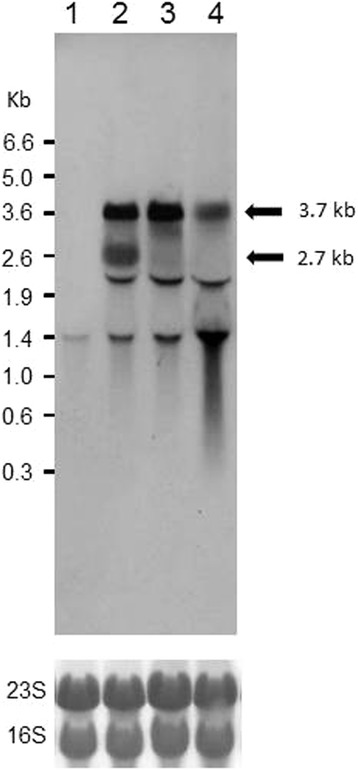
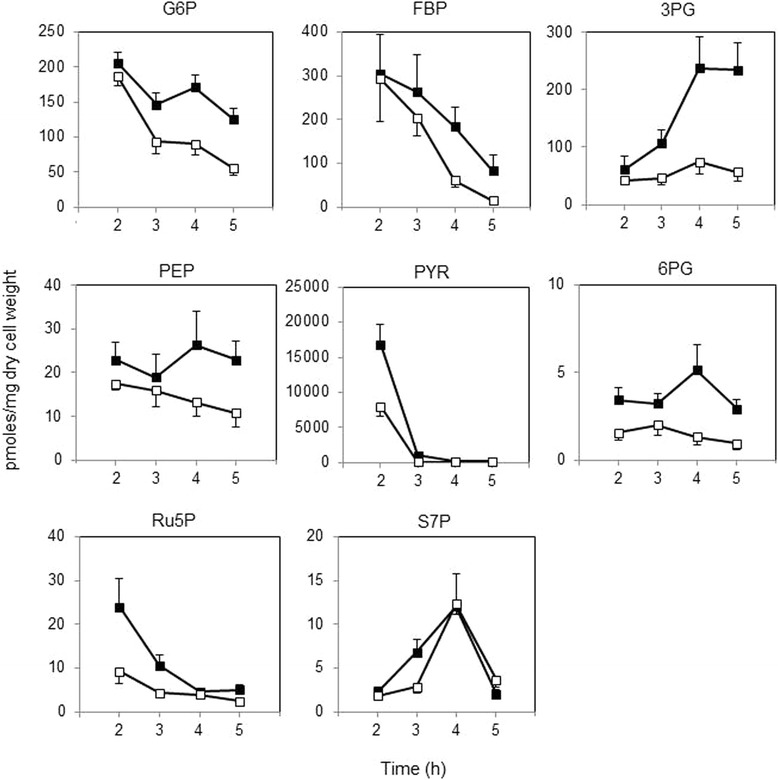
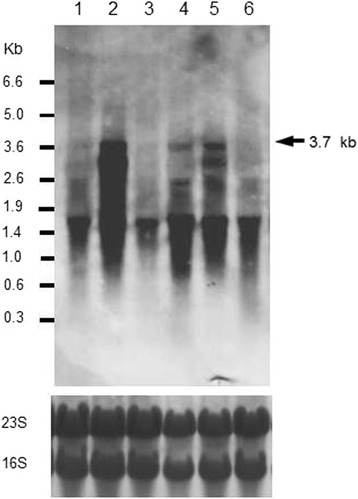
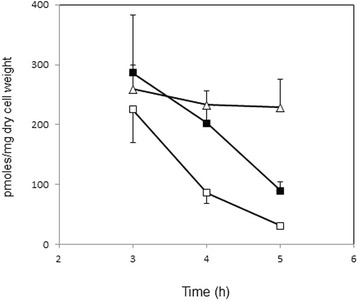
Growing 1A95 cells elevated the pH of soytone-based medium more than the parental strain 168 after the onset of the transition phase. The rocG gene encodes a catabolic glutamate dehydrogenase that catalyzes one of the main ammonia-releasing reactions. Inactivation of rocG abolished 1A95-mediated increases in the pH of growth media. Thus, transcription of the rocG locus was examined, and a novel 3.7-kb transcript covering sivA, rocG, and rocA was found in 1A95 but not 168 cells. Increased intracellular fructose 1,6-bisphosphate (FBP) levels are known to activate the HPr kinase HPrK, and to induce formation of the P-Ser-HPr/CcpA complex, which binds to catabolite responsive elements (cre) and exerts CcpA-dependent catabolite repression. A putative cre found within the intergenic region between sivA and rocG, and inactivation of ccpA led to creation of the 3.7-kb transcript in 168 cells. Analyses of intermediates in central carbon metabolism revealed that intracellular FBP levels were lowered earlier in 1A95 than in 168 cells. A genome wide transcriptome analysis comparing 1A95 and 168 cells suggested similar events occurring in other catabolite repressive loci involving induction of lctE encoding lactate dehydrogenase.
Under physiological conditions the 3.7-kb rocG transcript may be tightly controlled by a roadblock mechanism involving P-Ser-HPr/CcpA in 168 cells, while in 1A95 cells abolished repression of the 3.7-kb transcript. Accumulation of DegU-P in 1A95 affects central carbon metabolism involving lctE enhanced by unknown mechanisms, downregulates FBP levels earlier, and inactivates HPrK to allow the 3.7-kb transcription, and thus similar events may occur in other catabolite repressive loci.
双组分调节系统,涉及组氨酸传感器激酶DegS和反应调节因子DegU,在枯草芽孢杆菌的过渡阶段控制各种细胞过程中发挥重要作用。1A95菌株中的degU32等位基因的特征是DegU的磷酸化形式(DegU-P)积累。
在过渡阶段开始后,生长的1A95细胞比亲本菌株168更能提高基于大豆蛋白胨的培养基的pH值。rocG基因编码一种分解代谢型谷氨酸脱氢酶,催化主要的氨释放反应之一。rocG的失活消除了1A95介导的生长培养基pH值的升高。因此,对rocG基因座的转录进行了检测,在1A95细胞中发现了一种覆盖sivA、rocG和rocA的新的3.7kb转录本,而在168细胞中未发现。已知细胞内果糖1,6-二磷酸(FBP)水平升高会激活HPr激酶HPrK,并诱导形成P-Ser-HPr/CcpA复合物,该复合物与分解代谢物反应元件(cre)结合并发挥CcpA依赖性分解代谢物阻遏作用。在sivA和rocG之间的基因间区域发现了一个假定的cre,ccpA的失活导致168细胞中产生3.7kb的转录本。对中心碳代谢中间产物的分析表明,1A95细胞内的FBP水平比168细胞更早降低。一项比较1A95和168细胞的全基因组转录组分析表明,在其他涉及诱导编码乳酸脱氢酶的lctE的分解代谢物阻遏基因座中发生了类似事件。
在生理条件下,168细胞中3.7kb的rocG转录本可能受到涉及P-Ser-HPr/CcpA的阻碍机制的严格控制,而在1A95细胞中,3.7kb转录本的阻遏作用被消除。1A95中DegU-P的积累影响中心碳代谢,包括通过未知机制增强的lctE,更早地下调FBP水平,并使HPrK失活以允许3.7kb的转录,因此在其他分解代谢物阻遏基因座中可能发生类似事件。