Dua Tarun K, Dewanjee Saikat, Gangopadhyay Moumita, Khanra Ritu, Zia-Ul-Haq Muhammad, De Feo Vincenzo
Advanced Pharmacognosy Research Laboratory, Department of Pharmaceutical Technology, Jadavpur University, Kolkata, 700032, India.
Biophysics Division, Saha Institute of Nuclear Physics, Kolkata, 700064, India.
J Transl Med. 2015 Mar 5;13:81. doi: 10.1186/s12967-015-0430-3.
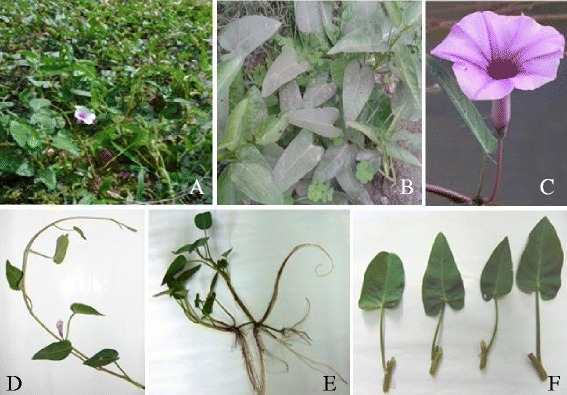
Ipomea aquatica (Convolvulaceae) is traditionally used against Arsenic (As) poisoning in folk medicines in India. The present study was designed to explore the therapeutic role of aqueous extract of I. aquatica (AEIA) against As-intoxication.
AEIA was chemically standardized by spectroscopic and chromatographic analysis. The cytoprotective role of AEIA was measured on isolated murine hepatocytes. The effect on redox status were measured after incubating the hepatocytes with NaAsO2 (10 μM) + AEIA (400 μg/ml). The protective effect of AEIA (400 μg/ml) in expressions of apoptotic proteins were estimated in vitro. The protective role of AEIA was measured by in vivo assay in mice. Haematological, biochemical, As bioaccumulation and histological parameters were evaluated to ensure the protective role of AEIA (100 mg/kg) against NaAsO2 (10 mg/kg) intoxication.
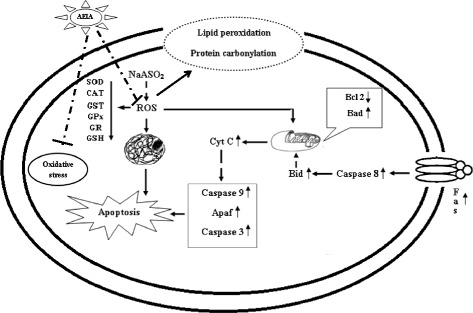
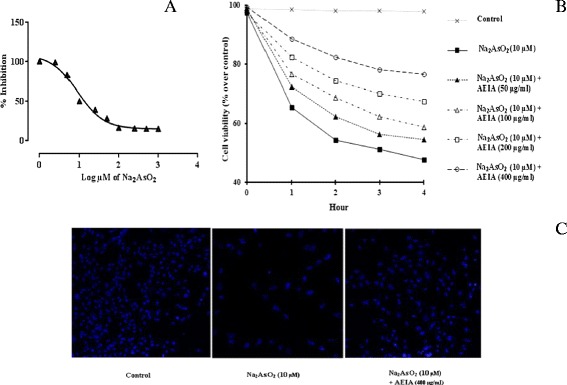
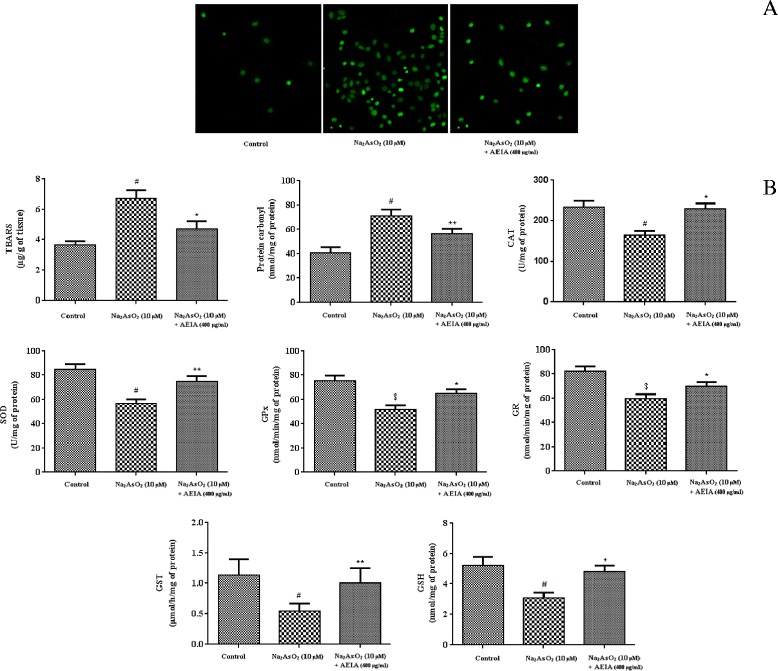
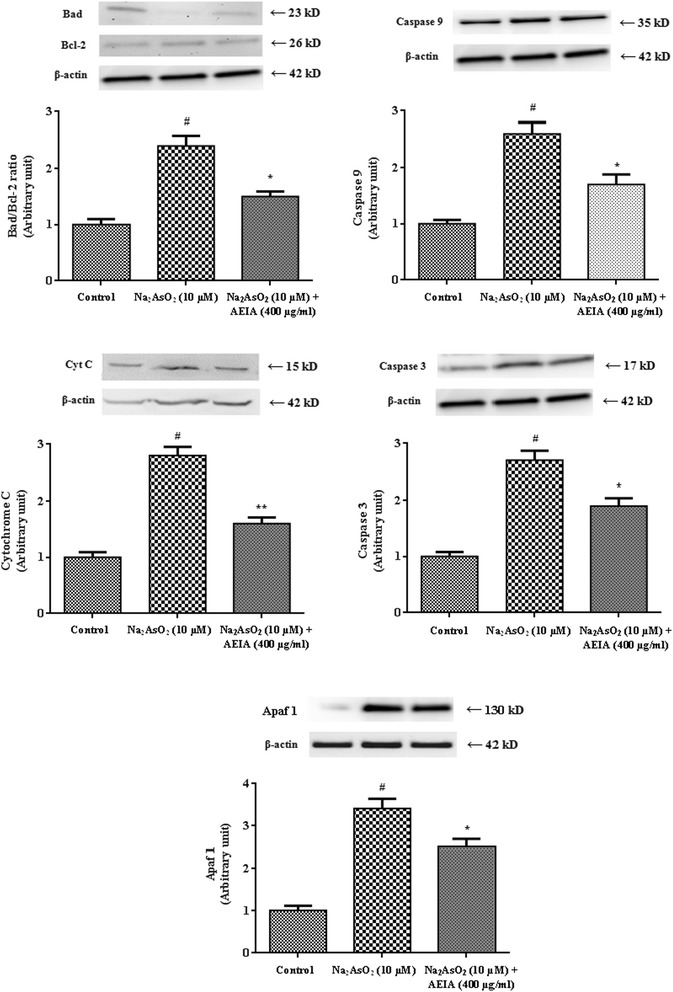
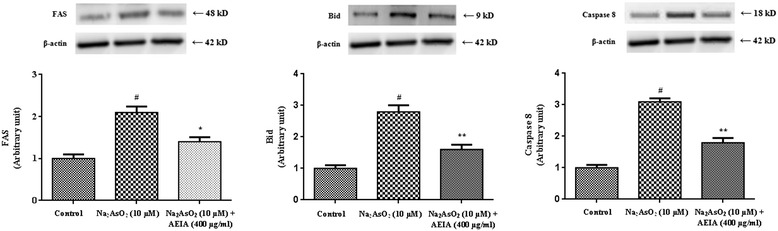
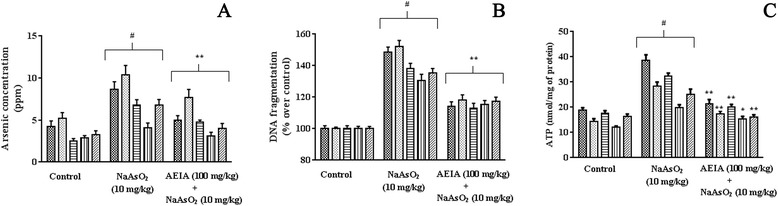
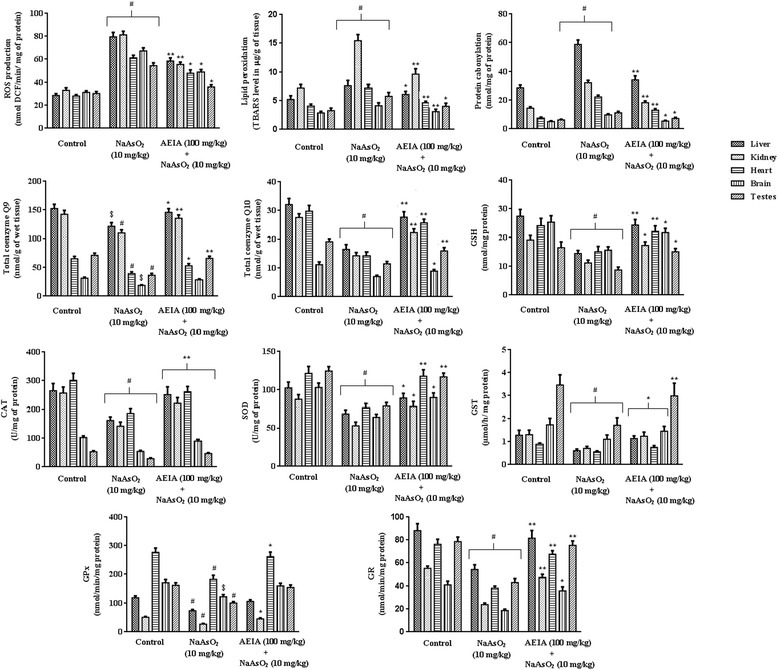
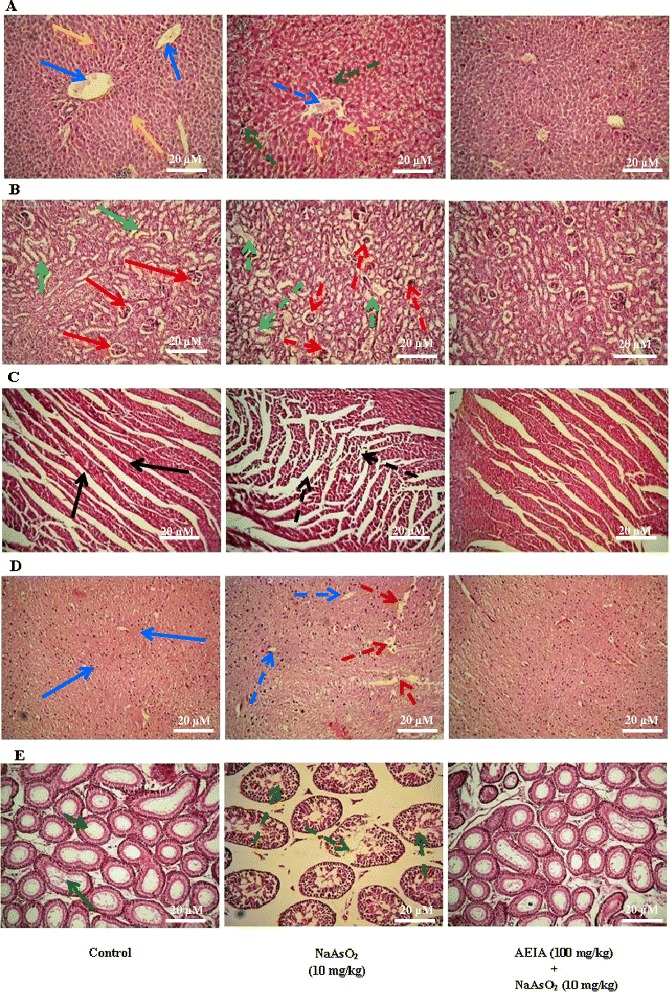
Phytochemical analysis revealed presence of substantial quantities of phenolics, flavonoids, saponins and ascorbic acid in AEIA. Incubation of murine hepatocytes with AEIA (0-400 μg/ml) + NaAsO2 (10 μM) exerted a concentration dependent cytoprotective effect. Incubation of murine hepatocytes with NaAsO2 (10 μM, ~ IC50) induced apoptosis via augmenting oxidative stress. NaAsO2 treated hepatocytes exhibited significantly (p < 0.01) enhanced levels of ROS production, lipid peroxidation and protein carbonylation with concomitant depletion of antioxidant enzymes (p < 0.05-0.01) and GSH (p < 0.01) levels. However, AEIA (400 μg/ml) + NaAsO2 (10 μM) could significantly (p < 0.05-0.01) reinstate the aforementioned parameters to near-normal status. Besides, AEIA (400 μg/ml) could significantly counteract (p <0.05-0.01) ROS mediated alteration in the expressions of apoptotic proteins viz. Bcl-2, BAD, Cyt C, Apaf 1, caspases, Fas and Bid. In in vivo bioassay, NaAsO2 (10 mg/kg) treatment in mice caused significantly (p < 0.05-0.01) elevated As bioaccumulation, ATP levels, DNA fragmentations and oxidative stress in the liver, kidney, heart, brain and testes along with alteration in cytoarchitecture of these organs. In addition, the serum biochemical and haematological parameters were significantly (p < 0.05-0.01) altered in the NaAsO2-treated animals. However, concurrent administration of AEIA (100 mg/ml) could significantly reinstate the NaAsO2-induced pathogenesis.
Presence of substantial quantities of dietary antioxidants within AEIA would be responsible for overall protective effect.
在印度民间医学中,蕹菜(旋花科)传统上用于对抗砷中毒。本研究旨在探讨蕹菜水提取物(AEIA)对砷中毒的治疗作用。
通过光谱和色谱分析对AEIA进行化学标准化。在分离的小鼠肝细胞上测定AEIA的细胞保护作用。在用NaAsO₂(10 μM)+ AEIA(400 μg/ml)孵育肝细胞后,测定对氧化还原状态的影响。在体外评估AEIA(400 μg/ml)对凋亡蛋白表达的保护作用。通过在小鼠体内进行试验来测定AEIA的保护作用。评估血液学、生化、砷生物累积和组织学参数,以确保AEIA(100 mg/kg)对NaAsO₂(10 mg/kg)中毒的保护作用。
植物化学分析表明,AEIA中存在大量的酚类、黄酮类、皂苷和抗坏血酸。用AEIA(0 - 400 μg/ml)+ NaAsO₂(10 μM)孵育小鼠肝细胞具有浓度依赖性的细胞保护作用。用NaAsO₂(10 μM,~IC50)孵育小鼠肝细胞通过增加氧化应激诱导细胞凋亡。经NaAsO₂处理的肝细胞表现出显著(p < 0.01)升高的活性氧生成水平、脂质过氧化和蛋白质羰基化,同时抗氧化酶(p < 0.05 - 0.01)和谷胱甘肽(p < 0.01)水平降低。然而,AEIA(400 μg/ml)+ NaAsO₂(10 μM)可显著(p < 0.05 - 0.01)使上述参数恢复到接近正常状态。此外,AEIA(400 μg/ml)可显著抵消(p < 0.05 - 0.01)活性氧介导的凋亡蛋白即Bcl - 2、BAD、细胞色素C、凋亡蛋白酶激活因子1、半胱天冬酶、Fas和Bid表达的改变。在体内生物测定中,给小鼠注射NaAsO₂(10 mg/kg)导致肝脏、肾脏、心脏、大脑和睾丸中的砷生物累积、ATP水平、DNA片段化和氧化应激显著(p < 0.05 - 0.01)升高,同时这些器官的细胞结构发生改变。此外,在经NaAsO₂处理的动物中,血清生化和血液学参数也发生了显著(p < 0.05 - 0.01)改变。然而,同时给予AEIA(100 mg/ml)可显著恢复NaAsO₂诱导的发病机制。
AEIA中大量膳食抗氧化剂的存在是其整体保护作用的原因。