Jaimes-Dueñez Jeiczon, Arboleda Sair, Triana-Chávez Omar, Gómez-Palacio Andrés
Grupo Biología y Control de Enfermedades Infecciosas-BCEI, Universidad de Antioquia UdeA, Medellín, Colombia.
PLoS Negl Trop Dis. 2015 Apr 20;9(4):e0003553. doi: 10.1371/journal.pntd.0003553. eCollection 2015 Apr.
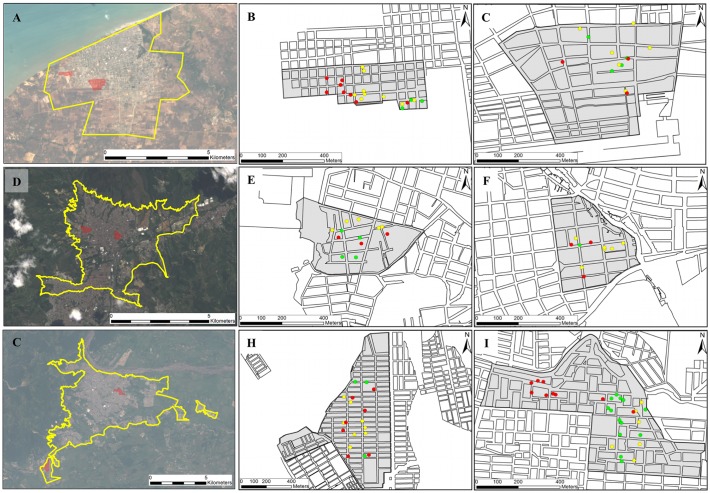
Aedes aegypti is the primary vector of the four serotypes of dengue virus (DENV1-4), Chikungunya and yellow fever virus to humans. Previous population genetic studies have revealed a particular genetic structure among the vector populations in the Americas that suggests differences in the ability to transmit DENV. In Colombia, despite its high epidemiologic importance, the genetic population structure and the phylogeographic depiction of Ae. aegypti, as well as its relationship with the epidemiologic landscapes in cities with heterogeneous incidence levels, remains unknown. We conducted a spatiotemporal analysis with the aim of determining the genetic structure and phylogeography of Colombian populations of Ae. aegypti among cities with different eco-epidemiologic characteristics with regard to DENV.
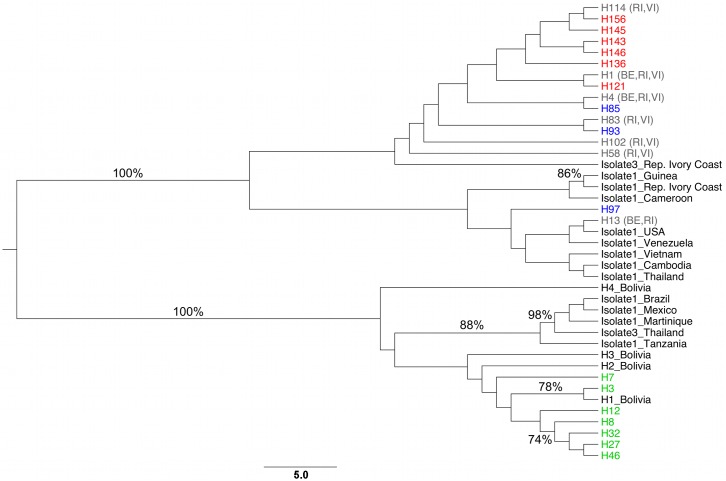
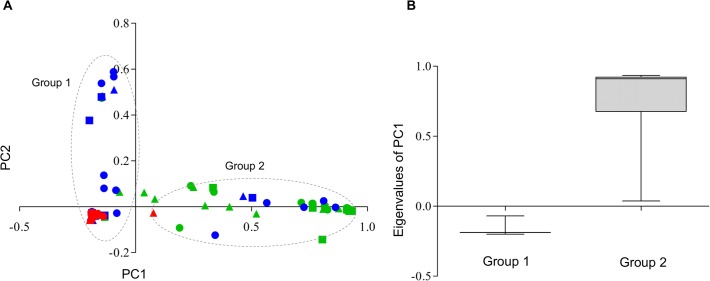
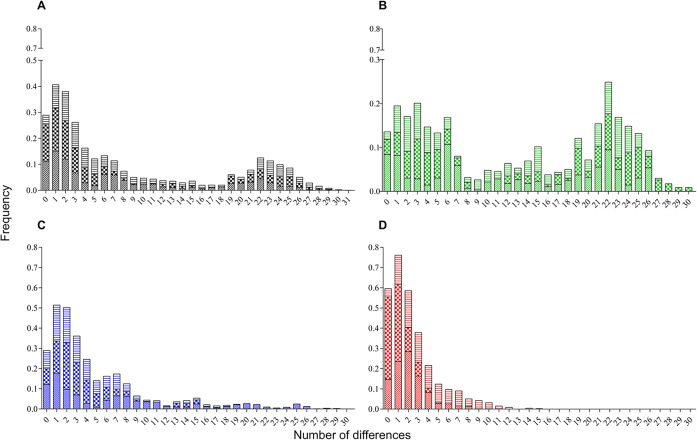
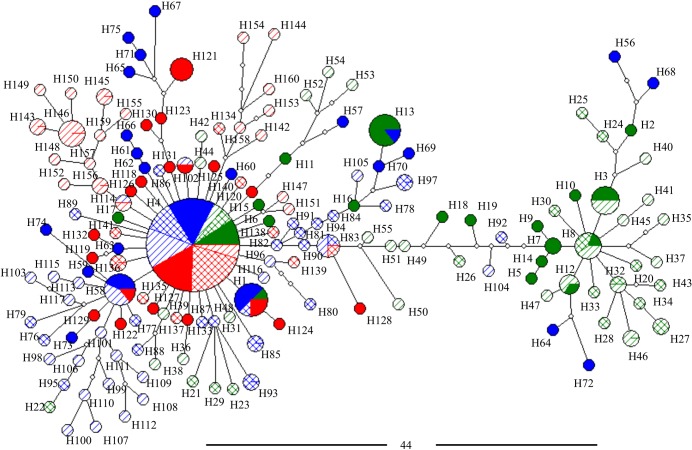
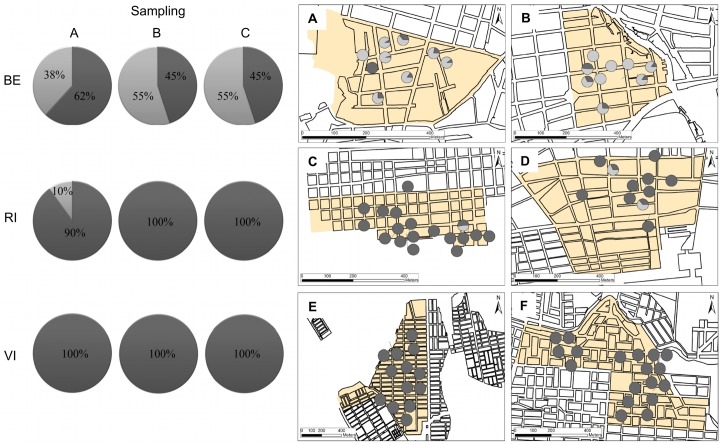
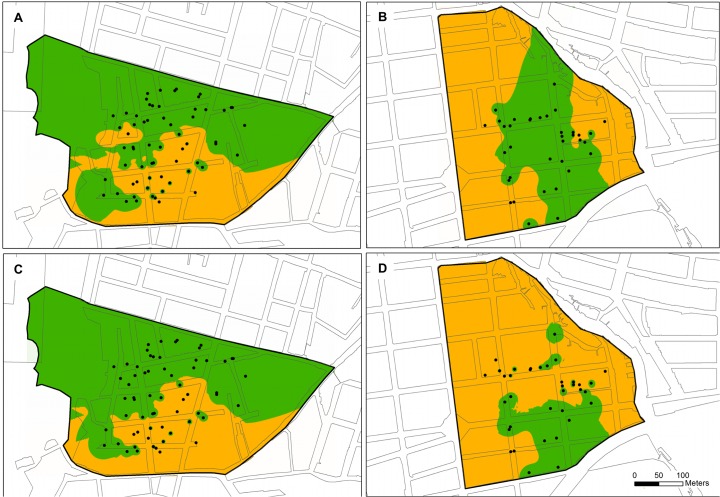
METHODS/FINDINGS: Mitochondrial cytochrome oxidase C subunit 1 (COI)--NADH dehydrogenase subunit 4 (ND4) genes were sequenced and analyzed from 341 adult mosquitoes collected during 2012 and 2013 in the Colombian cities of Bello, Riohacha and Villavicencio, which exhibit low, medium and high levels of incidence of DENV, respectively. The results demonstrated a low genetic differentiation over time and a high genetic structure between the cities due to changes in the frequency of two highly supported genetic groups. The phylogeographic analyses indicated that one group (associated with West African populations) was found in all the cities throughout the sampling while the second group (associated with East African populations) was found in all the samples from Bello and in only one sampling from Riohacha. Environmental factors such as the use of chemical insecticides showed a significant correlation with decreasing genetic diversity, indicating that environmental factors affect the population structure of Ae. aegypti across time and space in these cities.
Our results suggest that two Ae. aegypti lineages are present in Colombia; one that is widespread and related to a West African conspecific, and a second that may have been recently introduced and is related to an East African conspecific. The first lineage can be found in cities showing a high incidence of dengue fever and the use of chemical insecticides, whereas the second is present in cities showing a low incidence of dengue fever where the use of chemical insecticides is not constant. This study helps to improve our knowledge of the population structure of Ae. aegypti involved in the diversity of dengue fever epidemiology in Colombia.
埃及伊蚊是登革病毒四种血清型(DENV1 - 4)、基孔肯雅病毒和黄热病病毒传播给人类的主要媒介。以往的群体遗传学研究揭示了美洲媒介种群中一种特殊的遗传结构,这表明其传播登革病毒的能力存在差异。在哥伦比亚,尽管埃及伊蚊具有很高的流行病学重要性,但其遗传种群结构、系统地理学描述以及它与发病率水平各异的城市中流行病学格局的关系仍不清楚。我们进行了一项时空分析,旨在确定哥伦比亚不同生态流行病学特征城市中埃及伊蚊种群的遗传结构和系统地理学。
方法/结果:对2012年和2013年在哥伦比亚的贝洛、里奥哈查和比亚维森西奥市采集的341只成年蚊子的线粒体细胞色素氧化酶C亚基1(COI)——烟酰胺腺嘌呤二核苷酸脱氢酶亚基4(ND4)基因进行了测序和分析,这三个城市的登革热发病率分别为低、中、高。结果表明,随着时间推移遗传分化较低,但由于两个高度支持的遗传群体频率的变化,城市之间存在高度的遗传结构。系统地理学分析表明,在整个采样过程中,所有城市都发现了一个群体(与西非种群相关),而在贝洛的所有样本以及里奥哈查的仅一个样本中发现了第二个群体(与东非种群相关)。诸如化学杀虫剂使用等环境因素与遗传多样性降低显著相关,表明环境因素在这些城市中随时间和空间影响埃及伊蚊的种群结构。
我们的结果表明,哥伦比亚存在两个埃及伊蚊谱系;一个广泛分布且与西非同种相关,另一个可能是最近引入的且与东非同种相关。第一个谱系可在登革热发病率高且使用化学杀虫剂的城市中发现,而第二个谱系存在于登革热发病率低且化学杀虫剂使用不稳定的城市中。这项研究有助于增进我们对参与哥伦比亚登革热流行病学多样性的埃及伊蚊种群结构的了解。