Oda Teiji, Matsumoto Ken-ichi
Division of Thoracic and Cardiovascular Surgery, Department of Surgery, Shimane University Faculty of Medicine, 89-1 Enya-cho, Izumo, Shimane, 693-8501, Japan.
Department of Biosignaling and Radioisotope Experiment, Interdisciplinary Center for Science Research, Organization for Research, Shimane University, Izumo, Shimane, Japan.
Surg Today. 2016 Mar;46(3):285-96. doi: 10.1007/s00595-015-1169-4. Epub 2015 Apr 19.
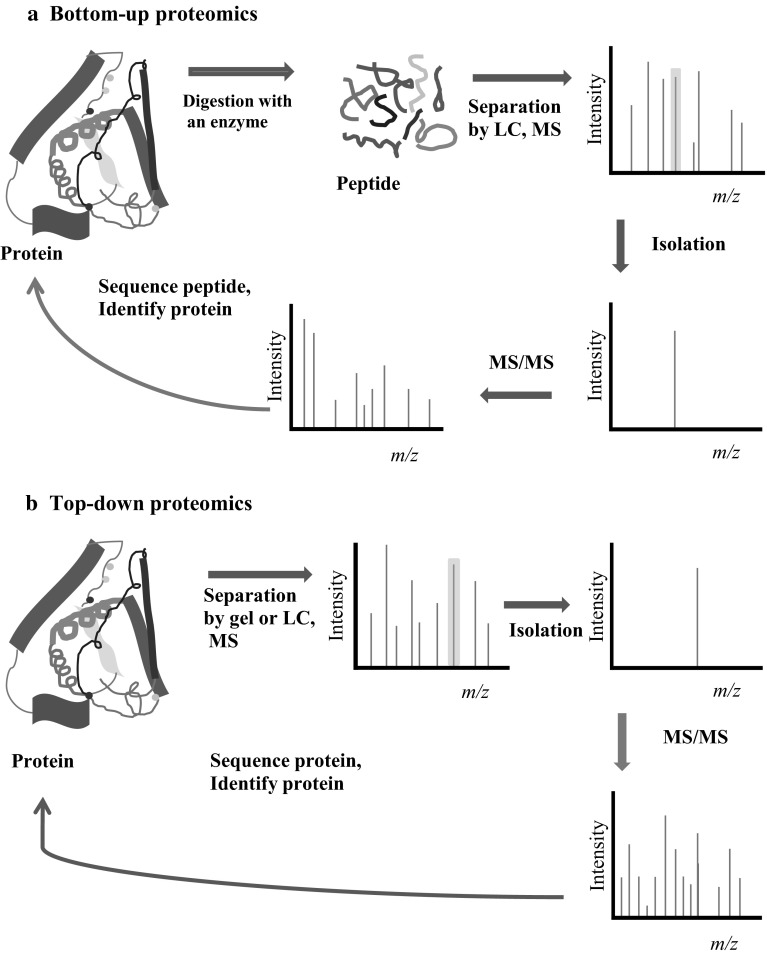
Advances in mass spectrometry technology and bioinformatics using clinical human samples have expanded quantitative proteomics in cardiovascular research. There are two major proteomic strategies: namely, "gel-based" or "gel-free" proteomics coupled with either "top-down" or "bottom-up" mass spectrometry. Both are introduced into the proteomic analysis using plasma or serum sample targeting 'biomarker" searches of aortic aneurysm and tissue samples, such as from the aneurysmal wall, calcific aortic valve, or myocardial tissue, investigating pathophysiological protein interactions and post-translational modifications. We summarize the proteomic studies that analyzed human samples taken during cardiovascular surgery to investigate disease processes, in order to better understand the system-wide changes behind known molecular factors and specific signaling pathways.
利用临床人体样本的质谱技术和生物信息学的进展,扩大了心血管研究中的定量蛋白质组学。有两种主要的蛋白质组学策略:即“基于凝胶”或“无凝胶”蛋白质组学,与“自上而下”或“自下而上”质谱联用。这两种方法都被引入到蛋白质组学分析中,使用血浆或血清样本,针对主动脉瘤和组织样本(如动脉瘤壁、钙化主动脉瓣或心肌组织)进行“生物标志物”搜索,研究病理生理蛋白质相互作用和翻译后修饰。我们总结了分析心血管手术期间采集的人体样本以研究疾病过程的蛋白质组学研究,以便更好地理解已知分子因素和特定信号通路背后的全系统变化。