Tay Hock L, Kaiko Gerard E, Plank Maximilian, Li JingJing, Maltby Steven, Essilfie Ama-Tawiah, Jarnicki Andrew, Yang Ming, Mattes Joerg, Hansbro Philip M, Foster Paul S
Priority Research Centre for Asthma and Respiratory Disease, Department of Microbiology and Immunology, School of Pharmacy and Biomedical Sciences, Faculty of Health and Hunter Medical Research Institute, University of Newcastle, Newcastle, Australia.
Priority Research Centre for Asthma and Respiratory Disease, Discipline of Paediatrics and Child Health, School of Medicine and Public Health, Faculty of Health and Hunter Medical Research Institute, University of Newcastle, Newcastle, Australia.
PLoS Pathog. 2015 Apr 20;11(4):e1004549. doi: 10.1371/journal.ppat.1004549. eCollection 2015 Apr.
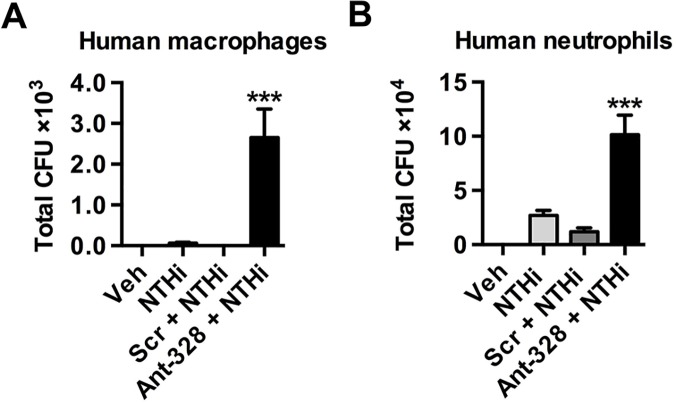
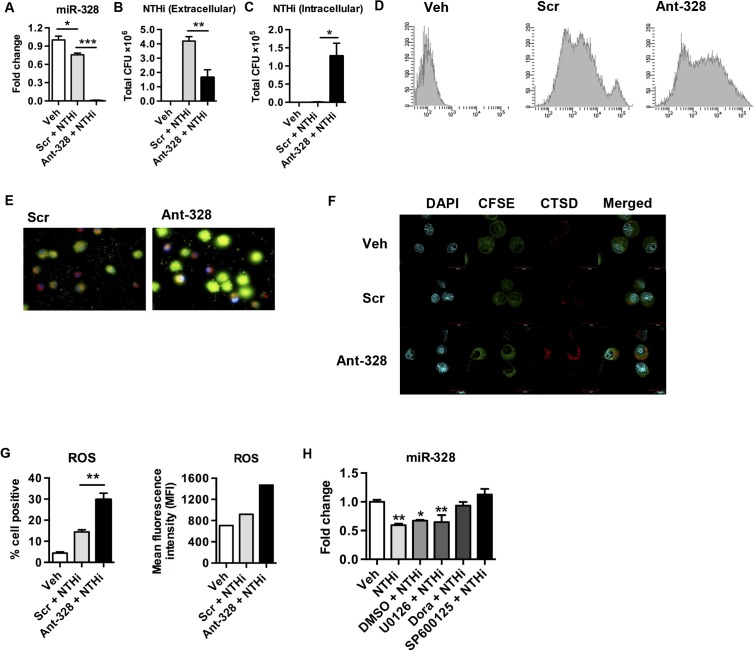
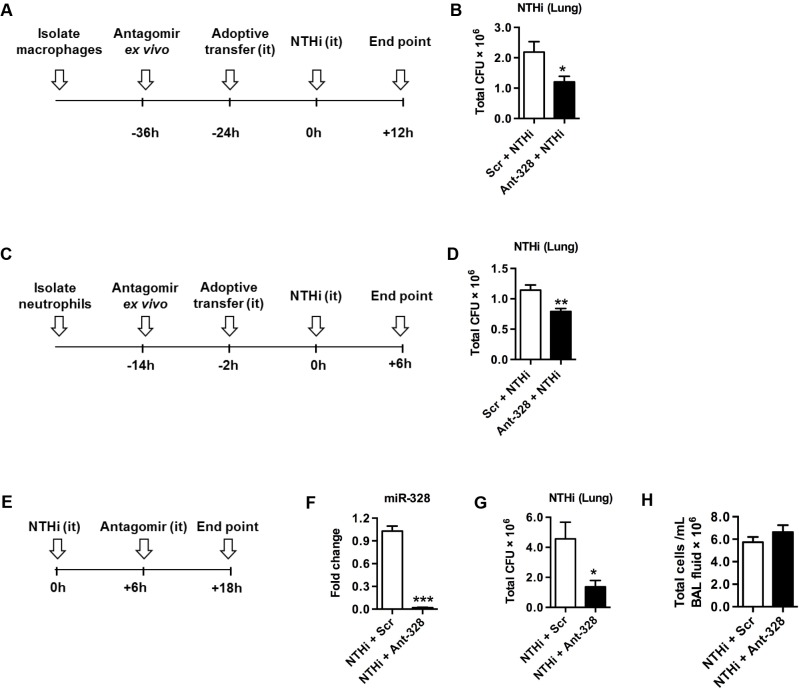
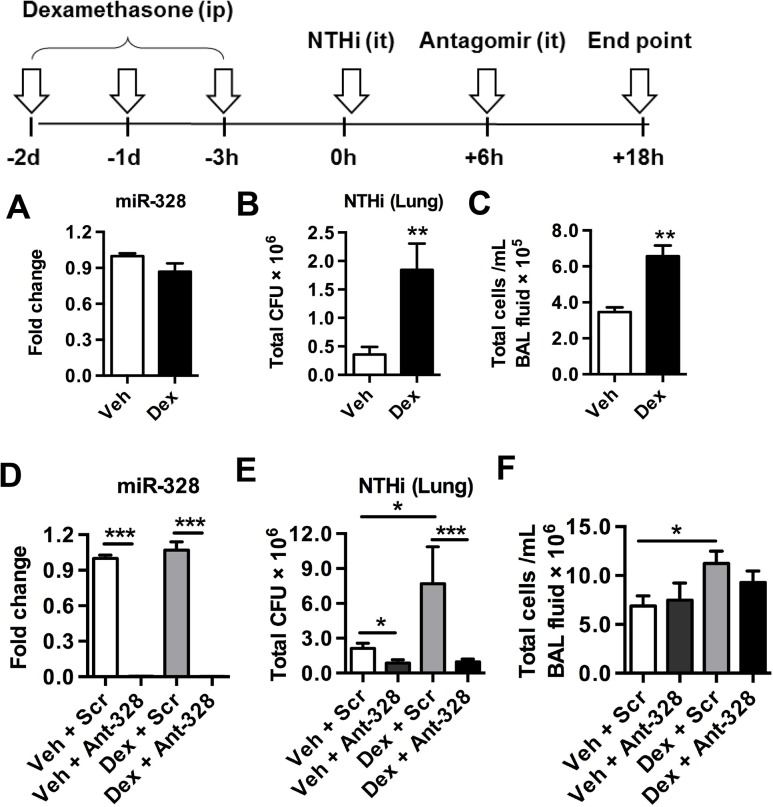
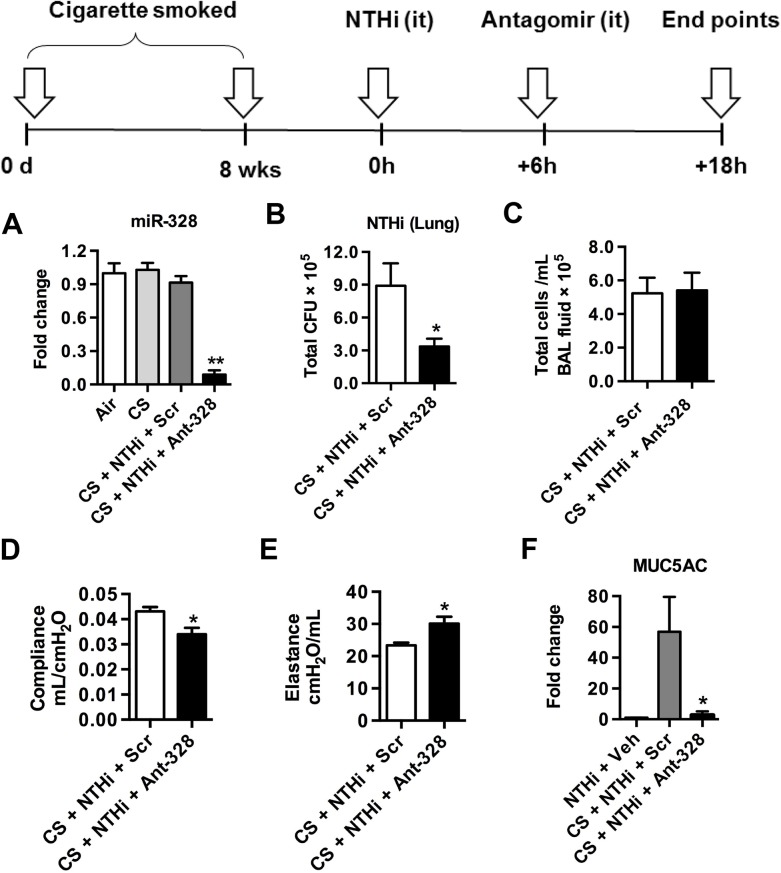
Pathogenic bacterial infections of the lung are life threatening and underpin chronic lung diseases. Current treatments are often ineffective potentially due to increasing antibiotic resistance and impairment of innate immunity by disease processes and steroid therapy. Manipulation miRNA directly regulating anti-microbial machinery of the innate immune system may boost host defence responses. Here we demonstrate that miR-328 is a key element of the host response to pulmonary infection with non-typeable haemophilus influenzae and pharmacological inhibition in mouse and human macrophages augments phagocytosis, the production of reactive oxygen species, and microbicidal activity. Moreover, inhibition of miR-328 in respiratory models of infection, steroid-induced immunosuppression, and smoke-induced emphysema enhances bacterial clearance. Thus, miRNA pathways can be targeted in the lung to enhance host defence against a clinically relevant microbial infection and offer a potential new anti-microbial approach for the treatment of respiratory diseases.
肺部致病性细菌感染会危及生命,并构成慢性肺部疾病的基础。由于抗生素耐药性增加以及疾病进程和类固醇疗法对先天免疫的损害,目前的治疗方法往往无效。直接调控先天免疫系统抗菌机制的微小RNA(miRNA)的操控可能会增强宿主防御反应。在此,我们证明miR-328是宿主对不可分型流感嗜血杆菌肺部感染反应的关键要素,在小鼠和人类巨噬细胞中进行药理抑制可增强吞噬作用、活性氧的产生以及杀菌活性。此外,在感染、类固醇诱导的免疫抑制和烟雾诱导的肺气肿的呼吸道模型中抑制miR-328可增强细菌清除。因此,miRNA途径可在肺部作为靶点,以增强宿主对临床相关微生物感染的防御,并为呼吸系统疾病的治疗提供一种潜在的新抗菌方法。