Wagner Martin, Ashby Damien R, Kurtz Caroline, Alam Ahsan, Busbridge Mark, Raff Ulrike, Zimmermann Josef, Heuschmann Peter U, Wanner Christoph, Schramm Lothar
Division of Nephrology, Department of Medicine I, University Hospital Würzburg, Würzburg, Germany; Institute of Clinical Epidemiology and Biometry, University of Würzburg, Würzburg, Germany; Comprehensive Heart Failure Center, University of Würzburg, Würzburg, Germany.
Kidney and Transplant Institute, Imperial College, London, United Kingdom.
PLoS One. 2015 Apr 20;10(4):e0123072. doi: 10.1371/journal.pone.0123072. eCollection 2015.
Anemia is common and is associated with impaired clinical outcomes in diabetic chronic kidney disease (CKD). It may be explained by reduced erythropoietin (EPO) synthesis, but recent data suggest that EPO-resistance and diminished iron availability due to inflammation contribute significantly. In this cohort study, we evaluated the impact of hepcidin-25--the key hormone of iron-metabolism--on clinical outcomes in diabetic patients with CKD along with endogenous EPO levels.
249 diabetic patients with CKD of any stage, excluding end-stage renal disease (ESRD), were enrolled (2003-2005), if they were not on EPO-stimulating agent and iron therapy. Hepcidin-25 levels were measured by radioimmunoassay. The association of hepcidin-25 at baseline with clinical variables was investigated using linear regression models. All-cause mortality and a composite endpoint of CKD progression (ESRD or doubling of serum creatinine) were analyzed by Cox proportional hazards models.
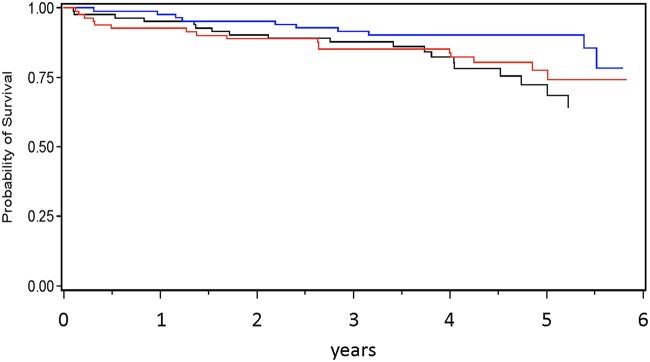
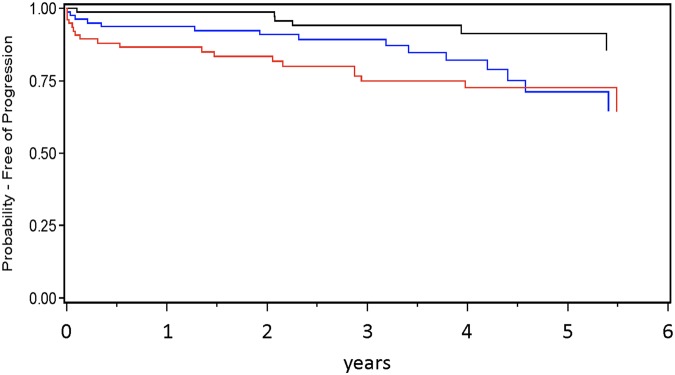
Patients (age 67 yrs, 53% male, GFR 51 ml/min, hemoglobin 131 g/L, EPO 13.5 U/L, hepcidin-25 62.0 ng/ml) were followed for a median time of 4.2 yrs. Forty-nine patients died (19.7%) and forty (16.1%) patients reached the composite endpoint. Elevated hepcidin levels were independently associated with higher ferritin-levels, lower EPO-levels and impaired kidney function (all p<0.05). Hepcidin was related to mortality, along with its interaction with EPO, older age, greater proteinuria and elevated CRP (all p<0.05). Hepcidin was also predictive for progression of CKD, aside from baseline GFR, proteinuria, low albumin- and hemoglobin-levels and a history of CVD (all p<0.05).
We found hepcidin-25 to be associated with EPO and impaired kidney function in diabetic CKD. Elevated hepcidin-25 and EPO-levels were independent predictors of mortality, while hepcidin-25 was also predictive for progression of CKD. Both hepcidin-25 and EPO may represent important prognostic factors of clinical outcome and have the potential to further define "high risk" populations in CKD.
贫血在糖尿病慢性肾脏病(CKD)中很常见,且与临床预后受损相关。这可能是由于促红细胞生成素(EPO)合成减少所致,但近期数据表明,EPO抵抗以及炎症导致的铁利用减少也起到了重要作用。在这项队列研究中,我们评估了铁代谢的关键激素——铁调素-25对糖尿病CKD患者临床预后的影响以及内源性EPO水平。
纳入249例非终末期肾病(ESRD)的各期糖尿病CKD患者(2003 - 2005年),前提是他们未接受EPO刺激剂和铁剂治疗。采用放射免疫分析法测定铁调素-25水平。使用线性回归模型研究基线时铁调素-25与临床变量之间的关联。通过Cox比例风险模型分析全因死亡率和CKD进展的复合终点(ESRD或血清肌酐翻倍)。
患者(年龄67岁,53%为男性,肾小球滤过率51 ml/min,血红蛋白131 g/L,EPO 13.5 U/L,铁调素-25 62.0 ng/ml)的中位随访时间为4.2年。49例患者死亡(19.7%),40例(16.1%)患者达到复合终点。铁调素水平升高与较高的铁蛋白水平、较低的EPO水平以及肾功能受损独立相关(均p<0.05)。铁调素与死亡率相关,同时还与EPO、年龄较大、蛋白尿较多以及CRP升高存在相互作用(均p<0.05)。除了基线肾小球滤过率、蛋白尿、低白蛋白和血红蛋白水平以及心血管疾病史外,铁调素还可预测CKD进展(均p<0.05)。
我们发现铁调素-25与糖尿病CKD中的EPO及肾功能受损相关。铁调素-25和EPO水平升高是死亡率的独立预测因素,而铁调素-25也可预测CKD进展。铁调素-25和EPO都可能是临床预后的重要预测因素,并且有可能进一步界定CKD中的“高危”人群。