Al-Hazzaa Hazzaa M, Abahussain Nada A, Al-Sobayel Hana I, Qahwaji Dina M, Alsulaiman Nouf A, Musaiger Abdulrahman O
J Health Popul Nutr. 2014 Dec;32(4):634-45.
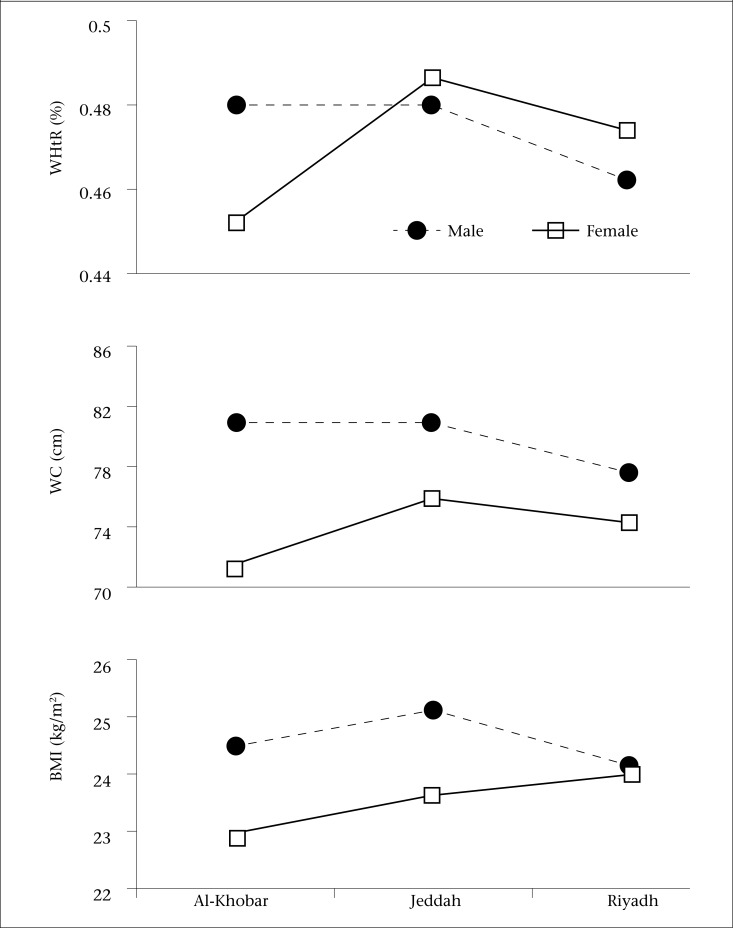
The nutrition transition with associated lifestyle-related non-communicable diseases has rapidly reached many developing countries, including Saudi Arabia. Therefore, the objective of this study was to examine the prevalence of overweight, obesity, and abdominal obesity among Saudi adolescents. This school-based multicentre cross-sectional study was conducted during 2009-2010 in three major cities in Saudi Arabia: Al-Khobar, Jeddah, and Riyadh. Participants included 2,908 students of secondary schools (1,401 males and 1,507 females) aged 14 to 19 years, randomly selected using a multistage stratified cluster-sampling technique. Weight, height, and waist-circumference were measured; prevalence of overweight and obes- ity was determined using age- and sex-specific BMI cutoff reference standards of the International Obesity Task Force (IOTF). Abdominal obesity was determined using waist-to-height ratio (WHtR) cutoffs (above 0.5). The prevalence of overweight was 19.5% in males and 20.8% in females while that of obesity was 24.1% in males and 14% in females. The prevalence of abdominal obesity in males and females was 35.9% and 30.3% respectively. Higher prevalence of obesity was observed among adolescents in private schools. Across all ages, overweight and obesity ranged from 39.9% to 45.6% in males and from 30.4% to 38.7% in females. ANCOVA, controlling for age, showed significant interaction effects (city by gender). It is concluded that the proportions of overweight, obesity, and abdominal obesity, observed among Saudi adolescents were remarkably high. Such high prevalence of overweight and obesity is a major public-health concern.
包括沙特阿拉伯在内,与生活方式相关的非传染性疾病所伴随的营养转变已迅速蔓延至许多发展中国家。因此,本研究的目的是调查沙特青少年中超重、肥胖和腹型肥胖的患病率。这项基于学校的多中心横断面研究于2009年至2010年在沙特阿拉伯的三个主要城市进行:胡拜尔、吉达和利雅得。参与者包括2908名年龄在14至19岁之间的中学学生(1401名男性和1507名女性),采用多阶段分层整群抽样技术随机选取。测量了体重、身高和腰围;超重和肥胖的患病率根据国际肥胖特别工作组(IOTF)针对年龄和性别的BMI临界参考标准来确定。腹型肥胖通过腰高比(WHtR)临界值(高于0.5)来确定。男性超重患病率为19.5%,女性为20.8%;而男性肥胖患病率为24.1%,女性为14%。男性和女性腹型肥胖的患病率分别为35.9%和30.3%。私立学校青少年的肥胖患病率更高。在所有年龄段中,男性超重和肥胖率在39.9%至45.6%之间,女性在30.4%至38.7%之间。控制年龄的协方差分析显示出显著的交互作用(城市与性别的交互作用)。得出的结论是,沙特青少年中超重、肥胖和腹型肥胖的比例非常高。如此高的超重和肥胖患病率是一个主要的公共卫生问题