Mihara Satoru, Shibamoto Takayuki
2-10-12 Nishinippori, Arakawa-ku, Tokyo, 116-0013 Japan.
Department of Environmental Toxicology, University of California Davis, Davis, CA 95616 USA.
Allergy Asthma Clin Immunol. 2015 Mar 16;11(1):11. doi: 10.1186/s13223-015-0074-0. eCollection 2015.
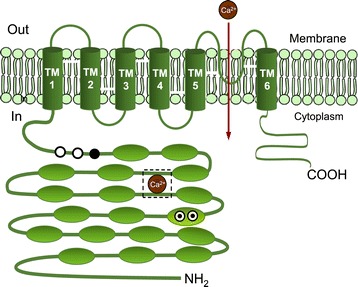
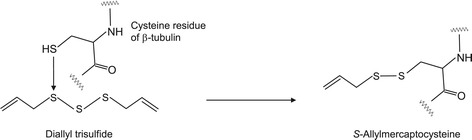
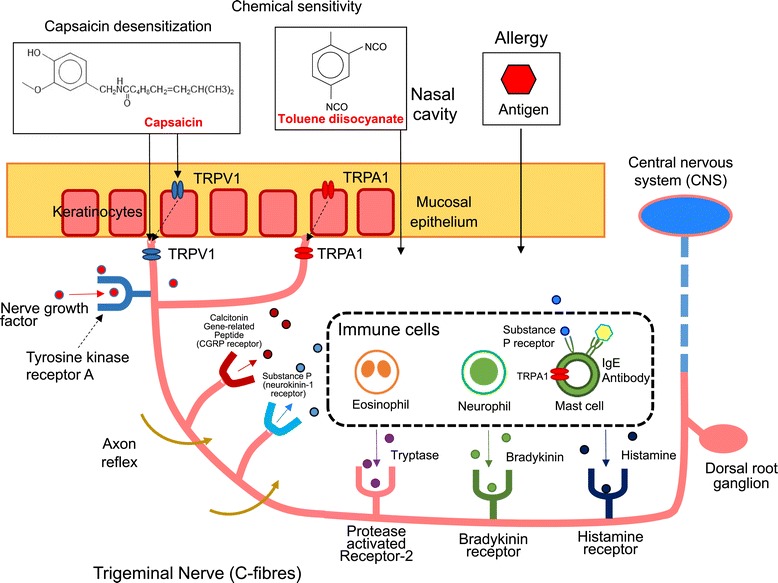
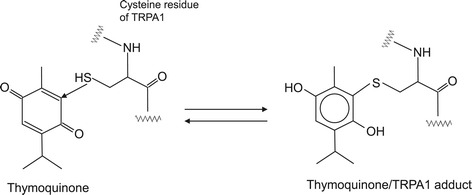
TRPA1 has been proposed to be associated with diverse sensory allergic reactions, including thermal (cold) nociception, hearing and allergic inflammatory conditions. Some naturally occurring compounds are known to activate TRPA1 by forming a Michael addition product with a cysteine residue of TRPA1 through covalent protein modification and, in consequence, to cause allergic reactions. The anti-allergic property of TRPA1 agonists may be due to the activation and subsequent desensitization of TRPA1 expressed in sensory neurons. In this review, naturally occurring TRPA1 antagonists, such as camphor, 1,8-cineole, menthol, borneol, fenchyl alcohol and 2-methylisoborneol, and TRPA1 agonists, including thymol, carvacrol, 1'S-1'- acetoxychavicol acetate, cinnamaldehyde, α-n-hexyl cinnamic aldehyde and thymoquinone as well as isothiocyanates and sulfides are discussed.
TRPA1已被认为与多种感觉过敏反应有关,包括热(冷)伤害感受、听觉和过敏性炎症状态。已知一些天然存在的化合物通过与TRPA1的半胱氨酸残基形成迈克尔加成产物,经共价蛋白质修饰来激活TRPA1,并因此引发过敏反应。TRPA1激动剂的抗过敏特性可能归因于感觉神经元中表达的TRPA1的激活及随后的脱敏作用。在本综述中,将讨论天然存在的TRPA1拮抗剂,如樟脑、1,8-桉叶素、薄荷醇、冰片、小茴香醇和2-甲基异冰片,以及TRPA1激动剂,包括百里香酚、香芹酚、1'S-1'-乙酰氧基查维酮乙酸酯、肉桂醛、α-正己基肉桂醛和百里醌,以及异硫氰酸盐和硫化物。