Tatebayashi Kazuo, Yamamoto Katsuyoshi, Nagoya Miho, Takayama Tomomi, Nishimura Akiko, Sakurai Megumi, Momma Takashi, Saito Haruo
Division of Molecular Cell Signaling, Institute of Medical Science, The University of Tokyo, 4-6-1 Shirokanedai, Minato-ku, Tokyo 108-8639, Japan.
Department of Biological Sciences, Graduate School of Science, The University of Tokyo, Tokyo 113-0033, Japan.
Nat Commun. 2015 Apr 21;6:6975. doi: 10.1038/ncomms7975.
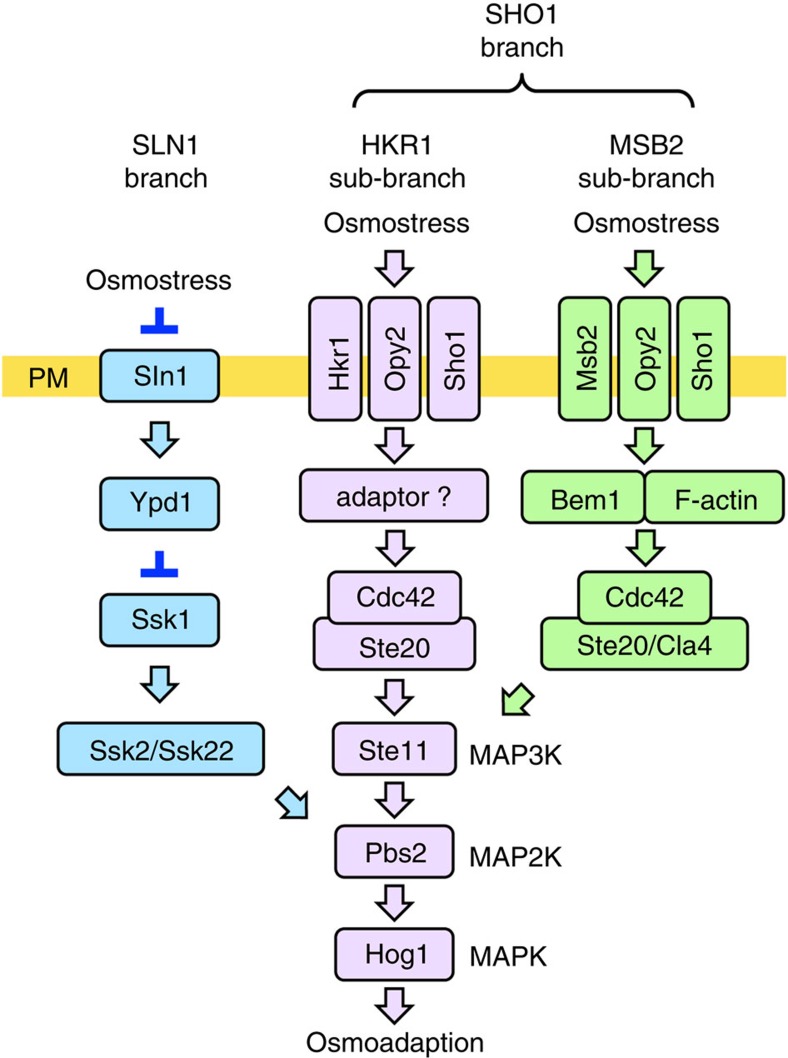
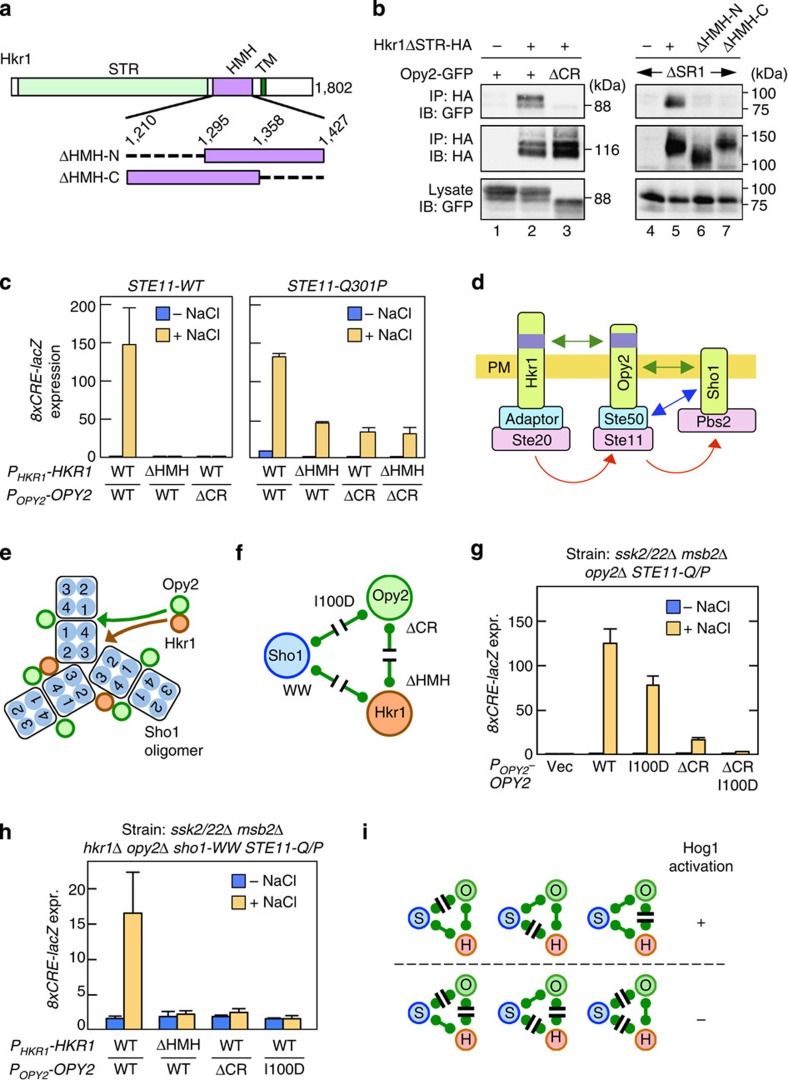
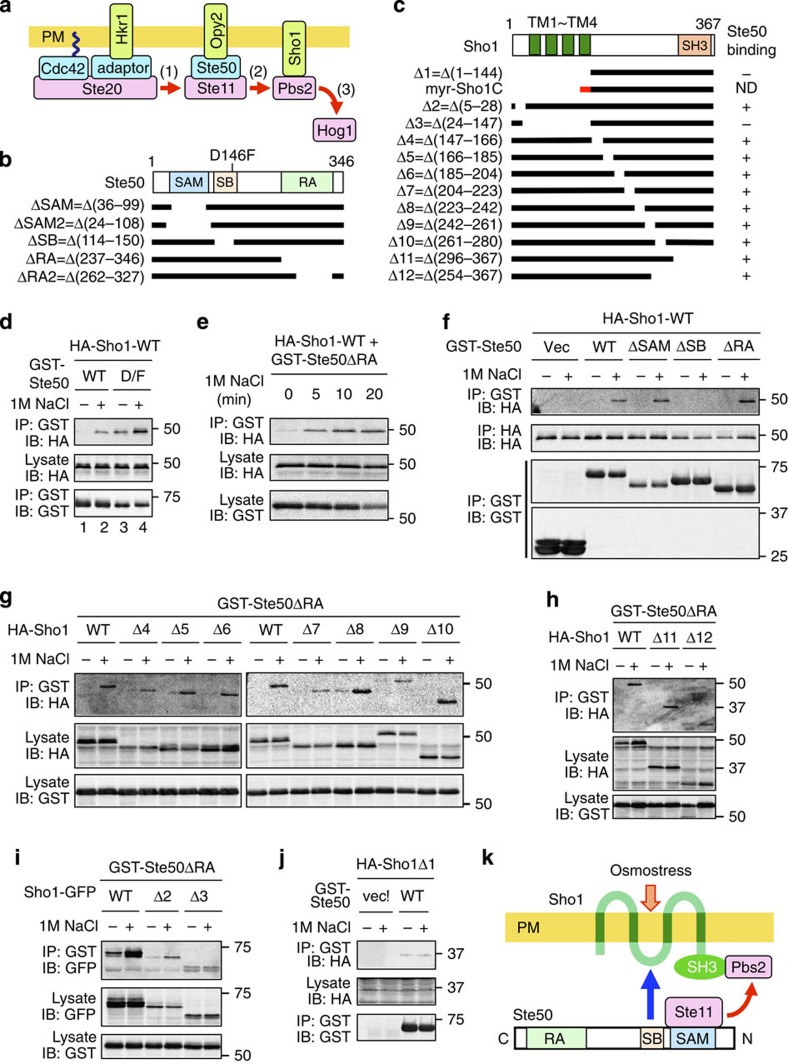
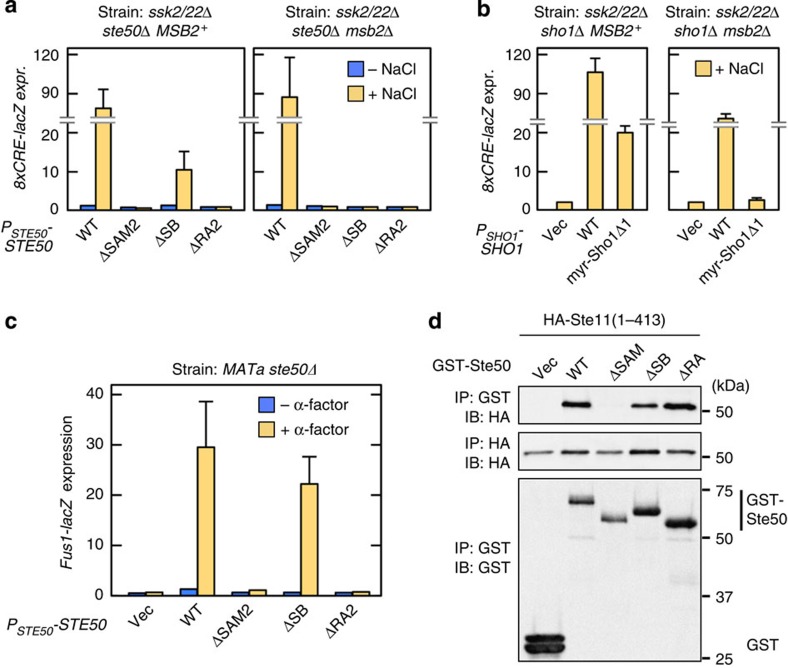
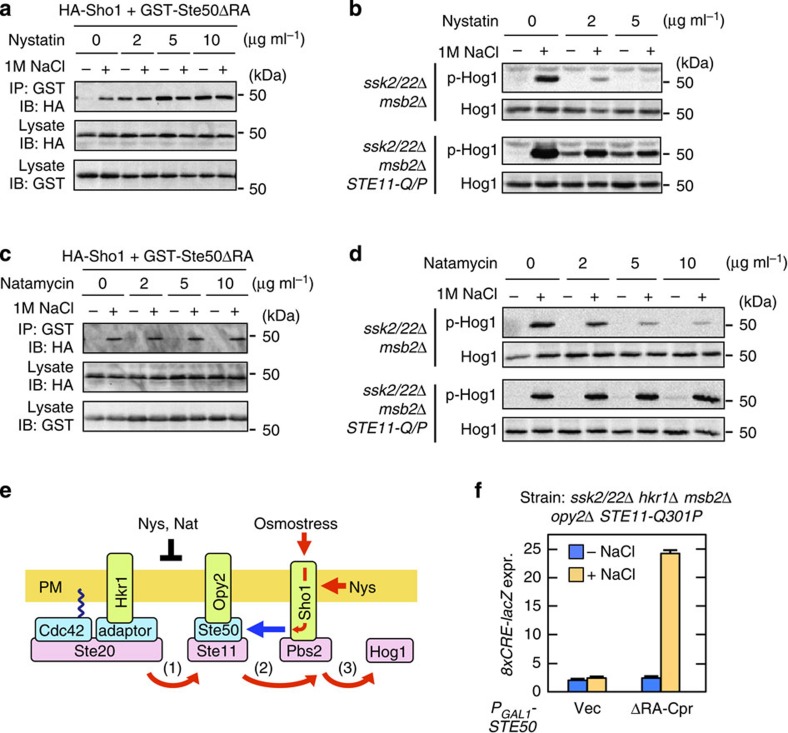
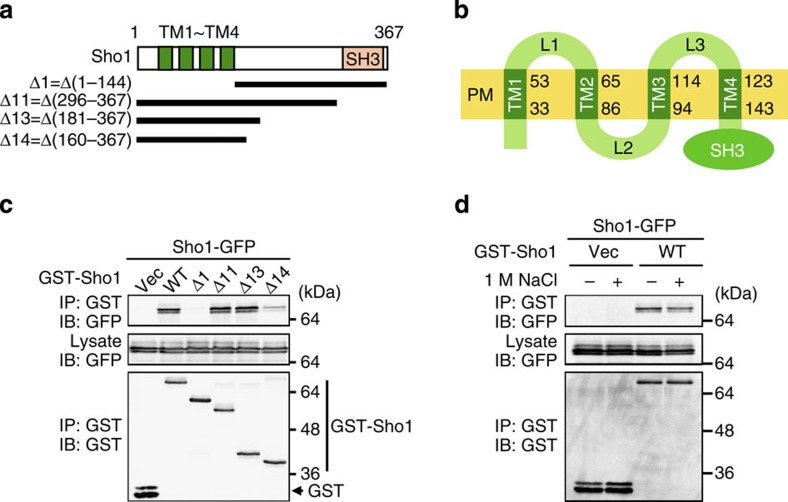
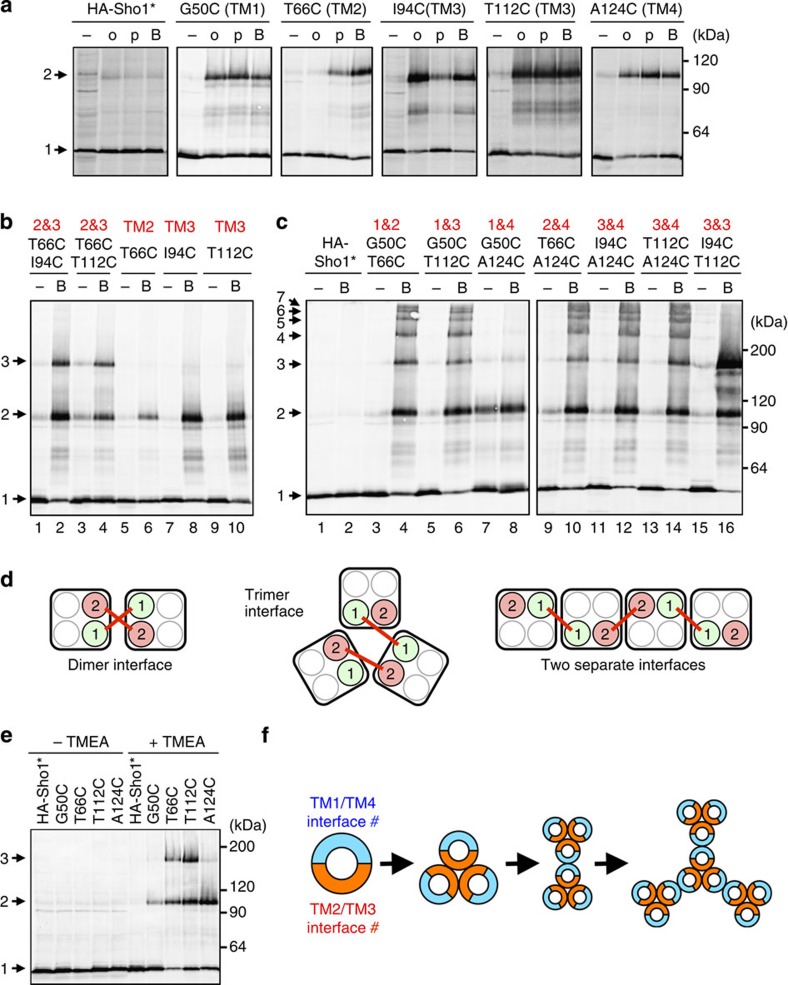
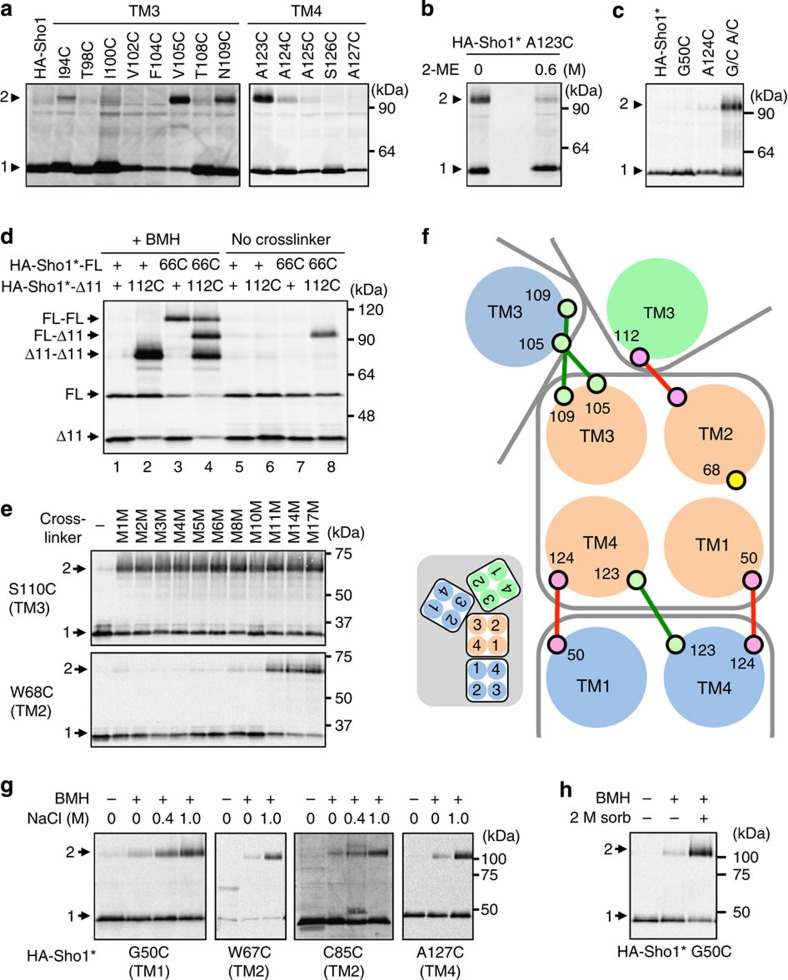
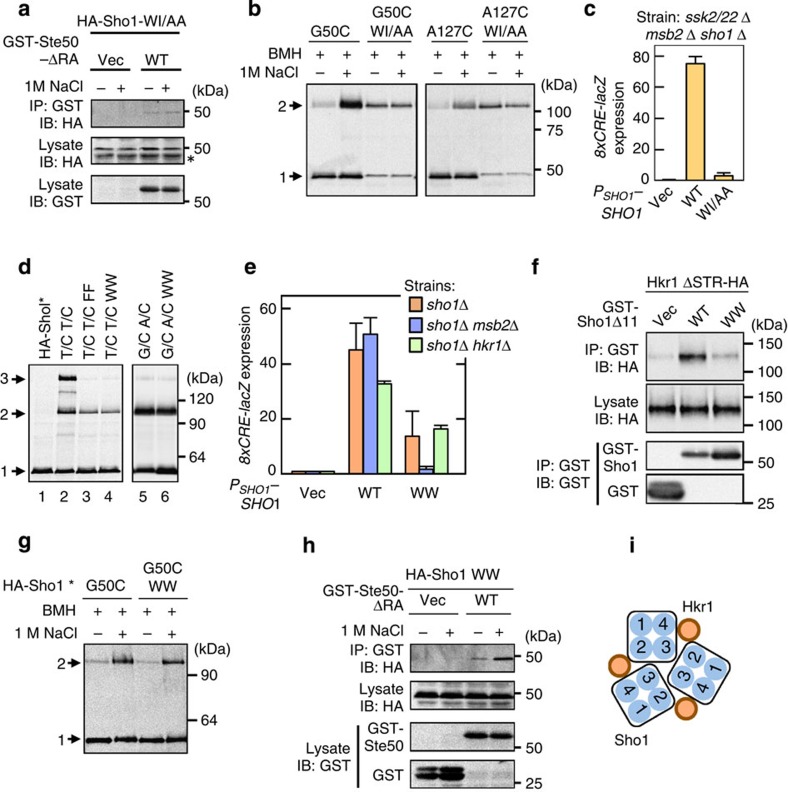
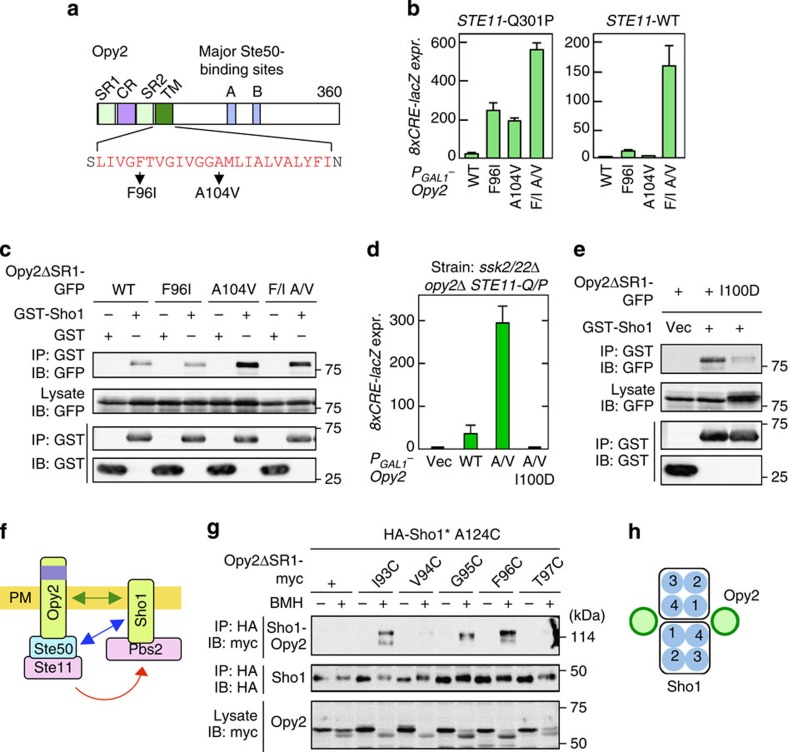
The yeast high osmolarity glycerol (HOG) pathway activates the Hog1 MAP kinase, which coordinates adaptation to high osmolarity conditions. Here we demonstrate that the four-transmembrane (TM) domain protein Sho1 is an osmosensor in the HKR1 sub-branch of the HOG pathway. Crosslinking studies indicate that Sho1 forms planar oligomers of the dimers-of-trimers architecture by dimerizing at the TM1/TM4 interface and trimerizing at the TM2/TM3 interface. High external osmolarity induces structural changes in the Sho1 TM domains and Sho1 binding to the cytoplasmic adaptor protein Ste50, which leads to Hog1 activation. Besides its osmosensing function, the Sho1 oligomer serves as a scaffold. By binding to the TM proteins Opy2 and Hkr1 at the TM1/TM4 and TM2/TM3 interface, respectively, Sho1 forms a multi-component signalling complex that is essential for Hog1 activation. Our results illuminate how the four TM domains of Sho1 dictate the oligomer structure as well as its osmosensing and scaffolding functions.
酵母高渗甘油(HOG)途径激活Hog1丝裂原活化蛋白激酶(MAP激酶),该激酶协调细胞对高渗条件的适应。在此,我们证明四跨膜(TM)结构域蛋白Sho1是HOG途径HKR1亚分支中的一种渗透压感受器。交联研究表明,Sho1通过在TM1/TM4界面二聚化并在TM2/TM3界面三聚化,形成三聚体二聚体结构的平面寡聚体。高外部渗透压诱导Sho1 TM结构域发生结构变化以及Sho1与细胞质接头蛋白Ste50结合,从而导致Hog1激活。除了其渗透压感受功能外,Sho1寡聚体还作为一种支架。通过分别在TM1/TM4和TM2/TM3界面与TM蛋白Opy2和Hkr1结合,Sho1形成了一种多组分信号复合物,这对Hog1激活至关重要。我们的结果阐明了Sho1的四个TM结构域如何决定寡聚体结构及其渗透压感受和支架功能。