Liu Yunhua, Zhang Xinna, Han Cecil, Wan Guohui, Huang Xingxu, Ivan Cristina, Jiang Dahai, Rodriguez-Aguayo Cristian, Lopez-Berestein Gabriel, Rao Pulivarthi H, Maru Dipen M, Pahl Andreas, He Xiaoming, Sood Anil K, Ellis Lee M, Anderl Jan, Lu Xiongbin
Department of Cancer Biology, The University of Texas MD Anderson Cancer Center, Houston, Texas 77030, USA.
1] Department of Gynaecologic Oncology and Reproductive Medicine, The University of Texas MD Anderson Cancer Center, Houston, Texas 77030, USA [2] Center for RNA Interference and Non-coding RNAs, The University of Texas MD Anderson Cancer Center, Houston, Texas 77030, USA.
Nature. 2015 Apr 30;520(7549):697-701. doi: 10.1038/nature14418. Epub 2015 Apr 22.
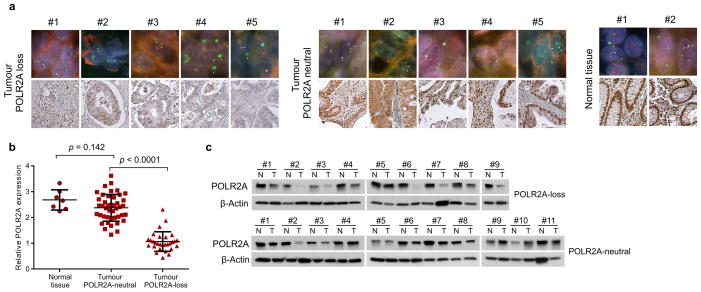
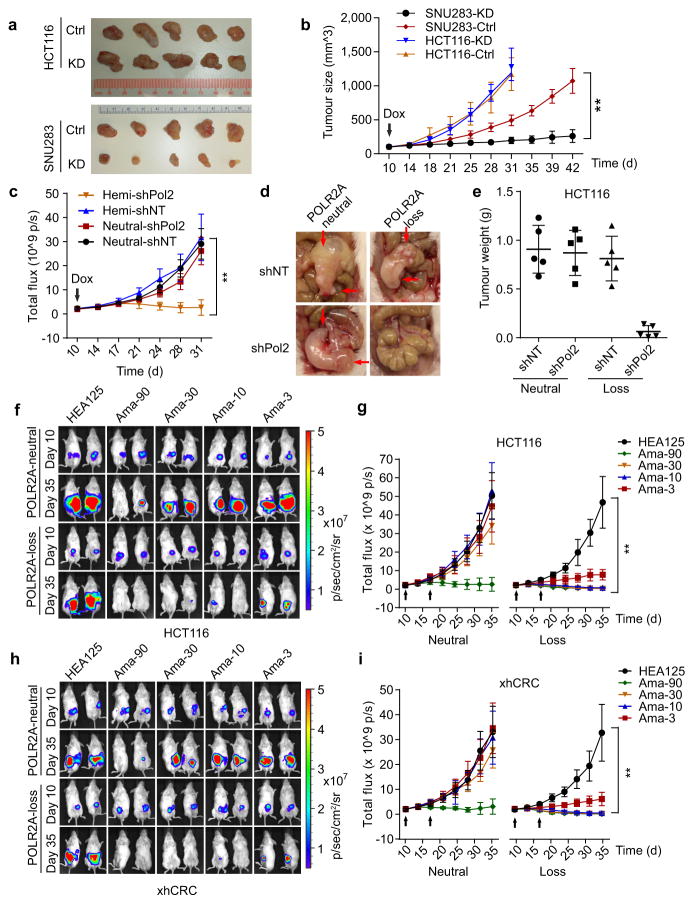
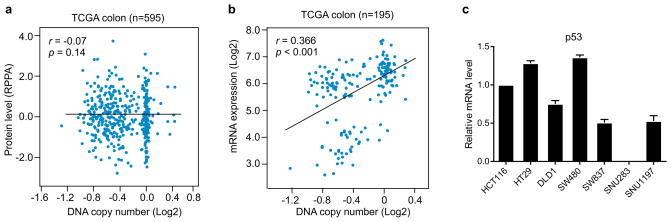
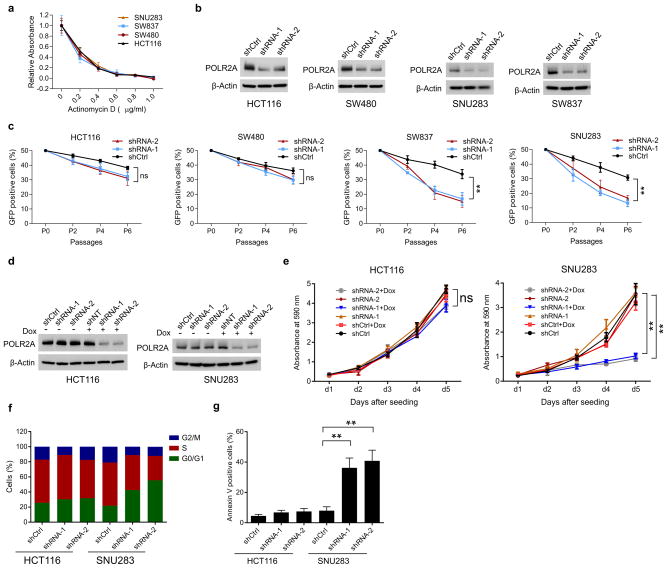
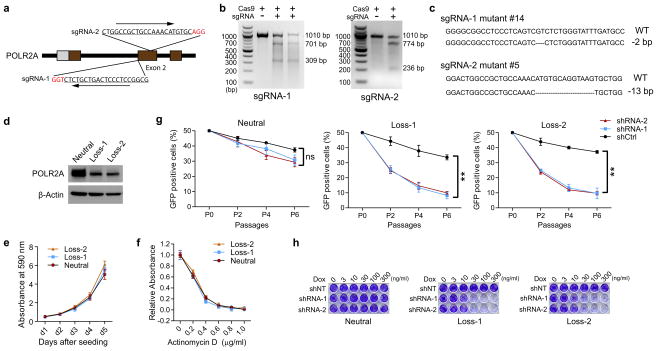
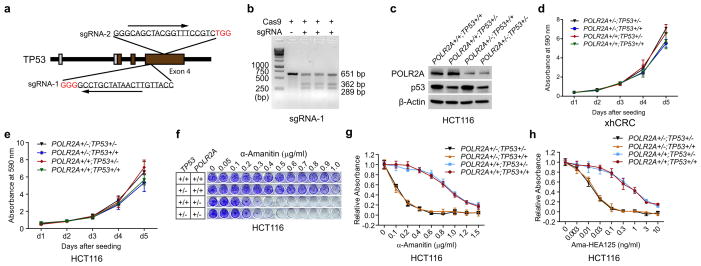
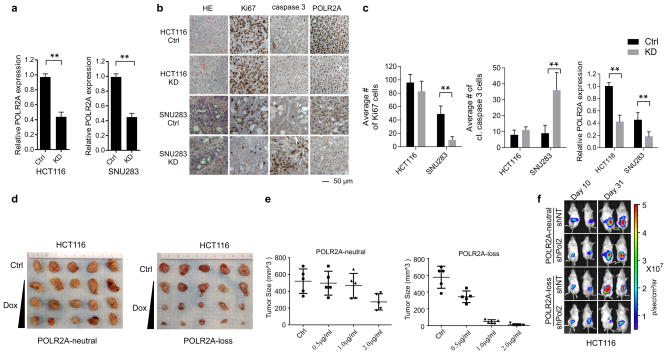
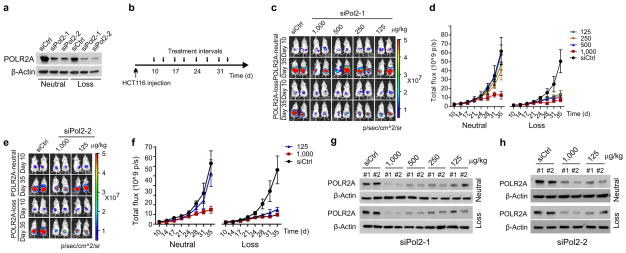
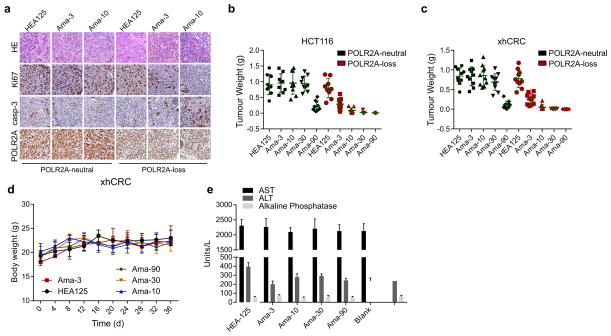
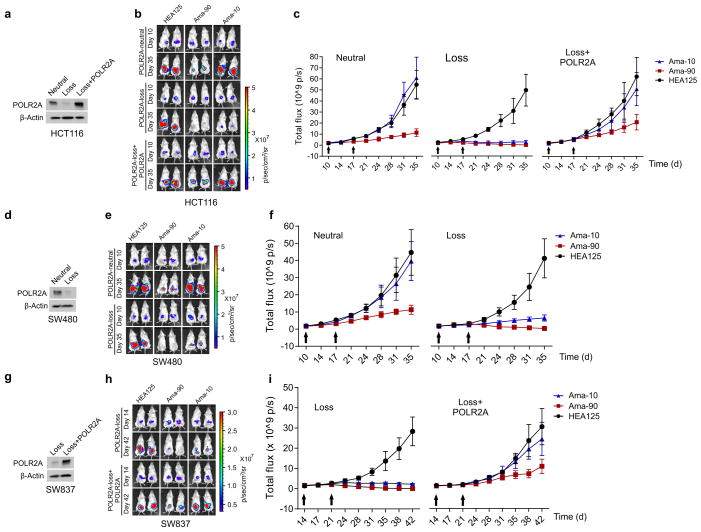
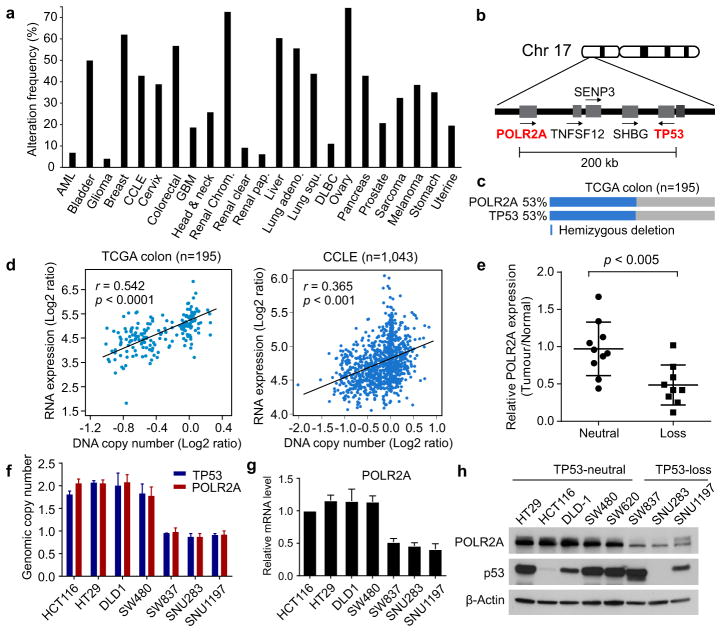
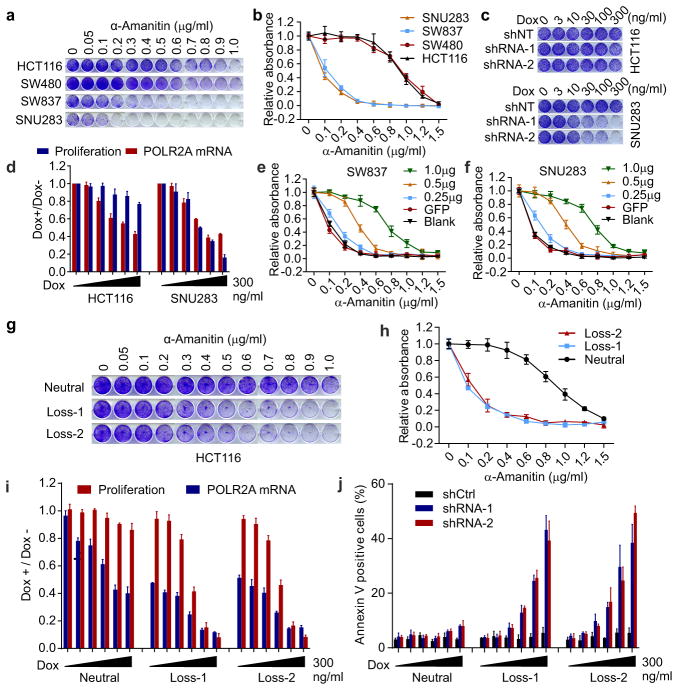
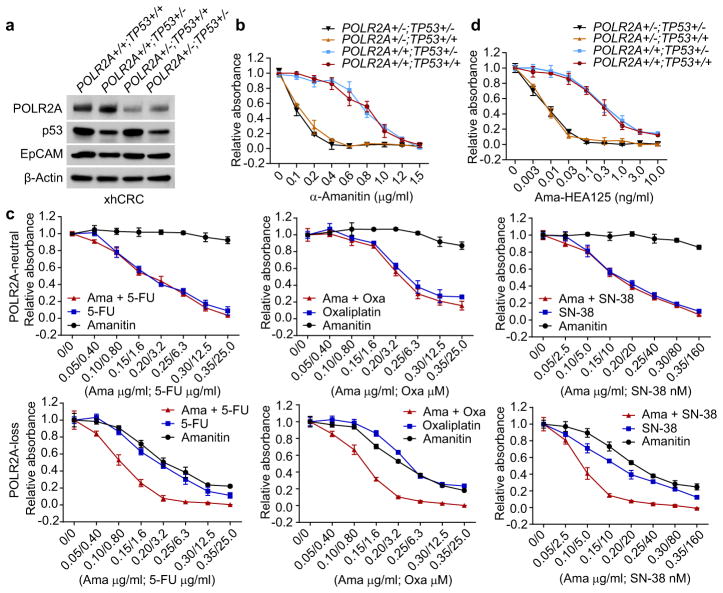
TP53, a well-known tumour suppressor gene that encodes p53, is frequently inactivated by mutation or deletion in most human tumours. A tremendous effort has been made to restore p53 activity in cancer therapies. However, no effective p53-based therapy has been successfully translated into clinical cancer treatment owing to the complexity of p53 signalling. Here we demonstrate that genomic deletion of TP53 frequently encompasses essential neighbouring genes, rendering cancer cells with hemizygous TP53 deletion vulnerable to further suppression of such genes. POLR2A is identified as such a gene that is almost always co-deleted with TP53 in human cancers. It encodes the largest and catalytic subunit of the RNA polymerase II complex, which is specifically inhibited by α-amanitin. Our analysis of The Cancer Genome Atlas (TCGA) and Cancer Cell Line Encyclopedia (CCLE) databases reveals that POLR2A expression levels are tightly correlated with its gene copy numbers in human colorectal cancer. Suppression of POLR2A with α-amanitin or small interfering RNAs selectively inhibits the proliferation, survival and tumorigenic potential of colorectal cancer cells with hemizygous TP53 loss in a p53-independent manner. Previous clinical applications of α-amanitin have been limited owing to its liver toxicity. However, we found that α-amanitin-based antibody-drug conjugates are highly effective therapeutic agents with reduced toxicity. Here we show that low doses of α-amanitin-conjugated anti-epithelial cell adhesion molecule (EpCAM) antibody lead to complete tumour regression in mouse models of human colorectal cancer with hemizygous deletion of POLR2A. We anticipate that inhibiting POLR2A will be a new therapeutic approach for human cancers containing such common genomic alterations.
TP53是一种著名的肿瘤抑制基因,编码p53,在大多数人类肿瘤中经常因突变或缺失而失活。在癌症治疗中,人们为恢复p53活性付出了巨大努力。然而,由于p53信号传导的复杂性,尚未有基于p53的有效疗法成功转化为临床癌症治疗。在此,我们证明TP53的基因组缺失常常包含重要的相邻基因,使得半合子TP53缺失的癌细胞易受此类基因进一步抑制的影响。POLR2A被鉴定为这样一个基因,在人类癌症中它几乎总是与TP53共同缺失。它编码RNA聚合酶II复合物的最大催化亚基,该亚基被α-鹅膏蕈碱特异性抑制。我们对癌症基因组图谱(TCGA)和癌细胞系百科全书(CCLE)数据库的分析表明,在人类结直肠癌中,POLR2A的表达水平与其基因拷贝数紧密相关。用α-鹅膏蕈碱或小干扰RNA抑制POLR2A以一种不依赖p53的方式选择性地抑制半合子TP53缺失的结直肠癌细胞的增殖、存活和致瘤潜力。由于其肝毒性,α-鹅膏蕈碱以前的临床应用受到限制。然而,我们发现基于α-鹅膏蕈碱的抗体药物偶联物是毒性降低的高效治疗剂。在此我们表明,低剂量的α-鹅膏蕈碱偶联抗上皮细胞粘附分子(EpCAM)抗体可使POLR2A半合子缺失的人类结直肠癌小鼠模型中的肿瘤完全消退。我们预计,抑制POLR2A将成为针对含有此类常见基因组改变的人类癌症的一种新治疗方法。