Sipponen Pentti, Maaroos Heidi-Ingrid
Patolab Oy, Espoo, Finland and Tartu State University , Tartu , Estonia.
Scand J Gastroenterol. 2015 Jun;50(6):657-67. doi: 10.3109/00365521.2015.1019918. Epub 2015 Apr 22.
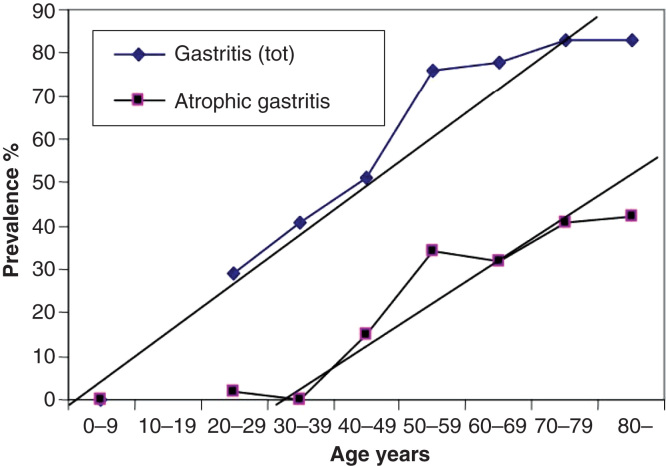
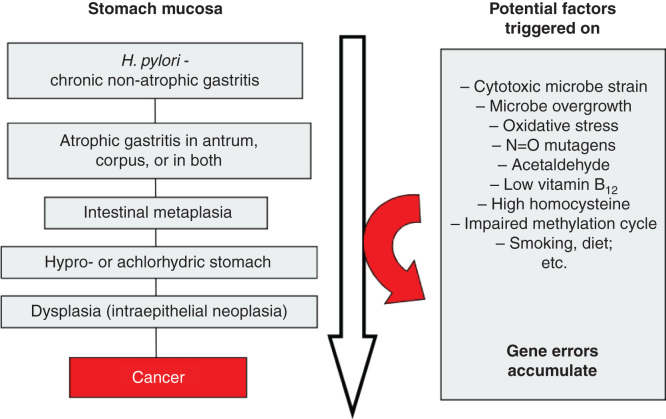
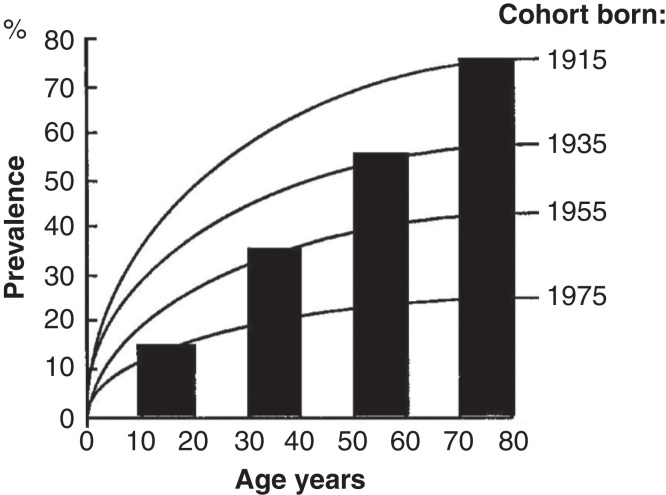
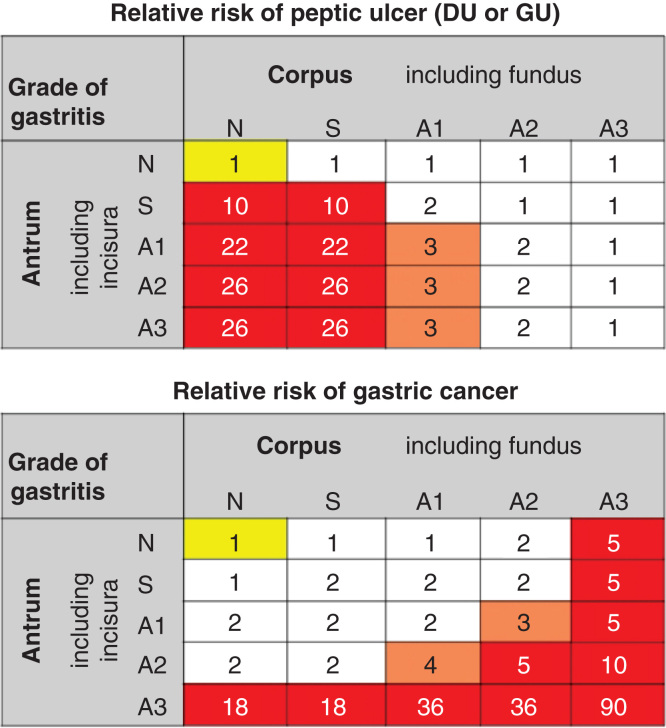
Prevalence of chronic gastritis has markedly declined in developed populations during the past decades. However, chronic gastritis is still one of the most common serious pandemic infections with such severe killing sequelae as peptic ulcer or gastric cancer. Globally, on average, even more than half of people may have a chronic gastritis at present. Helicobacter pylori infection in childhood is the main cause of chronic gastritis, which microbial origin is the key for the understanding of the bizarre epidemiology and course of the disease. A life-long and aggressive inflammation in gastritis results in destruction (atrophic gastritis) of stomach mucosa with time (years and decades). The progressive worsening of atrophic gastritis results subsequently in dysfunctions of stomach mucosa. Atrophic gastritis will finally end up in a permanently acid-free stomach in the most extreme cases. Severe atrophic gastritis and acid-free stomach are the highest independent risk conditions for gastric cancer known so far. In addition to the risks of malignancy and peptic ulcer, acid-free stomach and severe forms of atrophic gastritis may associate with failures in absorption of essential vitamins, like vitamin B12, micronutrients (like iron, calcium, magnesium and zinc), diet and medicines.
在过去几十年中,发达国家人群中慢性胃炎的患病率显著下降。然而,慢性胃炎仍然是最常见的严重大流行感染之一,会引发消化性溃疡或胃癌等严重致命后遗症。在全球范围内,目前平均甚至超过一半的人可能患有慢性胃炎。儿童期幽门螺杆菌感染是慢性胃炎的主要病因,其微生物起源是理解该疾病奇异流行病学和病程的关键。胃炎中持续终生且具有侵袭性的炎症会随着时间(数年乃至数十年)导致胃黏膜破坏(萎缩性胃炎)。萎缩性胃炎的逐渐恶化随后会导致胃黏膜功能障碍。在最极端的情况下,萎缩性胃炎最终会导致胃永久性无酸。严重萎缩性胃炎和无酸胃是目前已知的患胃癌最高的独立风险因素。除了有患恶性肿瘤和消化性溃疡的风险外,无酸胃和严重形式的萎缩性胃炎可能与必需维生素(如维生素B12)、微量营养素(如铁、钙、镁和锌)、饮食及药物吸收不良有关。