Nandi Munmun, Selin Carrie, Brassinga Ann Karen C, Belmonte Mark F, Fernando W G Dilantha, Loewen Peter C, de Kievit Teresa R
Department of Microbiology, University of Manitoba, Winnipeg, Manitoba, Canada.
Department of Plant Science University of Manitoba, Winnipeg, Manitoba, Canada.
PLoS One. 2015 Apr 22;10(4):e0123184. doi: 10.1371/journal.pone.0123184. eCollection 2015.
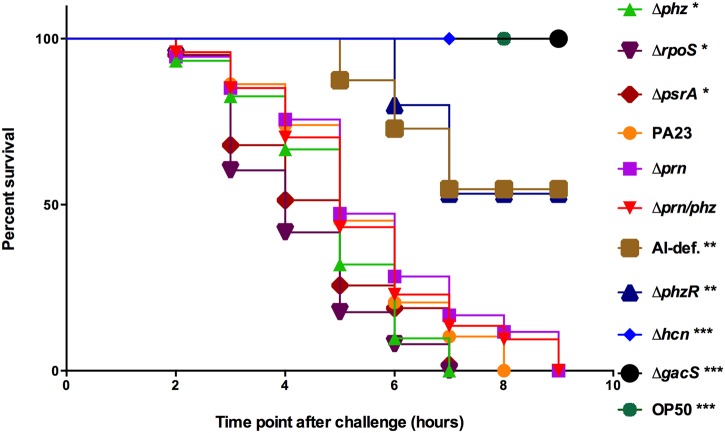
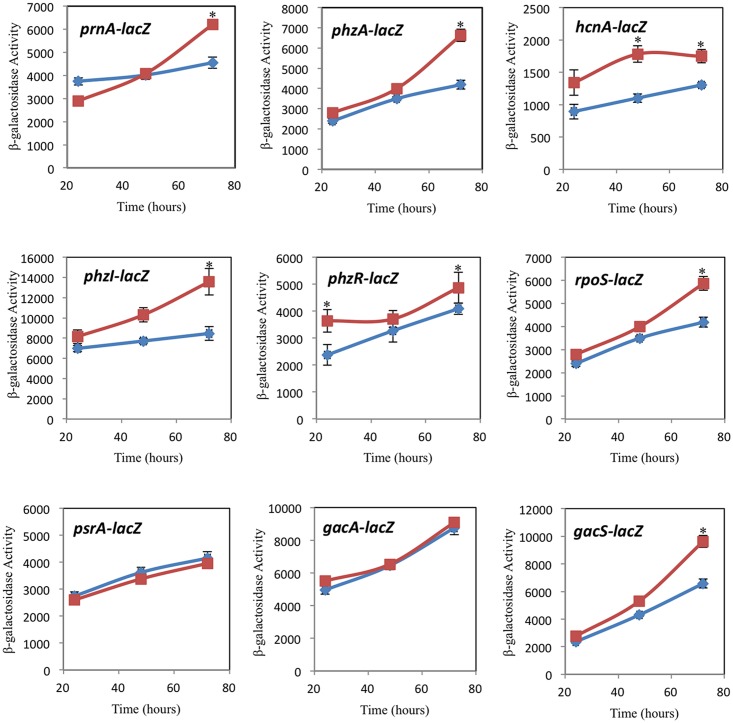
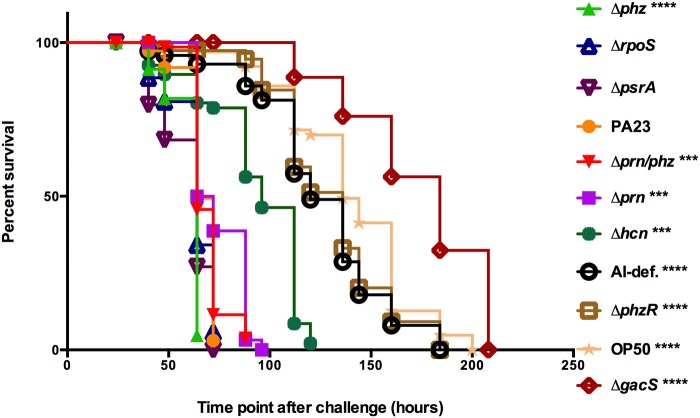
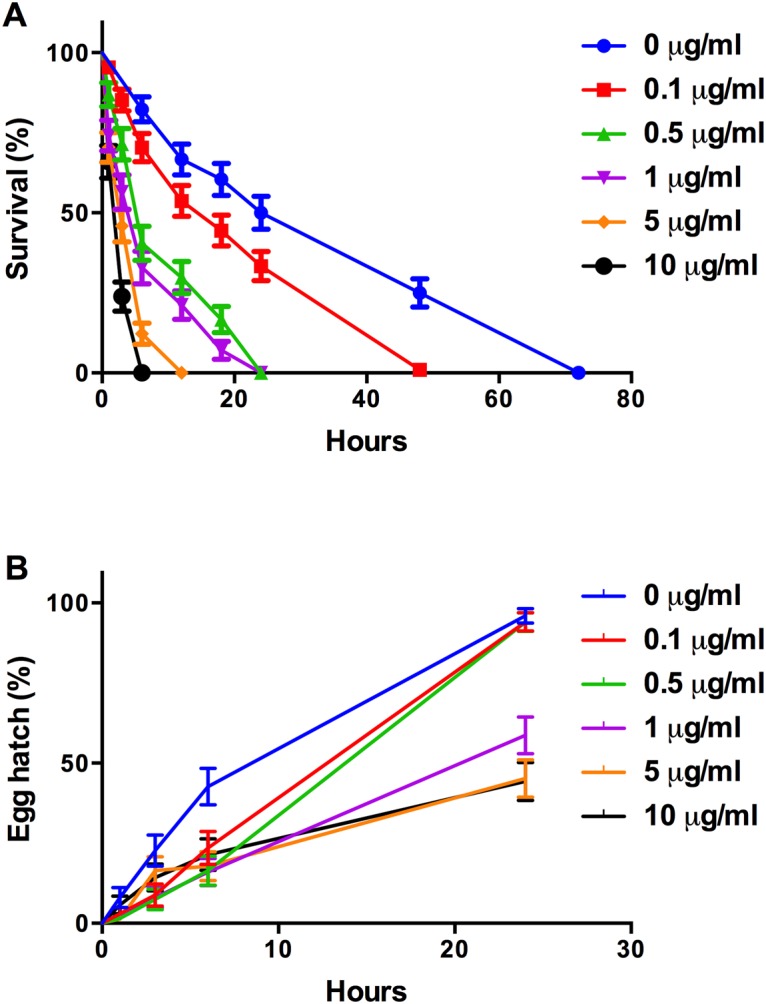
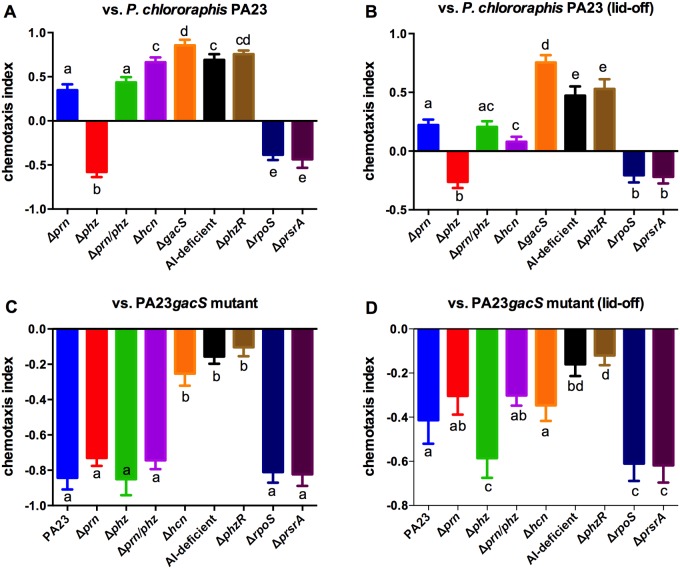
Pseudomonas chlororaphis strain PA23 is a biocontrol agent able to suppress growth of the fungal pathogen Sclerotinia sclerotiorum. This bacterium produces an arsenal of exometabolites including pyrrolnitrin (PRN), phenazine (PHZ), hydrogen cyanide (HCN), and degradative enzymes. Production of these compounds is controlled at both the transcriptional and posttranscriptional levels by the Gac-Rsm system, RpoS, PsrA, and the Phz quorum-sensing system. Beyond pathogen-suppression, the success of a biocontrol agent is dependent upon its ability to establish itself in the environment where predation by bacterivorous organisms, including nematodes, may threaten persistence. The focus of this study was to investigate whether PA23 is able to resist grazing by Caenorhabditis elegans and to define the role played by exoproducts in the bacterial-nematode interaction. We discovered that both PRN and HCN contribute to fast- and slow-killing of C. elegans. HCN is well-established as having lethal effects on C. elegans; however, PRN has not been reported to be nematicidal. Exposure of L4 stage nematodes to purified PRN reduced nematode viability in a dose-dependent fashion and led to reduced hatching of eggs laid by gravid adults. Because bacterial metabolites can act as chemoattractants or repellents, we analyzed whether PA23 exhibited attractant or repulsive properties towards C. elegans. Both PRN and HCN were found to be potent repellents. Next we investigated whether the presence of C. elegans would elicit changes in PA23 gene activity. Co-culturing the two organisms increased expression of a number of genes associated with biocontrol, including phzA, hcnA, phzR, phzI, rpoS and gacS. Exoproduct analysis showed that PHZ and autoinducer signals were upregulated, consistent with the gene expression profiles. Collectively, these findings indicate that PA23 is able to sense the presence of C. elegans and it is able to both repel and kill the nematodes, which should facilitate environmental persistence and ultimately biocontrol.
绿针假单胞菌PA23菌株是一种能够抑制真菌病原菌核盘菌生长的生物防治剂。这种细菌能产生一系列胞外代谢产物,包括吡咯菌素(PRN)、吩嗪(PHZ)、氰化氢(HCN)和降解酶。这些化合物的产生在转录和转录后水平上受Gac-Rsm系统、RpoS、PsrA和Phz群体感应系统的控制。除了抑制病原体,生物防治剂的成功还取决于其在环境中定殖的能力,在该环境中,包括线虫在内的食细菌生物的捕食可能会威胁其持久性。本研究的重点是调查PA23是否能够抵抗秀丽隐杆线虫的捕食,并确定胞外产物在细菌与线虫相互作用中所起的作用。我们发现PRN和HCN都有助于对秀丽隐杆线虫的快速和慢速杀伤。HCN对秀丽隐杆线虫具有致死作用已得到充分证实;然而,尚未有报道称PRN具有杀线虫作用。将L4期线虫暴露于纯化的PRN中会以剂量依赖的方式降低线虫的活力,并导致怀孕成虫所产卵的孵化率降低。由于细菌代谢产物可以作为化学引诱剂或驱避剂,我们分析了PA23对秀丽隐杆线虫是否表现出引诱或驱避特性。结果发现PRN和HCN都是有效的驱避剂。接下来,我们研究了秀丽隐杆线虫的存在是否会引起PA23基因活性的变化。将这两种生物共培养会增加许多与生物防治相关的基因的表达,包括phzA、hcnA、phzR、phzI、rpoS和gacS。胞外产物分析表明,PHZ和自诱导信号上调,与基因表达谱一致。总的来说,这些发现表明PA23能够感知秀丽隐杆线虫的存在,并且能够驱避和杀死线虫,这应该有助于其在环境中的持久性并最终实现生物防治。