Loomis Sally, McCarthy Andrew, Baxter Christopher, Kellett Daniel O, Edgar Dale M, Tricklebank Mark, Gilmour Gary
Lilly Research Laboratories, Eli Lilly & Co. Ltd, Erl Wood Manor, Sunninghill Road, Windlesham, Surrey, GU20 6PH, England, UK.
Psychopharmacology (Berl). 2015 Nov;232(21-22):3977-89. doi: 10.1007/s00213-015-3936-8. Epub 2015 Apr 24.
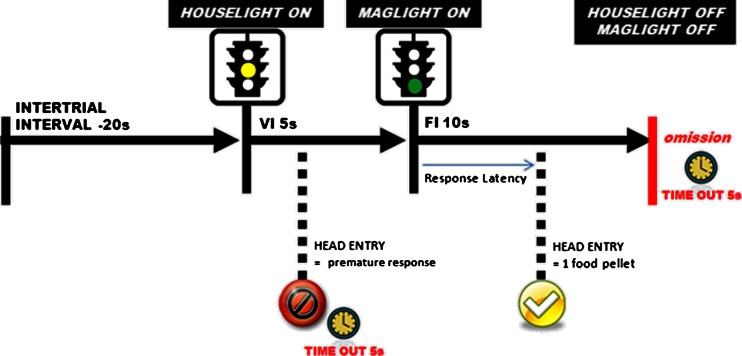
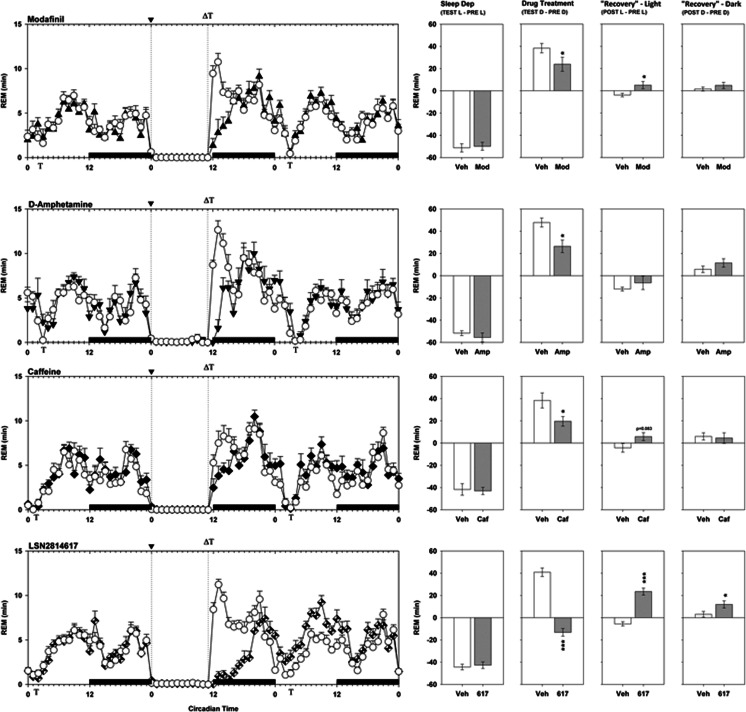
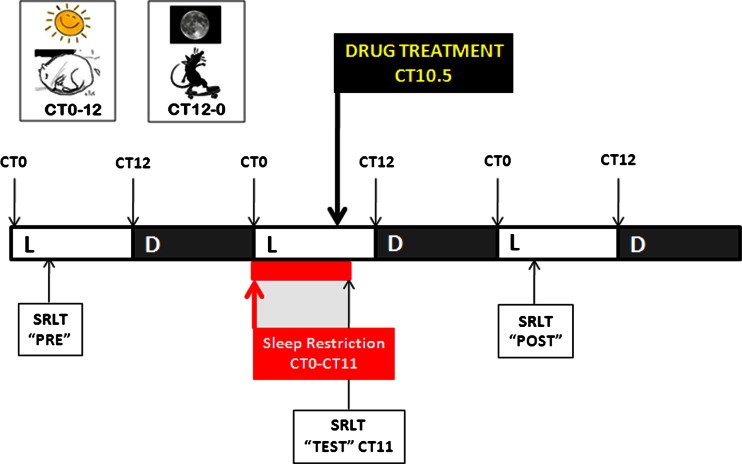
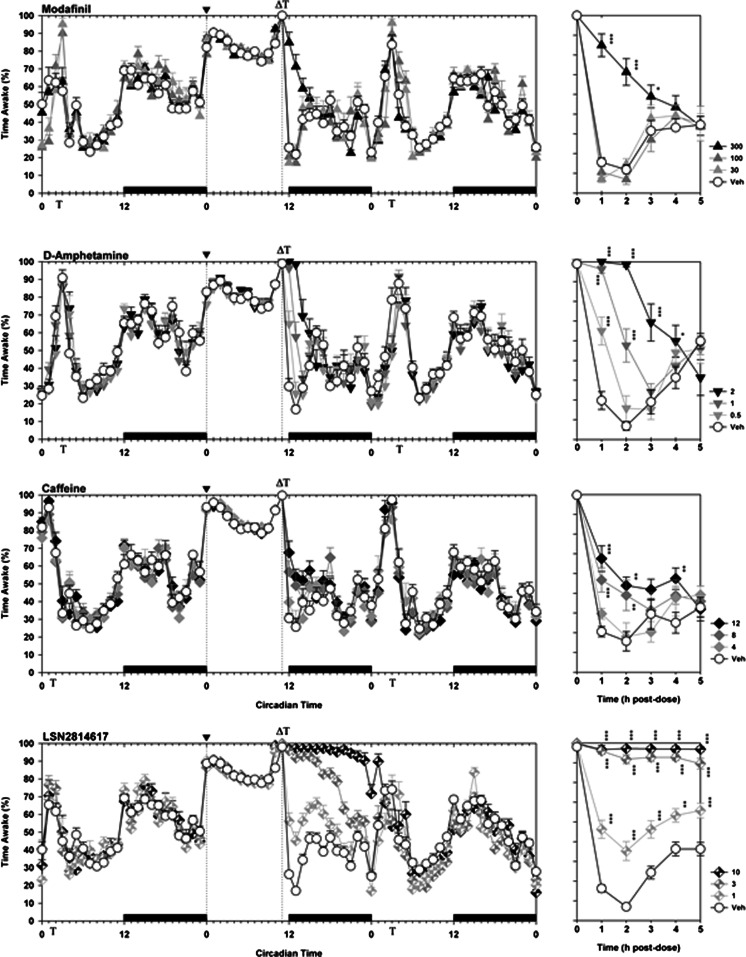
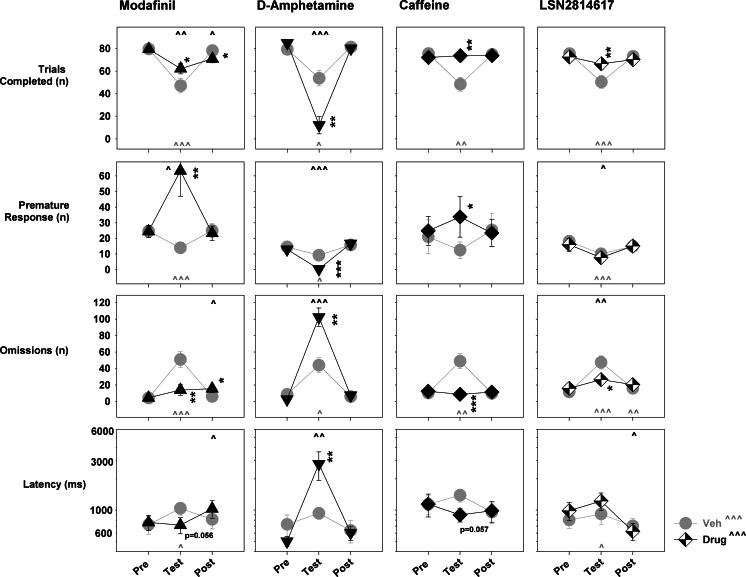
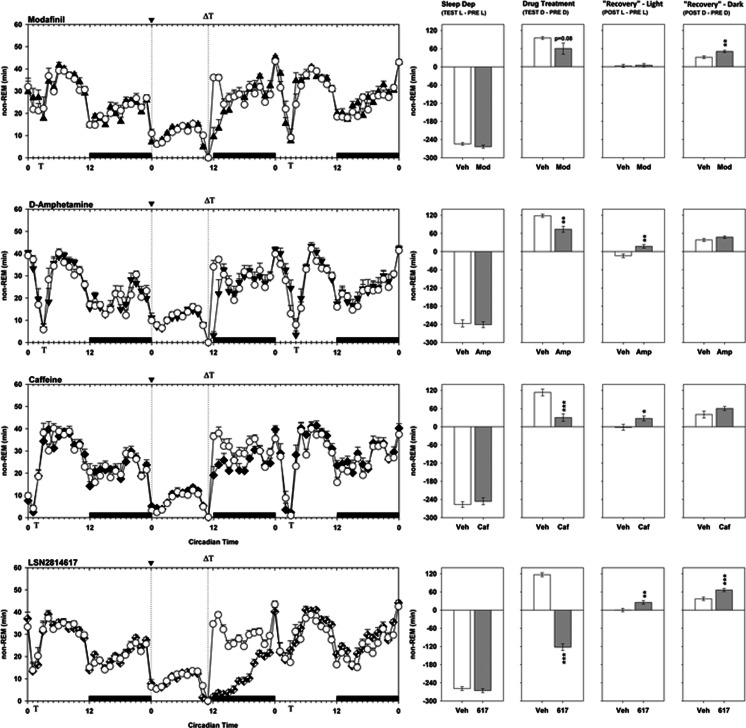
While treatment options are available, excessive daytime sleepiness (EDS) remains a significant unmet medical need for many patients. Relatively little rodent behavioural pharmacology has been conducted in this context to assess potential pro-vigilant compounds for their ability to restore functional capacity following experimentally induced sleep loss. Male Wistar rats were prepared for electroencephalographic (EEG) recording and subject to 11 h of sleep restriction using a biofeedback-induced cage rotation protocol. A simple response latency task (SRLT) was used to behaviourally index sleep restriction and the effects of pro-vigilant compounds: modafinil, D-amphetamine, caffeine, and the mGlu5-positive allosteric modulator LSN2814617. Sleep restriction resulted in a consistent, quantified loss of non-rapid eye movement (NREM) and REM sleep that impaired SRLT performance in a manner suggestive of progressive task disengagement. In terms of EEG parameters, all compounds induced wakefulness. Amphetamine treatment further decreased SRLT performance capacity, whereas the other three compounds decreased omissions and allowed animals to re-engage in the task. Caffeine and modafinil also significantly increased premature responses during this period, an effect not observed for LSN2814617. While all compounds caused compensatory sleep responses, the magnitude of compensation observed for LSN2814617 was much smaller than would be predicted to result from the prolongation of wakefulness exhibited. Using simple response latencies to index performance, an mGlu5 PAM dramatically increased wakefulness and improved functional capacity of sleep-restricted animals, without eliciting a proportionate compensatory sleep response. This effect was qualitatively distinct from that of amphetamine, caffeine and modafinil.
虽然有多种治疗方案可供选择,但白天过度嗜睡(EDS)对许多患者来说仍是一项尚未得到充分满足的重大医疗需求。在这方面,为评估潜在的促清醒化合物在实验性诱导睡眠剥夺后恢复功能能力的作用而开展的啮齿动物行为药理学研究相对较少。雄性Wistar大鼠被准备用于脑电图(EEG)记录,并使用生物反馈诱导的笼子旋转方案进行11小时的睡眠限制。一个简单反应潜伏期任务(SRLT)被用于从行为上评估睡眠限制以及促清醒化合物(莫达非尼、D - 苯丙胺、咖啡因和mGlu5正变构调节剂LSN2814617)的效果。睡眠限制导致非快速眼动(NREM)和快速眼动睡眠持续且定量地减少,这损害了SRLT的表现,表明任务参与度逐渐降低。就EEG参数而言,所有化合物都能诱导清醒。苯丙胺治疗进一步降低了SRLT的表现能力,而其他三种化合物减少了遗漏情况,并使动物能够重新参与任务。咖啡因和莫达非尼在此期间也显著增加了过早反应,而LSN2814617未观察到这种效应。虽然所有化合物都引起了代偿性睡眠反应,但观察到的LSN2814617的代偿幅度远小于由所表现出的清醒时间延长所预测的幅度。使用简单反应潜伏期来衡量表现,一种mGlu5 正变构调节剂(PAM)显著增加了清醒程度,并改善了睡眠受限动物的功能能力,而没有引发相应比例的代偿性睡眠反应。这种效应在性质上与苯丙胺、咖啡因和莫达非尼不同。