Wilson Jamie L, Yu Jun, Taylor Linda, Polgar Peter
Department of Biochemistry, Boston University School of Medicine, Boston, Massachusetts, United States of America.
PLoS One. 2015 Apr 23;10(4):e0123662. doi: 10.1371/journal.pone.0123662. eCollection 2015.
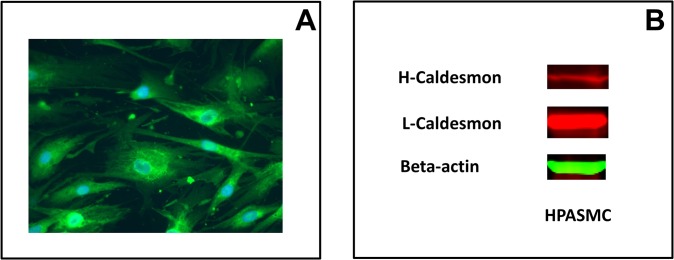
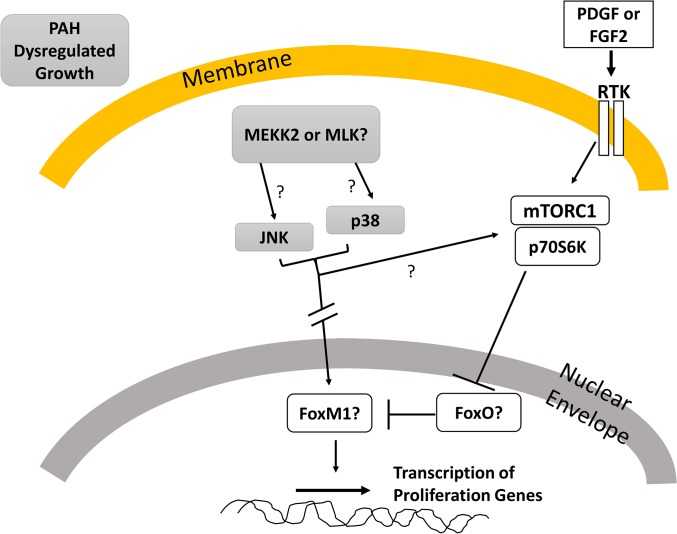
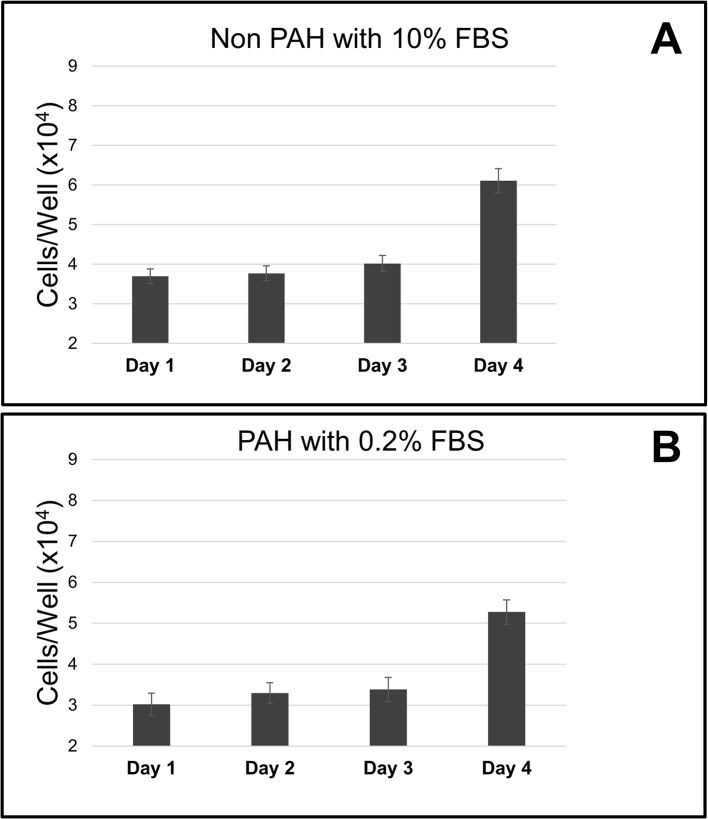
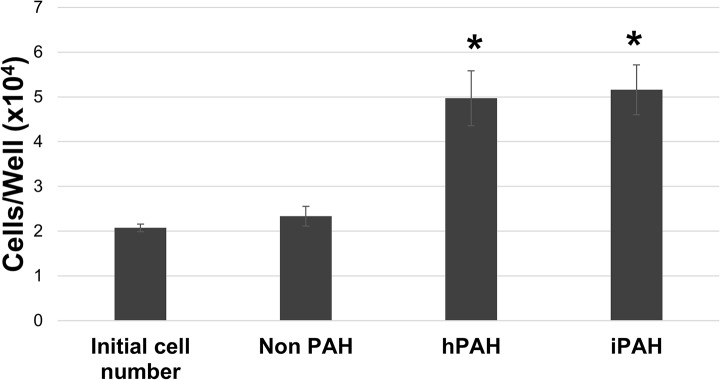
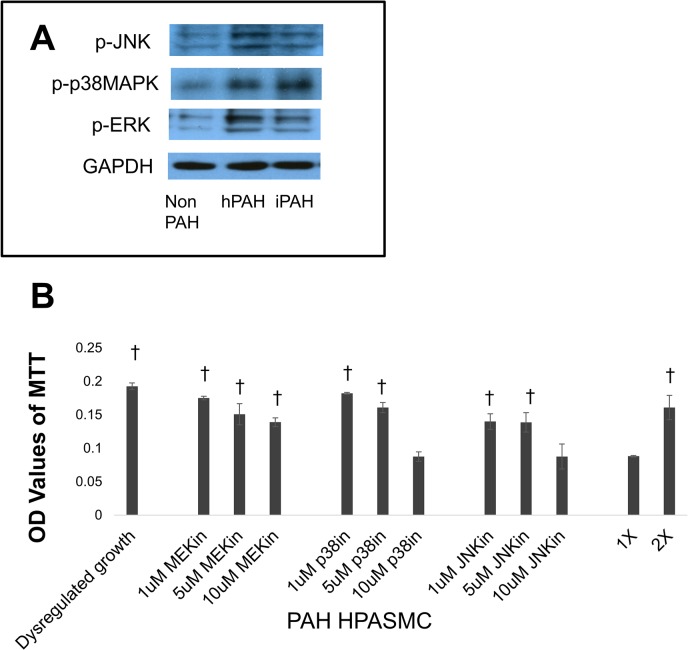
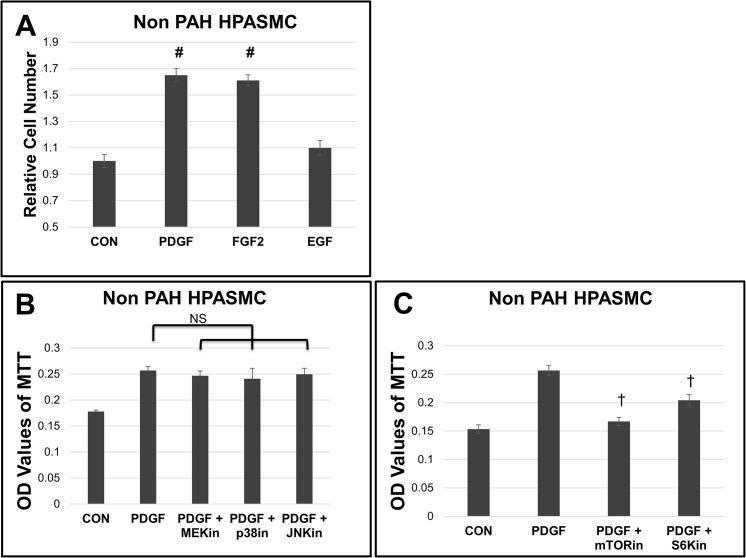
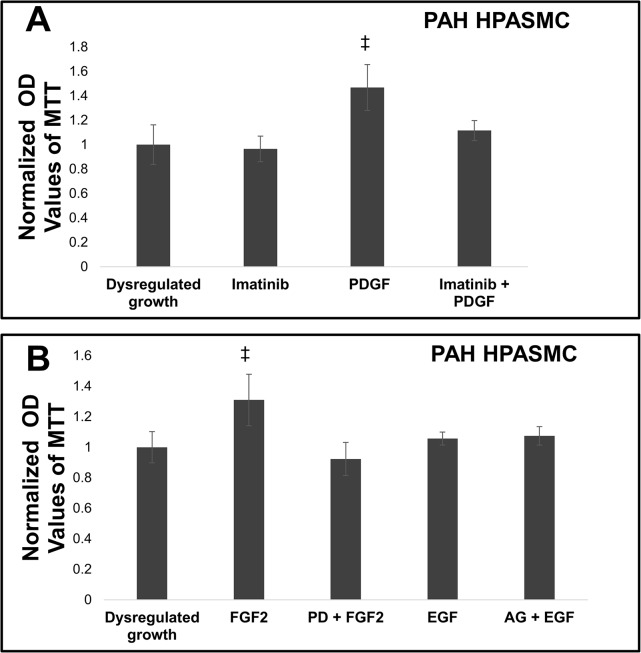
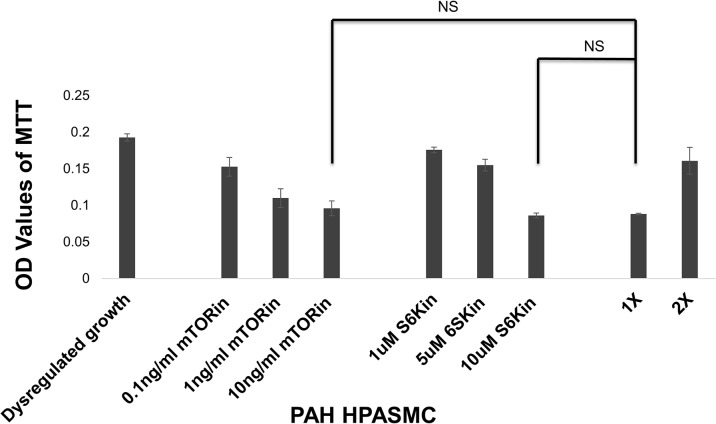
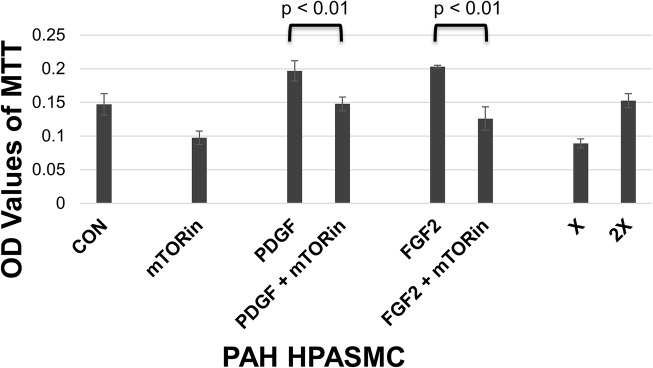
Smooth muscle in the pulmonary artery of PAH subjects, both idiopathic and hereditary, is characterized by hyperplasia. Smooth muscle cells (HPASMC) isolated from subjects with or without PAH retain their in vivo phenotype as illustrated by their expression of alpha-smooth muscle actin and expression of H-caldesmon. Both non PAH and PAH HPASMC display a lengthy, approximately 94h, cell cycle. The HPASMC from both idiopathic and hereditary PAH display an abnormal proliferation characterized by continued growth under non-proliferative, non-growth stimulated conditions. This effector independent proliferation is JNK and p38 MAP kinase dependent. Blocking the activation of either abrogates the HPASMC growth. HPASMC from non PAH donors under quiescent conditions display negligible proliferation but divide upon exposure to growth factors such as PDGF-BB or FGF2 but not EGF. This growth does not involve the MAP kinases. Instead it routes via the tyrosine kinase receptor through mTOR and then 6SK. In the PAH cells PDGF-BB and FGF2 augment the dysregulated cell proliferation, also through mTOR/6SK. Additionally, blocking the activation of mTOR also modulates the MAP kinase promoted dysregulated growth. These results highlight key alterations in the growth of HPASMC from subjects with PAH which contribute to the etiology of the disease and can clearly be targeted at various regulatory points for future therapies.
特发性和遗传性肺动脉高压(PAH)患者肺动脉中的平滑肌以增生为特征。从患有或未患有PAH的受试者中分离出的平滑肌细胞(HPASMC)保留其体内表型,这通过α-平滑肌肌动蛋白的表达和H-钙调蛋白的表达得以体现。非PAH和PAH的HPASMC均显示出较长的细胞周期,约为94小时。特发性和遗传性PAH的HPASMC均表现出异常增殖,其特征是在非增殖、非生长刺激条件下持续生长。这种效应器非依赖性增殖依赖于JNK和p38丝裂原活化蛋白激酶(MAP激酶)。阻断其中任何一种的激活都会消除HPASMC的生长。来自非PAH供体的HPASMC在静止条件下增殖可忽略不计,但在暴露于生长因子如血小板衍生生长因子BB(PDGF-BB)或成纤维细胞生长因子2(FGF2)而非表皮生长因子(EGF)时会分裂。这种生长不涉及MAP激酶。相反,它通过酪氨酸激酶受体经雷帕霉素靶蛋白(mTOR)然后是核糖体蛋白S6激酶(6SK)进行传导。在PAH细胞中,PDGF-BB和FGF2也通过mTOR/6SK增强失调的细胞增殖。此外,阻断mTOR的激活也会调节MAP激酶促进的失调生长。这些结果突出了PAH患者HPASMC生长中的关键改变,这些改变导致了该疾病的病因,并且显然可以在未来治疗的各个调节点上作为靶点。