Tsetsarkin Konstantin A, Liu Guangping, Kenney Heather, Bustos-Arriaga Jose, Hanson Christopher T, Whitehead Stephen S, Pletnev Alexander G
Laboratory of Infectious Diseases, National Institute of Allergy and Infectious Diseases, National Institutes of Health, Bethesda, Maryland, United States of America.
PLoS Pathog. 2015 Apr 23;11(4):e1004852. doi: 10.1371/journal.ppat.1004852. eCollection 2015 Apr.
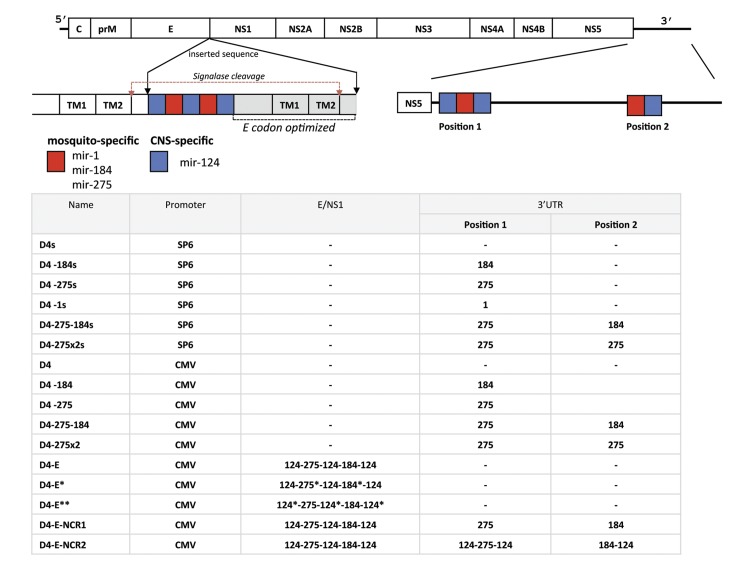
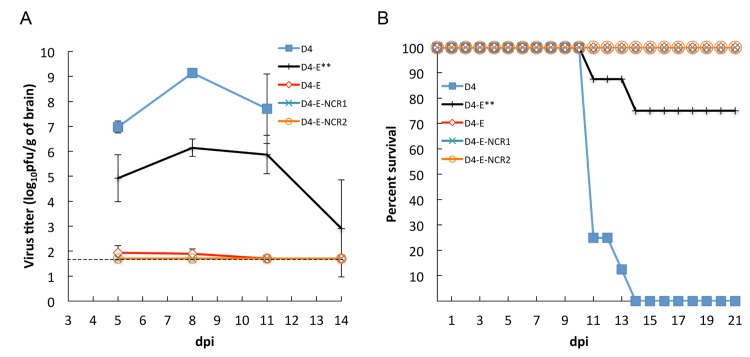
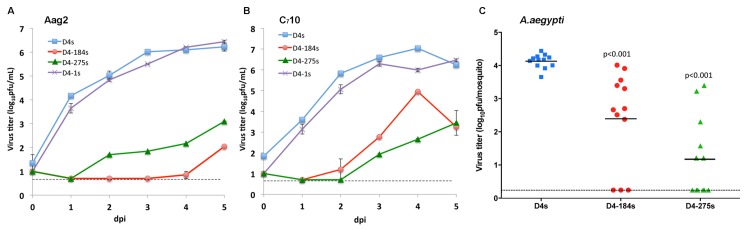
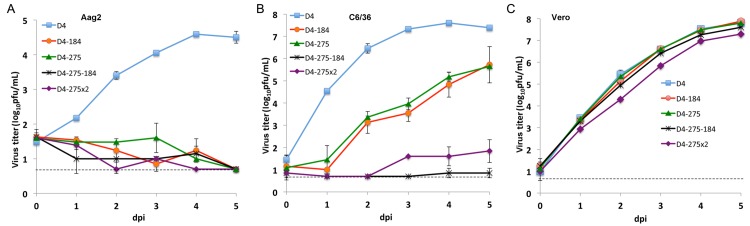
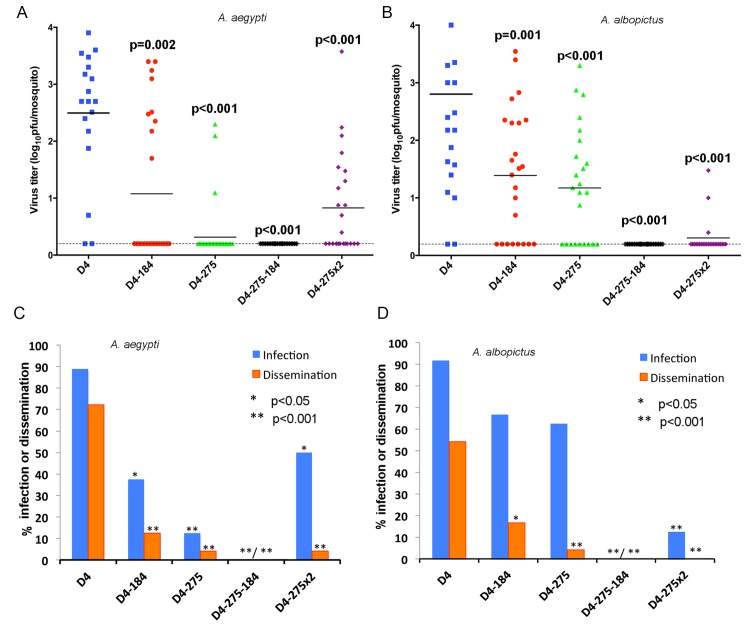
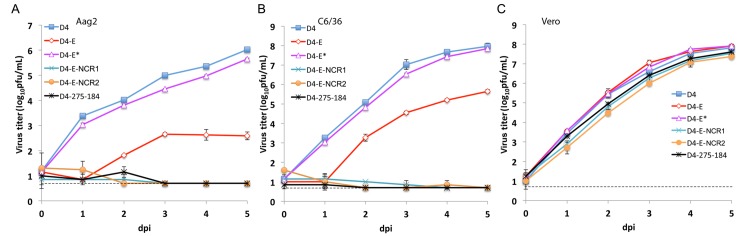
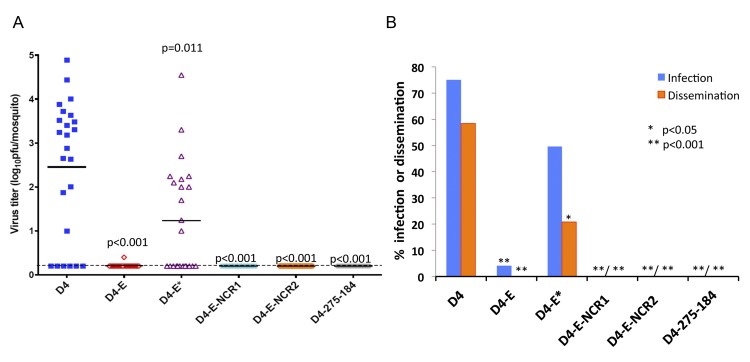
Mosquito-borne flaviviruses are among the most significant arboviral pathogens worldwide. Vaccinations and mosquito population control programs remain the most reliable means for flavivirus disease prevention, and live attenuated viruses remain one of the most attractive flavivirus vaccine platforms. Some live attenuated viruses are capable of infecting principle mosquito vectors, as demonstrated in the laboratory, which in combination with their intrinsic genetic instability could potentially lead to a vaccine virus reversion back to wild-type in nature, followed by introduction and dissemination of potentially dangerous viral strains into new geographic locations. To mitigate this risk we developed a microRNA-targeting approach that selectively restricts replication of flavivirus in the mosquito host. Introduction of sequences complementary to a mosquito-specific mir-184 and mir-275 miRNAs individually or in combination into the 3'NCR and/or ORF region resulted in selective restriction of dengue type 4 virus (DEN4) replication in mosquito cell lines and adult Aedes mosquitos. Moreover a combined targeting of DEN4 genome with mosquito-specific and vertebrate CNS-specific mir-124 miRNA can silence viral replication in two evolutionally distant biological systems: mosquitoes and mouse brains. Thus, this approach can reinforce the safety of newly developed or existing vaccines for use in humans and could provide an additional level of biosafety for laboratories using viruses with altered pathogenic or transmissibility characteristics.
蚊媒黄病毒是全球最重要的虫媒病毒病原体之一。疫苗接种和蚊虫种群控制计划仍然是预防黄病毒疾病最可靠的手段,而减毒活病毒仍然是最具吸引力的黄病毒疫苗平台之一。一些减毒活病毒能够感染主要蚊虫媒介,如在实验室中所证明的那样,这与其固有的遗传不稳定性相结合,可能会导致疫苗病毒在自然界中回复为野生型,随后将潜在危险的病毒株引入并传播到新的地理位置。为了降低这种风险,我们开发了一种靶向微小RNA的方法,该方法可选择性地限制黄病毒在蚊虫宿主中的复制。将与蚊子特异性mir-184和mir-275微小RNA互补的序列单独或组合引入3'非编码区和/或开放阅读框区域,导致登革4型病毒(DEN4)在蚊细胞系和成年伊蚊中的复制受到选择性限制。此外,用蚊子特异性和脊椎动物中枢神经系统特异性mir-124微小RNA联合靶向DEN4基因组,可以在两个进化距离较远的生物系统(蚊子和小鼠大脑)中使病毒复制沉默。因此,这种方法可以加强新开发的或现有的用于人类的疫苗的安全性,并可以为使用具有改变的致病性或传播特性的病毒的实验室提供额外的生物安全保障。