Guterstam Arvid, Abdulkarim Zakaryah, Ehrsson H Henrik
Department of Neuroscience, Karolinska Institutet, Retzius väg 8, SE-171 77 Stockholm, Sweden.
Sci Rep. 2015 Apr 23;5:9831. doi: 10.1038/srep09831.
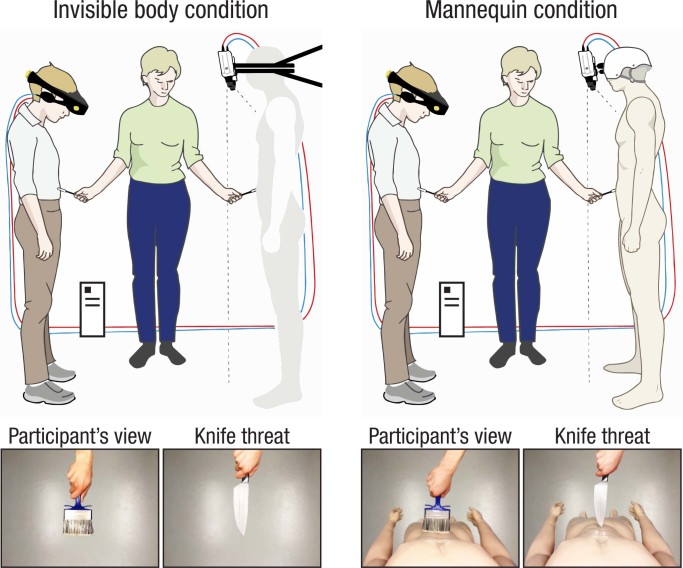
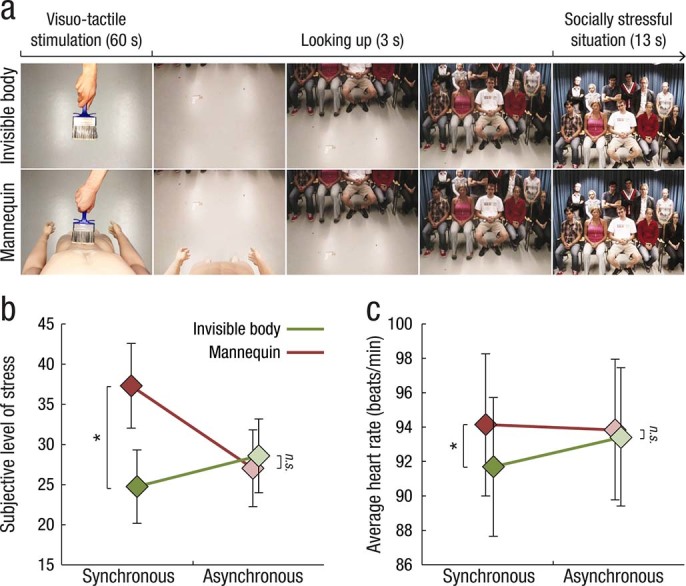
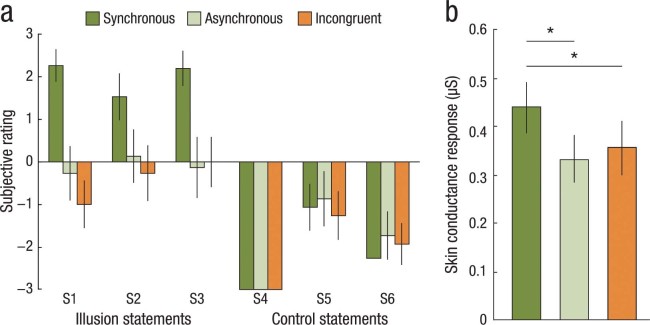
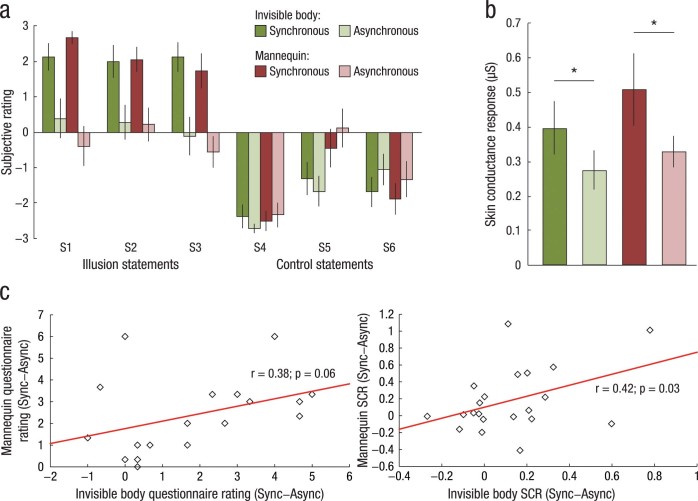
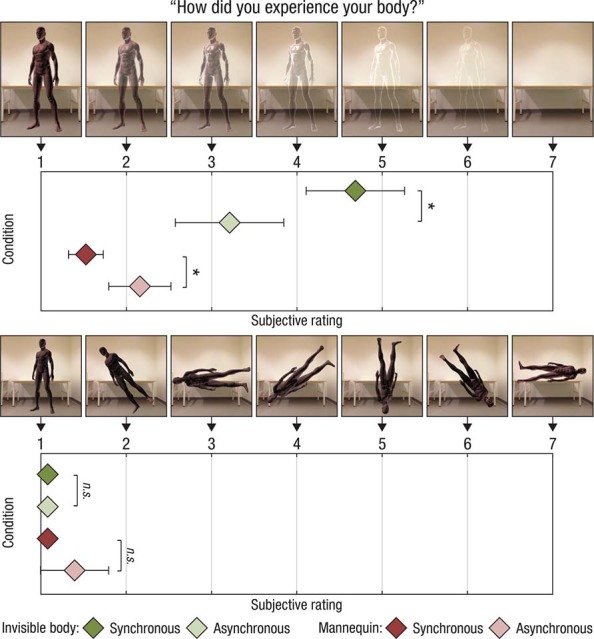
What is it like to be invisible? This question has long fascinated man and has been the central theme of many classic literary works. Recent advances in materials science suggest that invisibility cloaking of the human body may be possible in the not-so-distant future. However, it remains unknown how invisibility affects body perception and embodied cognition. To address these questions, we developed a perceptual illusion of having an entire invisible body. Through a series of experiments, we characterized the multisensory rules that govern the elicitation of the illusion and show that the experience of having an invisible body reduces the social anxiety response to standing in front of an audience. This study provides an experimental model of what it is like to be invisible and shows that this experience affects bodily self-perception and social cognition.
隐形是什么感觉?这个问题长期以来一直吸引着人们,并且一直是许多经典文学作品的核心主题。材料科学的最新进展表明,在不太遥远的将来,人体隐形斗篷可能成为现实。然而,隐形如何影响身体感知和具身认知仍然未知。为了解决这些问题,我们制造了一种拥有整个隐形身体的感知错觉。通过一系列实验,我们确定了引发这种错觉的多感官规则,并表明拥有隐形身体的体验会降低站在观众面前时的社交焦虑反应。这项研究提供了一个关于隐形是什么感觉的实验模型,并表明这种体验会影响身体自我感知和社会认知。