Department of Neuroscience, Karolinska Institutet, Stockholm, Sweden.
University Grenoble Alpes, CNRS, LPNC, Grenoble, France.
PLoS One. 2022 Nov 15;17(11):e0277080. doi: 10.1371/journal.pone.0277080. eCollection 2022.
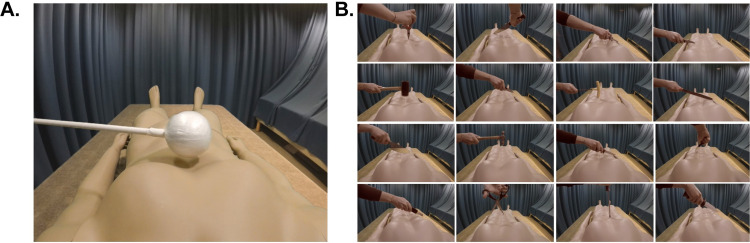
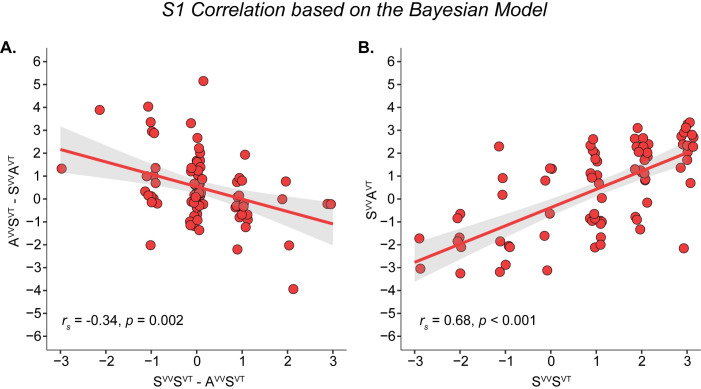
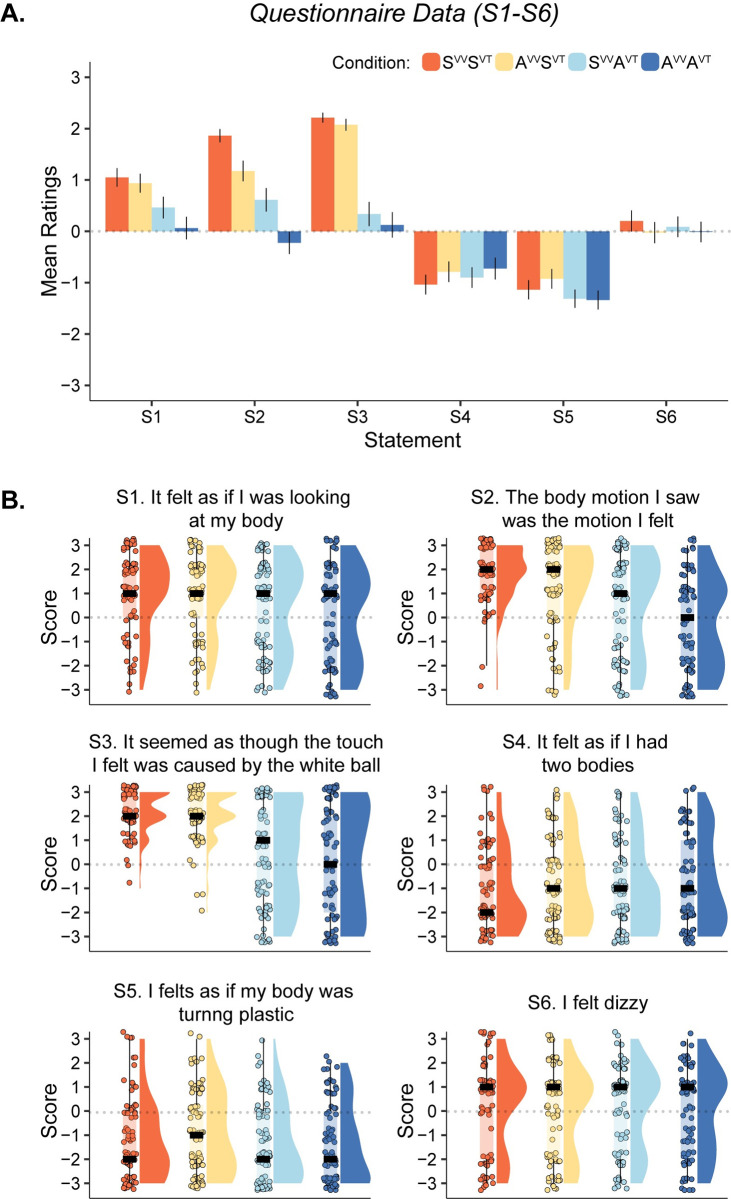
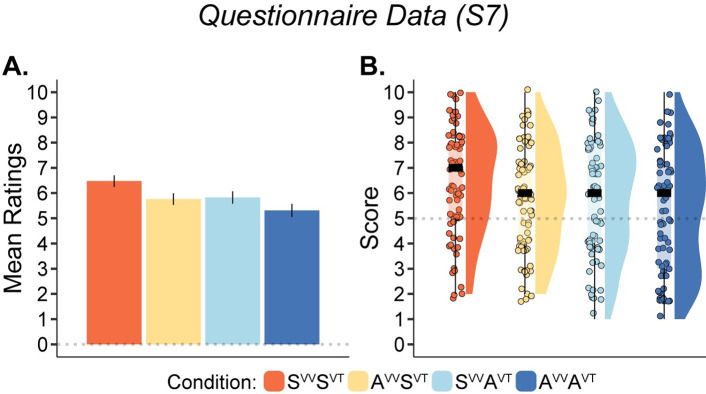
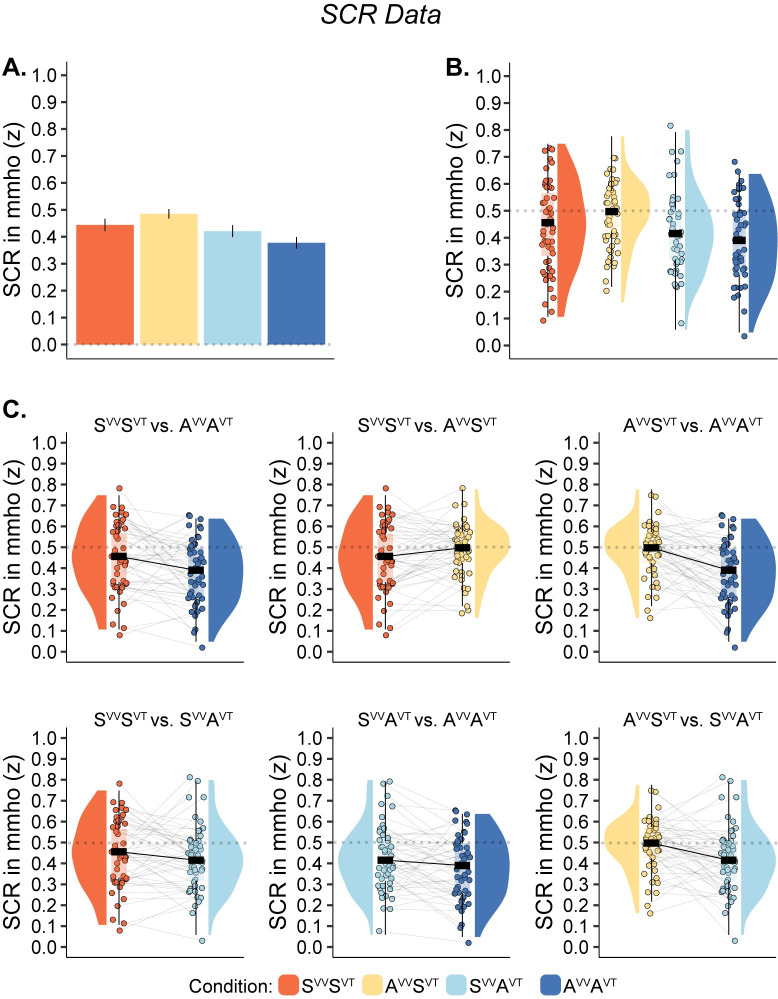
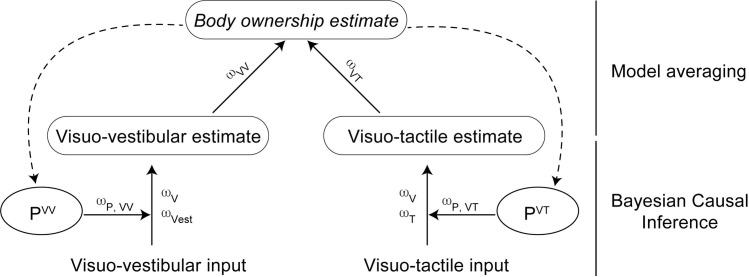
Previous studies have shown that illusory ownership over a mannequin's body can be induced through synchronous visuo-tactile stimulation as well as through synchronous visuo-vestibular stimulation. The current study aimed to elucidate how three-way combinations of correlated visual, tactile and vestibular signals contribute to the senses of body ownership and self-motion. Visuo-tactile temporal congruence was manipulated by touching the mannequin's body and the participant's unseen real body on the trunk with a small object either synchronously or asynchronously. Visuo-vestibular temporal congruence was manipulated by synchronous or asynchronous presentation of a visual motion cue (the background rotating around the mannequin in one direction) and galvanic stimulation of the vestibular nerve generating a rotation sensation (in the same direction). The illusory experiences were quantified using a questionnaire; threat-evoked skin-conductance responses (SCRs) provided complementary indirect physiological evidence for the illusion. Ratings on the illusion questionnaire statement showed significant main effects of synchronous visuo-vestibular and synchronous visuo-tactile stimulations, suggesting that both of these pairs of bimodal correlations contribute to the ownership illusion. Interestingly, visuo-tactile synchrony dominated because synchronous visuo-tactile stimulation combined with asynchronous visuo-vestibular stimulation elicited a body ownership illusion of similar strength as when both bimodal combinations were synchronous. Moreover, both visuo-tactile and visuo-vestibular synchrony were associated with enhanced self-motion perception; self-motion sensations were even triggered when visuo-tactile synchrony was combined with visuo-vestibular asynchrony, suggesting that ownership enhanced the relevance of visual information as a self-motion cue. Finally, the SCR results suggest that synchronous stimulation of either modality pair led to a stronger illusion compared to the asynchronous conditions. Collectively, the results suggest that visuo-tactile temporal correlations have a stronger influence on body ownership than visuo-vestibular correlations and that ownership boosts self-motion perception. We present a Bayesian causal inference model that can explain how visuo-vestibular and visuo-tactile information are combined in multisensory own-body perception.
先前的研究表明,通过同步视听触觉刺激以及同步视听前庭刺激,可以诱导对人体模型身体的错觉拥有感。本研究旨在阐明相关视觉、触觉和前庭信号的三向组合如何有助于身体拥有感和自我运动感。通过用小物体同时或不同时触摸人体模型和参与者看不见的真实身体的躯干来操纵视触时同步性,通过同步或不同步呈现视觉运动提示(背景围绕人体模型朝一个方向旋转)和前庭神经电刺激产生旋转感觉(相同方向)来操纵视前庭时同步性。通过问卷调查来量化错觉体验;皮肤电反应(SCR)提供了错觉的补充间接生理证据。错觉问卷陈述的评分显示同步视听前庭和同步视触刺激的显著主效应,表明这两种双模态相关性都有助于拥有错觉。有趣的是,视触同步性占主导地位,因为同步视触刺激与异步视听前庭刺激相结合会产生与两种双模态组合均同步时相似强度的拥有错觉。此外,视触和视前庭同步性都与增强的自我运动感知相关;即使当视触同步与视前庭异步结合时,也会触发自我运动感觉,这表明拥有感增强了视觉信息作为自我运动线索的相关性。最后,SCR 结果表明,与异步条件相比,任一模态对的同步刺激都会导致更强的错觉。总的来说,结果表明,视触时间相关性对视触时间相关性的影响比对视前庭相关性的影响更大,并且拥有感会增强自我运动感知。我们提出了一个贝叶斯因果推理模型,可以解释视前庭和视触觉信息如何在多感觉自身身体感知中结合。