Bae Ui-Jin, Jang Hyun-Young, Lim Jung Min, Hua Li, Ryu Jae-Ha, Park Byung-Hyun
Department of Biochemistry, Chonbuk National University Medical School, Jeonju, Jeonbuk, Republic of Korea.
Department of Anatomy, Chonbuk National University Medical School, Jeonju, Jeonbuk, Republic of Korea.
Exp Mol Med. 2015 Apr 24;47(4):e160. doi: 10.1038/emm.2015.16.
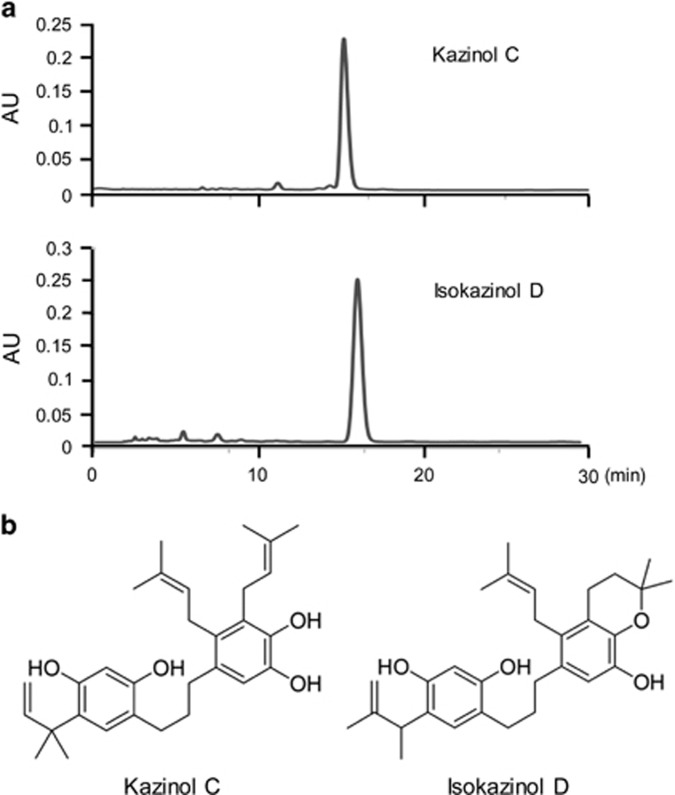
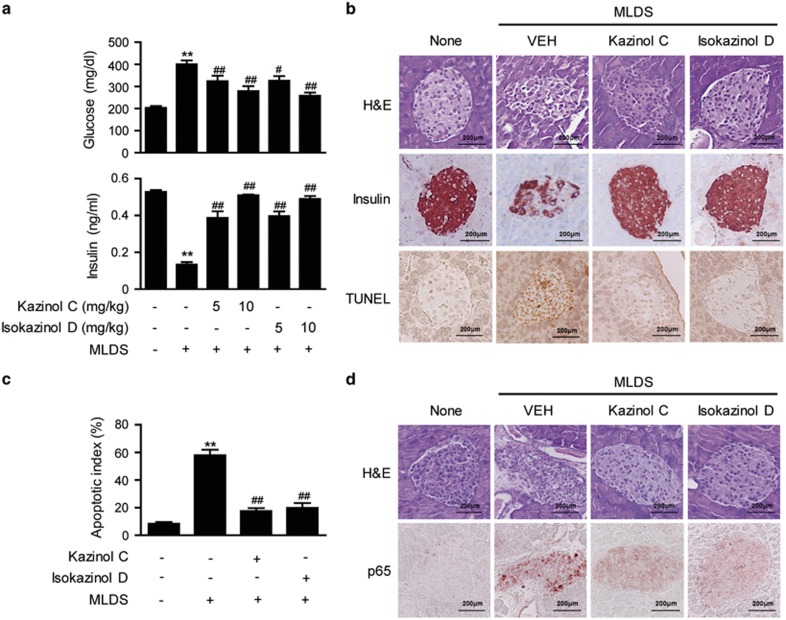
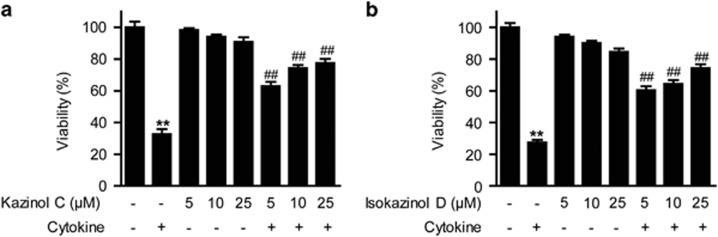
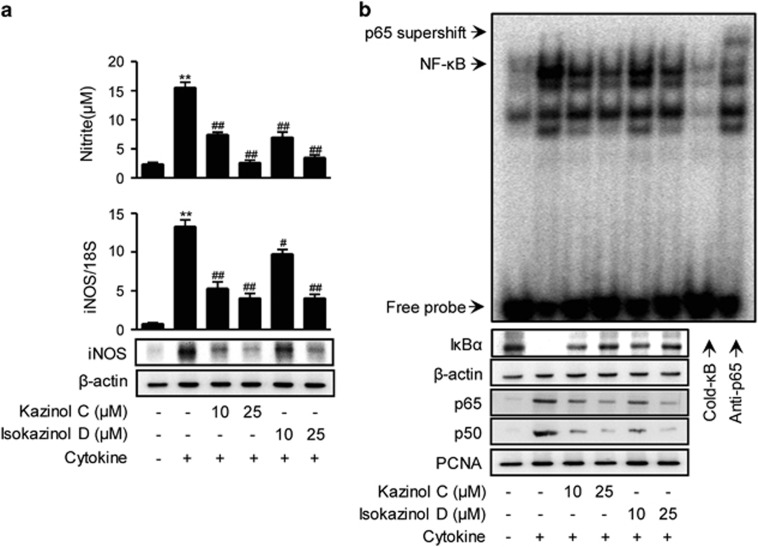
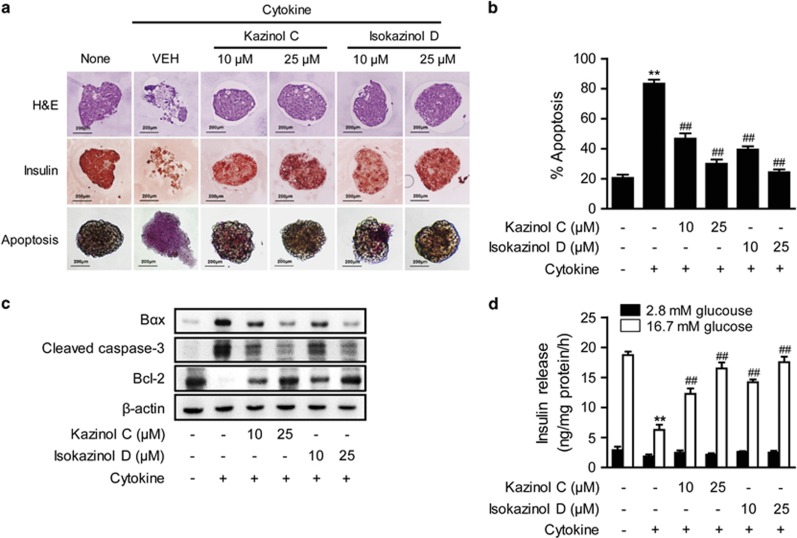
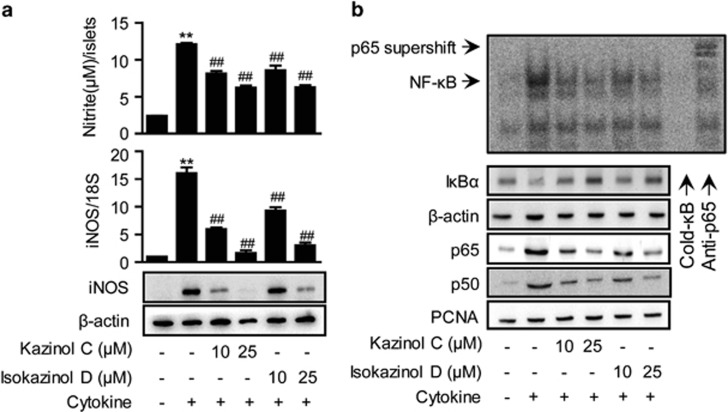
The axis of nuclear factor κB (NF-κB)-inducible NO synthase (iNOS)-nitric oxide plays a key role in cytokine- and streptozotocin-mediated pancreatic β-cell damage. In this study, we investigated the effects of kazinol C and isokazinol D isolated from Broussonetia kazinoki on the β-cell viability and function. RINm5F cells and primary islets were used for in vitro and ex vivo cytokine toxicity experiments, respectively. For type 1 diabetes induction, mice were injected with multiple low-dose streptozotocin (MLDS). Cytokine-induced toxicity was completely abolished in both RINm5F cells and islets that were pretreated with either kazinol C or isokazinol D. Both kazinols inhibited the NF-κB signaling pathway, thereby inhibiting cytokine-mediated iNOS induction, nitric oxide production, apoptotic cell death and defects in insulin secretion. Moreover, the occurrence of diabetes in MLDS-treated mice was efficiently attenuated in kazinol-pretreated mice. Immunohistochemical analysis revealed that the numbers of terminal deoxynucleotidyl transferase dUTP nick end labeling-positive apoptotic cells and nuclear p65-positive cells were significantly decreased in kazinol-pretreated mice. Our results suggest that kazinol C and isokazinol D block the NF-κB pathway, thus reducing the extent of β-cell damage. Therefore, kazinol C and isokazinol D may have therapeutic value in delaying pancreatic β-cell damage in type 1 diabetes.
核因子κB(NF-κB)诱导型一氧化氮合酶(iNOS)-一氧化氮轴在细胞因子和链脲佐菌素介导的胰腺β细胞损伤中起关键作用。在本研究中,我们研究了从构树中分离出的卡齐诺醇C和异卡齐诺醇D对β细胞活力和功能的影响。分别使用RINm5F细胞和原代胰岛进行体外和体内细胞因子毒性实验。为了诱导1型糖尿病,给小鼠注射多次低剂量链脲佐菌素(MLDS)。用卡齐诺醇C或异卡齐诺醇D预处理的RINm5F细胞和胰岛中,细胞因子诱导的毒性均完全消除。两种卡齐诺醇均抑制NF-κB信号通路,从而抑制细胞因子介导的iNOS诱导、一氧化氮生成、凋亡性细胞死亡和胰岛素分泌缺陷。此外,在卡齐诺醇预处理的小鼠中,MLDS处理的小鼠糖尿病的发生得到有效减轻。免疫组织化学分析显示,在卡齐诺醇预处理的小鼠中,末端脱氧核苷酸转移酶dUTP缺口末端标记阳性凋亡细胞和核p65阳性细胞的数量显著减少。我们的结果表明,卡齐诺醇C和异卡齐诺醇D阻断NF-κB途径,从而降低β细胞损伤程度。因此,卡齐诺醇C和异卡齐诺醇D在延缓1型糖尿病胰腺β细胞损伤方面可能具有治疗价值。