Xu Can-Xin, Wang Chun, Zhang Zhi-Ming, Jaeger Cassie D, Krager Stacey L, Bottum Kathleen M, Liu Jianghua, Liao Duan-Fang, Tischkau Shelley A
Department of Pharmacology, Southern Illinois University School of Medicine, Springfield, Illinois, USA.
Department of Anesthesiology, Institute of Translation Medicine, the First People's Hospital of Chenzhou, Chenzhou, China.
Int J Obes (Lond). 2015 Aug;39(8):1300-1309. doi: 10.1038/ijo.2015.63. Epub 2015 Apr 24.
BACKGROUND/OBJECTIVES: Epidemics of obesity and diabetes are escalating. High-calorie/high-fat food is a major cause for these global health issues, but molecular mechanisms underlying high-fat, diet-induced obesity are still not well understood. The aryl hydrocarbon receptor (AhR), a transcription factor that acts as a xenobiotic sensor, mediates environmental toxicant-induced obesity, insulin resistance and development of diabetes. AhR also influences lipid metabolism and diet-induced obesity. The effects of AhR deficiency on diet-induced obesity, hepatic steatosis and insulin resistance were examined.
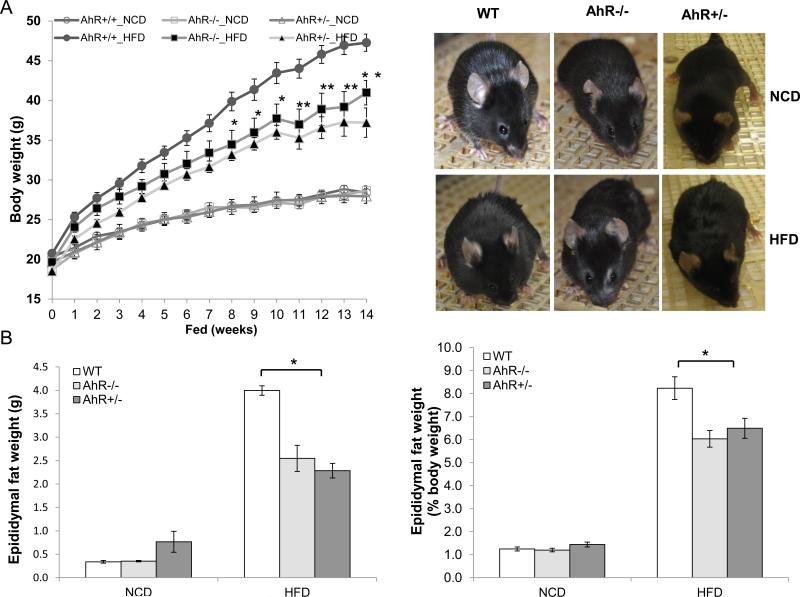
Male wild-type (WT), AhR null (AhR(-/-)) and AhR heterozygote (AhR(+/-)) mice were fed a normal chow diet (NCD, 10% kcal from fat) or a high-fat diet (HFD, 60% kcal from fat) for up to 14 weeks. Adiposity, adipose and liver morphology, insulin signaling, metabolic parameters and gene profiles were assessed.
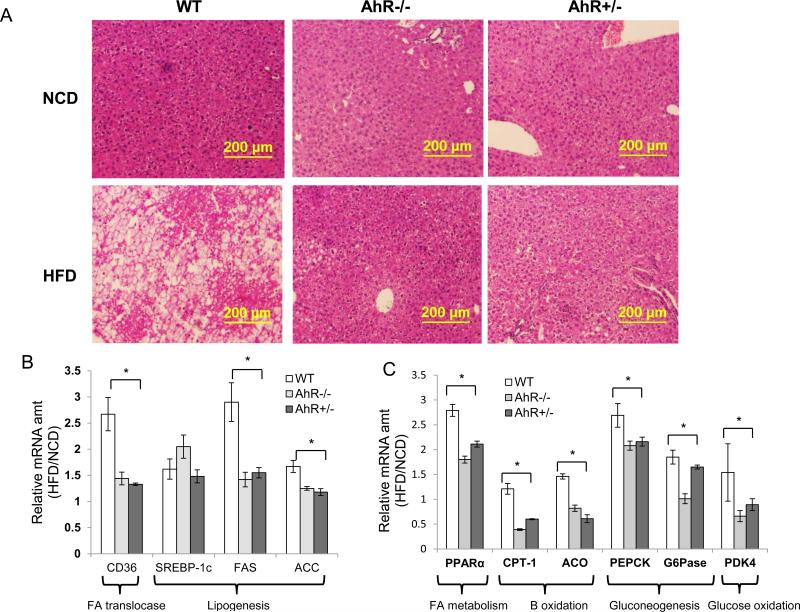
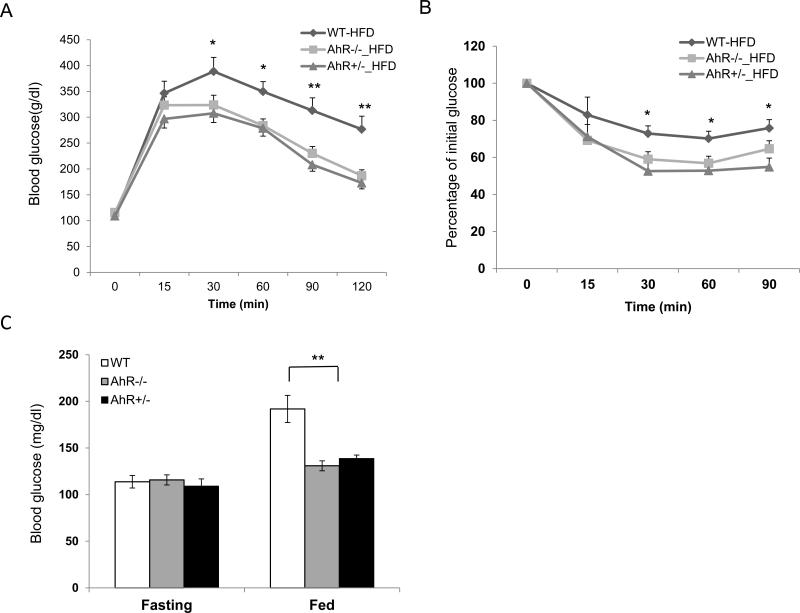
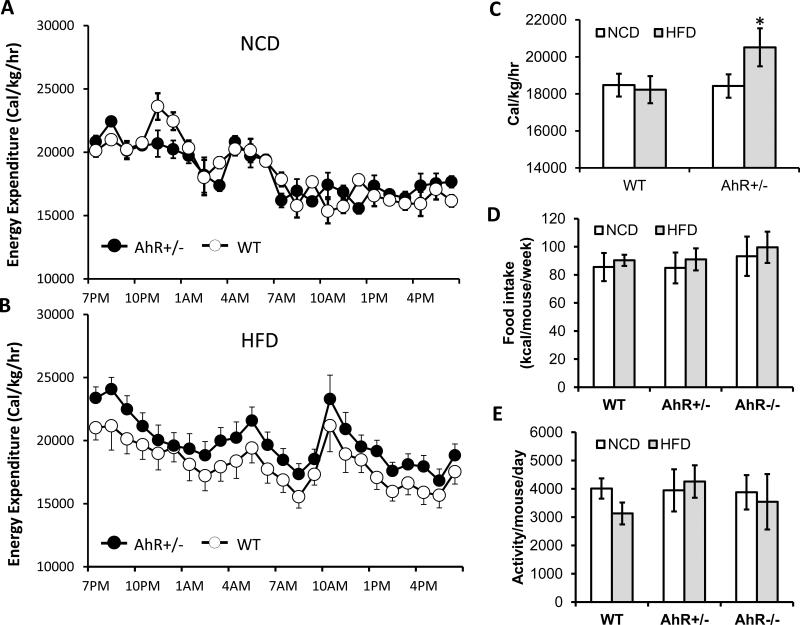
AhR deficiency protected against HFD-induced obesity, hepatic steatosis, insulin resistance and inflammation. Moreover, AhR deficiency preserved insulin signaling in major metabolic tissues. These protective effects result from a higher energy expenditure in AhR-deficient mice compared with WT. Levels of transcript for both the thermogenic gene, uncoupling protein 1 (Ucp1), in brown adipose tissue and mitochondrial β-oxidation genes in muscle were significantly higher in AhR(-/-) and AhR(+/-) mice compared with WT.
This work documents a physiologically relevant function for AhR in regulation of body weight, hepatic fat deposition, insulin sensitivity and energy expenditure under HFD exposure, suggesting that AhR signaling may be developed as a potential therapeutic target for treatment of obesity and metabolic disorders.
背景/目的:肥胖症和糖尿病的流行正在加剧。高热量/高脂肪食物是这些全球健康问题的主要原因,但高脂肪饮食诱导肥胖的分子机制仍未得到充分了解。芳烃受体(AhR)是一种作为外源性物质传感器的转录因子,介导环境毒物诱导的肥胖、胰岛素抵抗和糖尿病的发展。AhR还影响脂质代谢和饮食诱导的肥胖。研究了AhR缺乏对饮食诱导的肥胖、肝脂肪变性和胰岛素抵抗的影响。
雄性野生型(WT)、AhR基因敲除(AhR(-/-))和AhR杂合子(AhR(+/-))小鼠分别喂食正常饲料(NCD,10%千卡来自脂肪)或高脂肪饮食(HFD,60%千卡来自脂肪)长达14周。评估肥胖程度、脂肪和肝脏形态、胰岛素信号、代谢参数和基因谱。
AhR缺乏可预防HFD诱导的肥胖、肝脂肪变性、胰岛素抵抗和炎症。此外,AhR缺乏可保留主要代谢组织中的胰岛素信号。与WT相比,这些保护作用源于AhR缺乏小鼠更高的能量消耗。与WT相比,AhR(-/-)和AhR(+/-)小鼠棕色脂肪组织中产热基因解偶联蛋白1(Ucp1)和肌肉中线粒体β-氧化基因的转录水平显著更高。
这项工作证明了AhR在HFD暴露下调节体重、肝脏脂肪沉积、胰岛素敏感性和能量消耗方面具有生理相关功能,表明AhR信号通路可能被开发为治疗肥胖和代谢紊乱的潜在治疗靶点。