Yun Hyung-Mun, Park Kyung-Ran, Kim Eun-Cheol, Han Sang Bae, Yoon Do Young, Hong Jin Tae
Department of Maxillofacial Tissue Regeneration, School of Dentistry and Research Center for Tooth & Periodontal Regeneration (MRC), Kyung Hee University, Seoul 130-701, Republic of Korea.
College of Pharmacy and Medical Research Center, Chungbuk National University, Heungduk-gu, Cheongju, Chungbuk 361-763, Republic of Korea.
Oncotarget. 2015 Apr 20;6(11):9061-72. doi: 10.18632/oncotarget.3197.
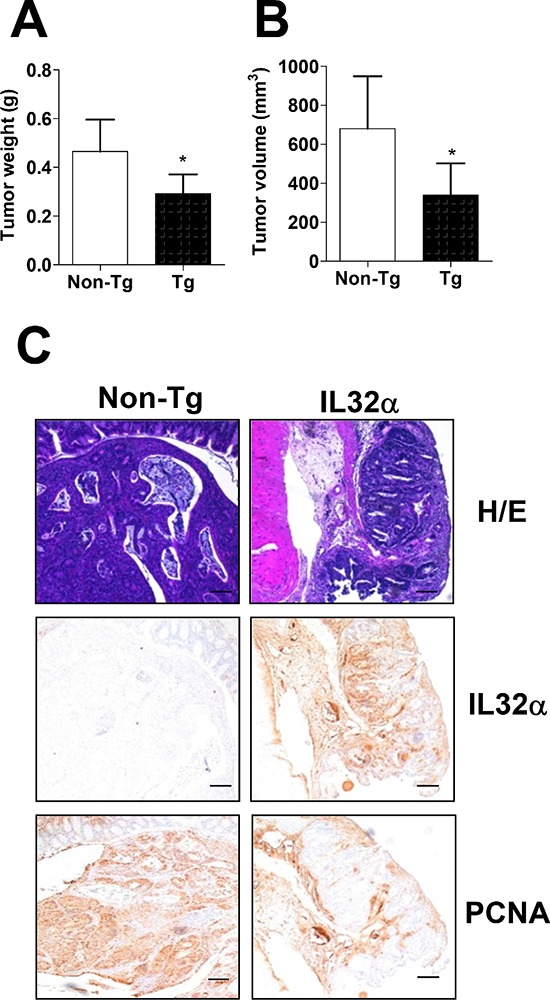
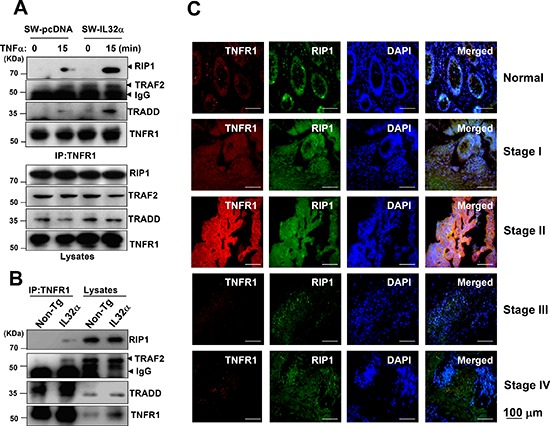
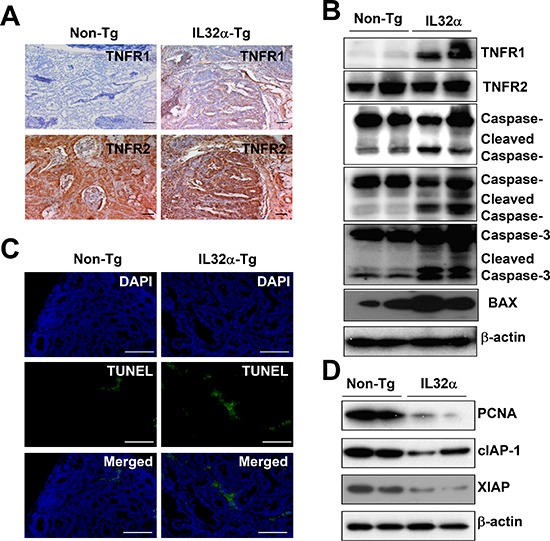
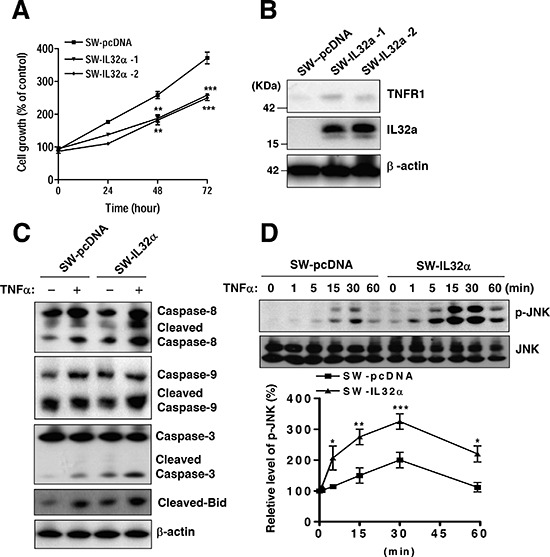
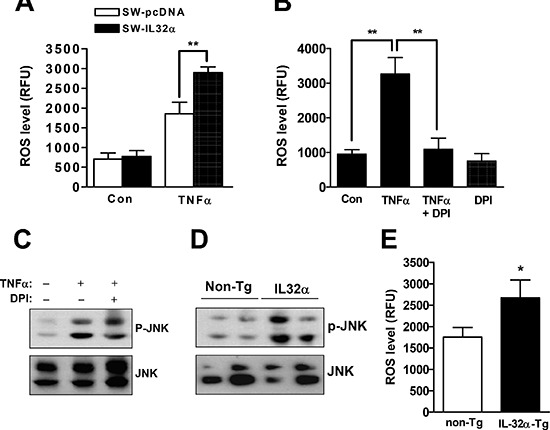
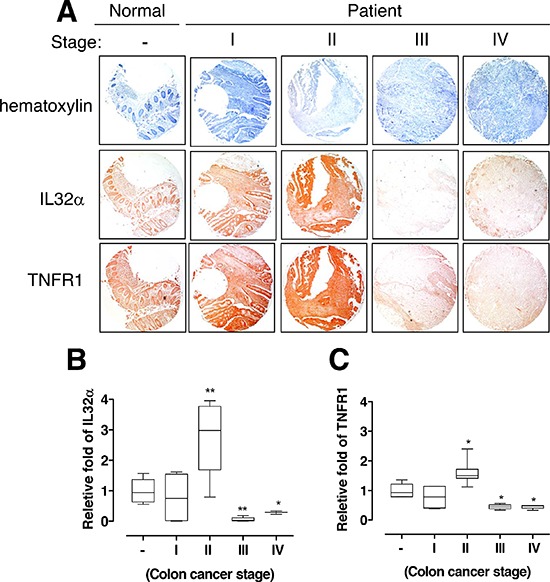
Inflammation is associated with cancer-prone microenvironment, leading to cancer. IL-32 is expressed in chronic inflammation-linked human cancers. To investigate IL-32α in inflammation-linked colorectal carcinogenesis, we generated a strain of mice, expressing IL-32 (IL-32α-Tg). In IL-32α-Tg mice, azoxymethane (AOM)-induced colon cancer incidence was decreased, whereas expression of TNFR1 and TNFR1-mediated apoptosis was increased. Also, IL-32α increased ROS production to induce prolonged JNK activation. In colon cancer patients, IL-32α and TNFR1 were increased. These findings indicate that IL-32α suppressed colon cancer development by promoting the death signaling of TNFR1.
炎症与易于引发癌症的微环境相关,进而导致癌症。白细胞介素-32(IL-32)在与慢性炎症相关的人类癌症中表达。为了研究IL-32α在与炎症相关的结直肠癌发生过程中的作用,我们培育了一种表达IL-32(IL-32α转基因)的小鼠品系。在IL-32α转基因小鼠中,偶氮甲烷(AOM)诱导的结肠癌发病率降低,而肿瘤坏死因子受体1(TNFR1)的表达及TNFR1介导的细胞凋亡增加。此外,IL-32α增加活性氧(ROS)的产生,以诱导JNK的持续激活。在结肠癌患者中,IL-32α和TNFR1水平升高。这些发现表明,IL-32α通过促进TNFR1的死亡信号传导来抑制结肠癌的发展。