Tang Bo, Qi Guangying, Tang Fang, Yuan Shengguang, Wang Zhenran, Liang Xingsi, Li Bo, Yu Shuiping, Liu Jie, Huang Qi, Wei Yangchao, Zhai Run, Lei Biao, Yu Hongping, Jiao Xingyuan, He Songqing
Department of Hepatobiliary Surgery, Guilin Medical University, Affiliated Hospital, Guilin, Guangxi, People's Republic of China.
Laboratory of Liver Injury and Repair Molecular Medicine, Guilin Medical University, Guilin, Guangxi, People's Republic of China.
Oncotarget. 2015 May 20;6(14):12723-39. doi: 10.18632/oncotarget.3713.
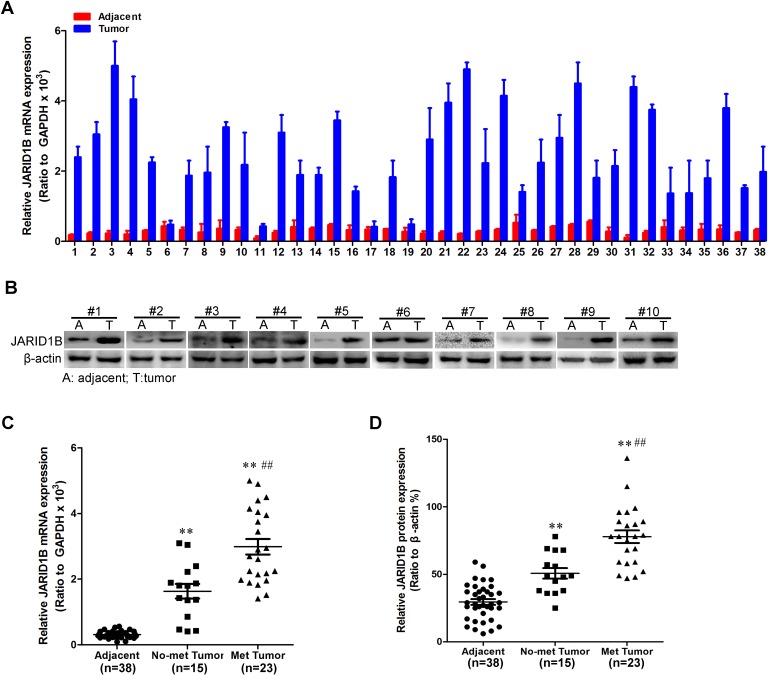
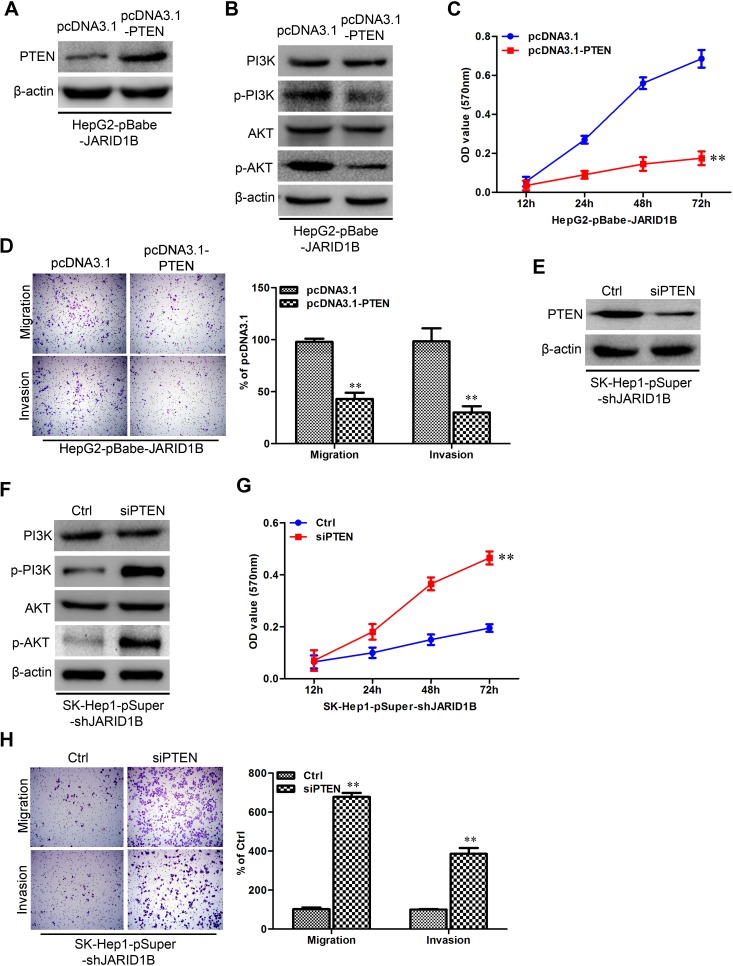
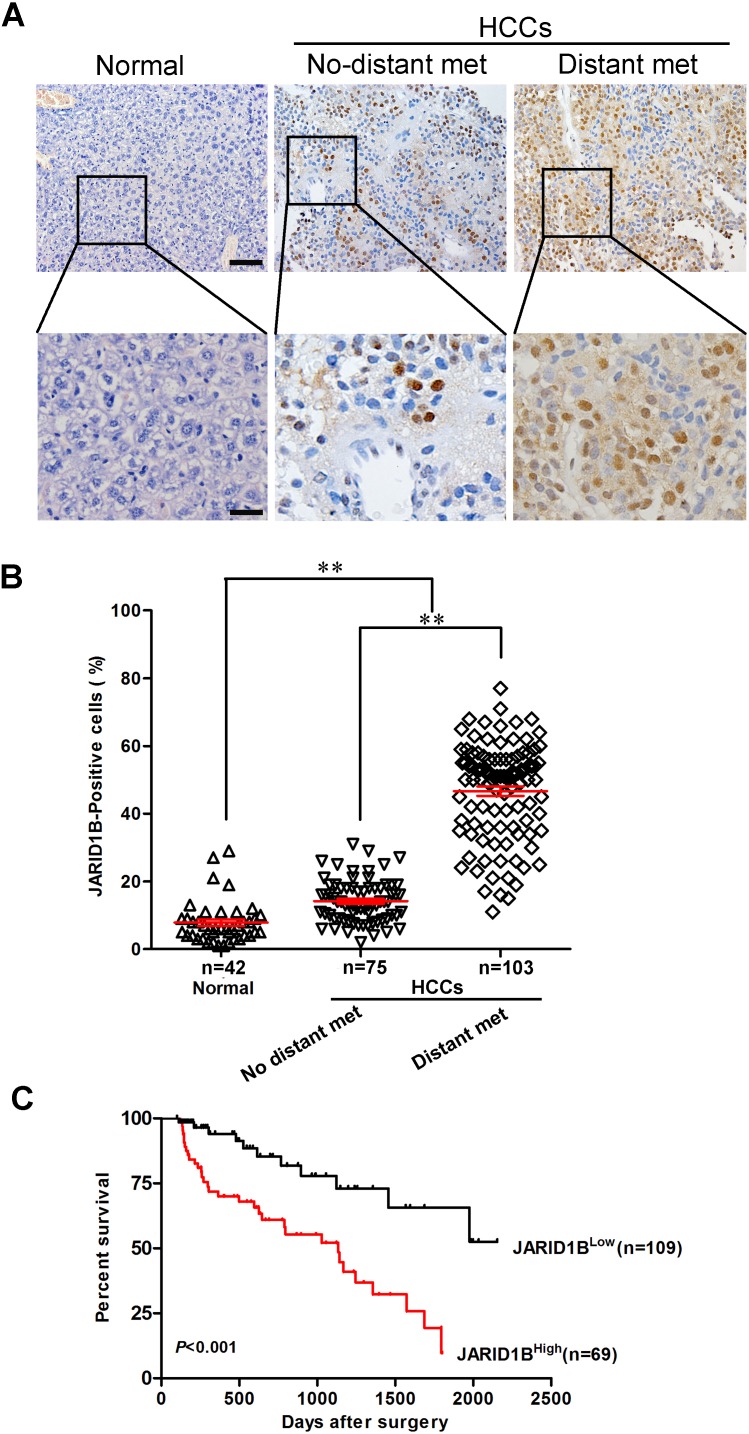
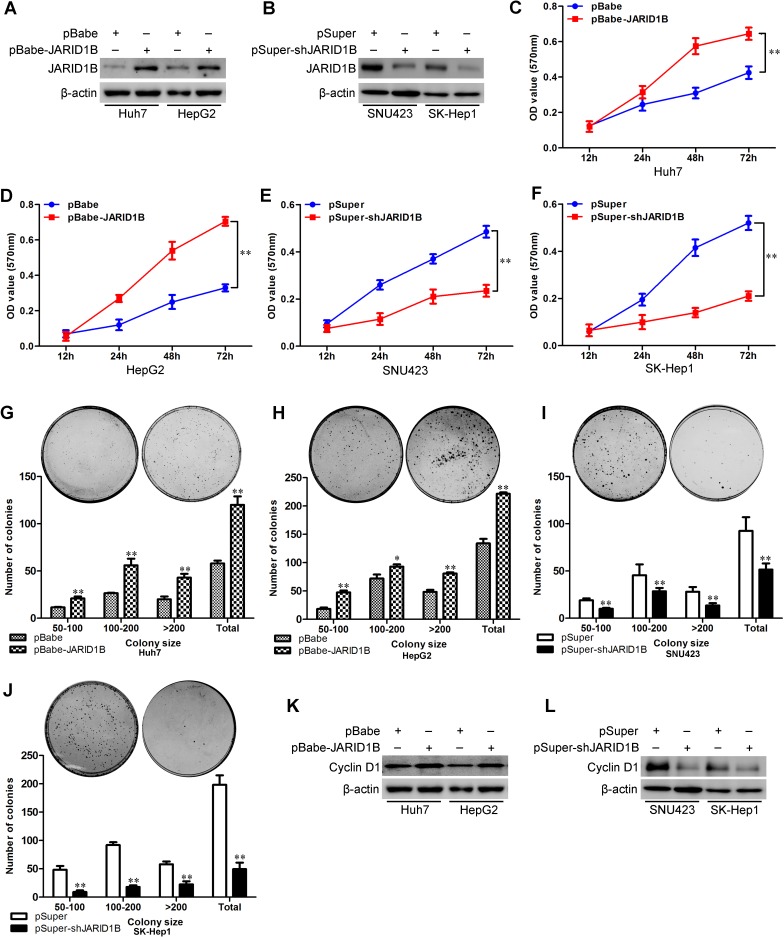
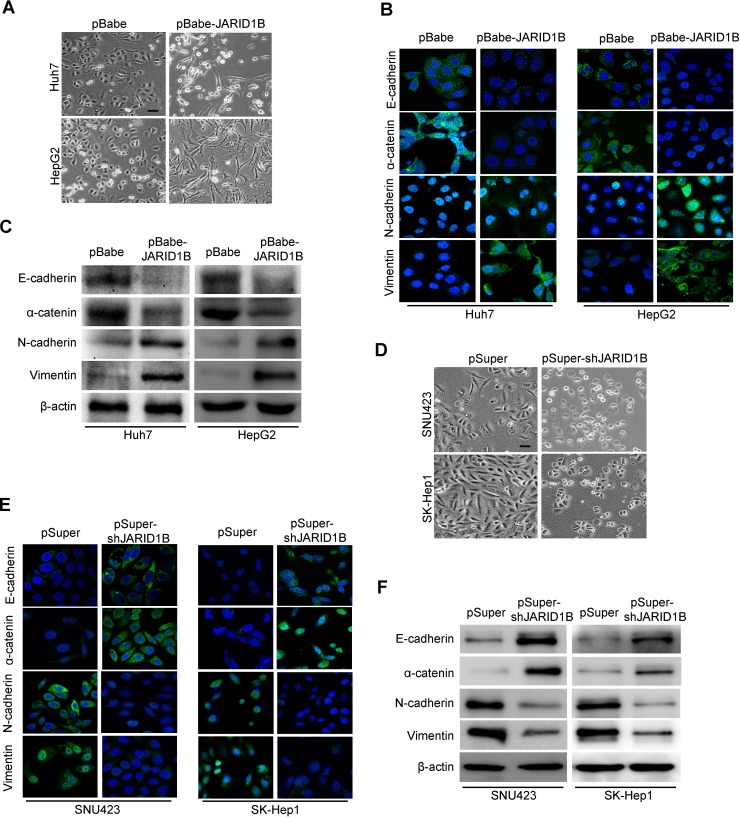
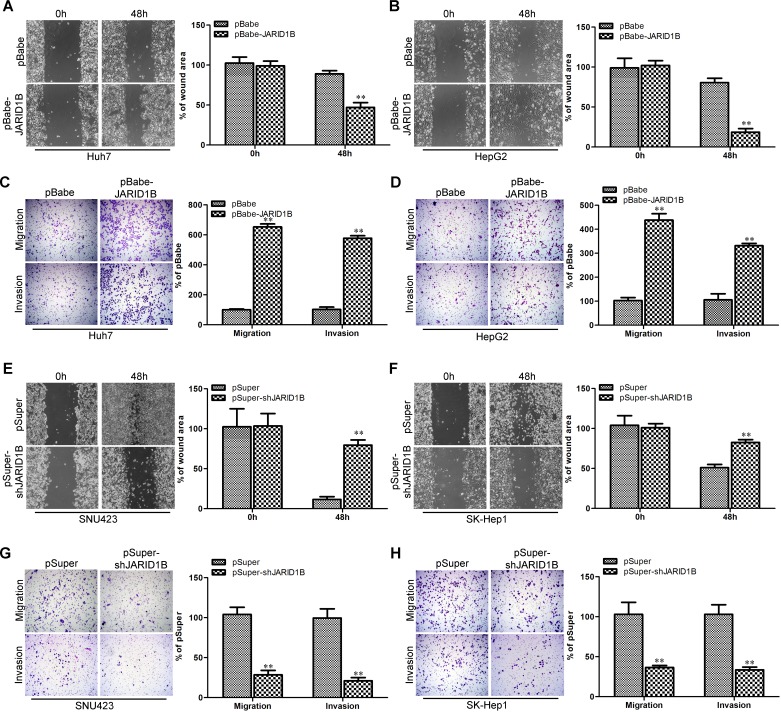
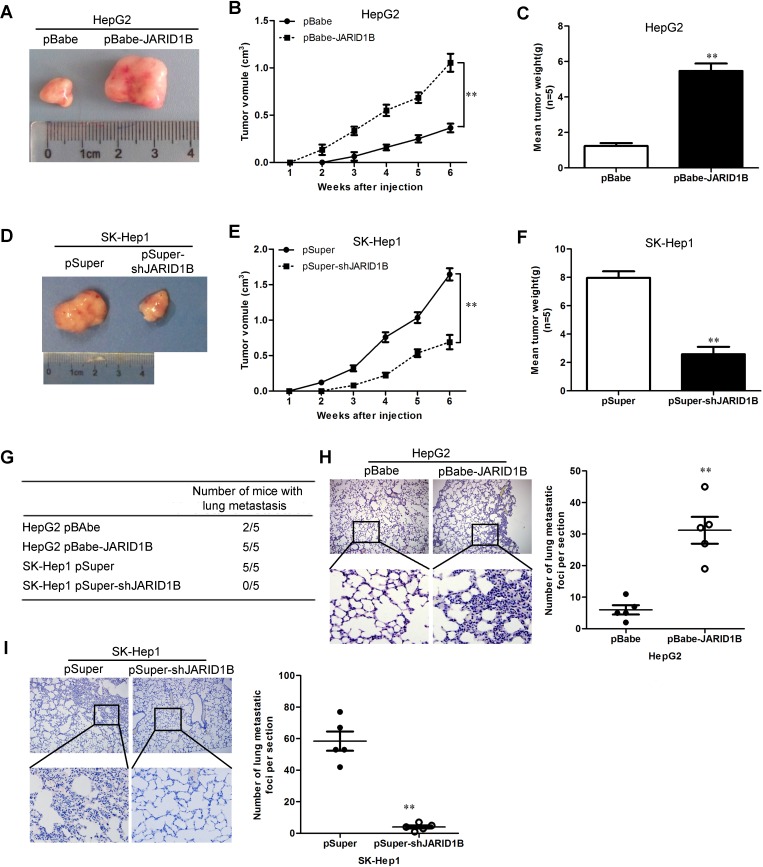
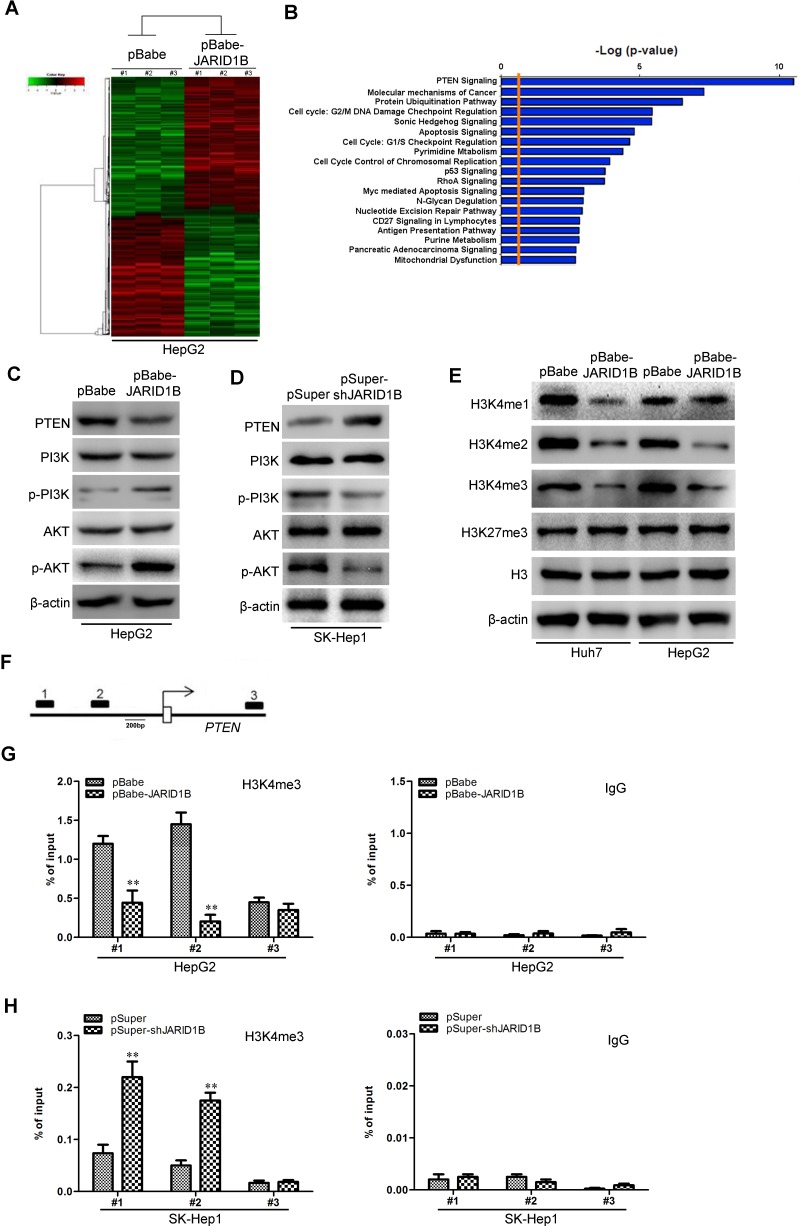
JARID1B is a member of the family of JmjC domain-containing proteins that removes methyl residues from methylated lysine 4 on histone H3 lysine 4 (H3K4). JARID1B has been proposed as an oncogene in many types of tumors; however, its role and underlying mechanisms in hepatocellular carcinoma (HCC) remain unknown. Here we show that JARID1B is elevated in HCC and its expression level is positively correlated with metastasis. In addition Kaplan-Meier survival analysis showed that high expression of JARID1B was associated with decreased overall survival of HCC patients. Overexpression of JARID1B in HCC cells increased proliferation, epithelial-mesenchymal transition, migration and invasion in vitro, and enhanced tumorigenic and metastatic capacities in vivo. In contrast, silencing JARID1B in aggressive and invasive HCC cells inhibited these processes. Mechanistically, we found JARID1B exerts its function through modulation of H3K4me3 at the PTEN gene promoter, which was associated with inactive PTEN transcription. PTEN overexpression blocked JARID1B-driven proliferation, EMT, and metastasis. Our results, for the first time, portray a pivotal role of JARID1B in stimulating metastatic behaviors of HCC cells. Targeting JARID1B may thus be a useful strategy to impede HCC cell invasion and metastasis.
JARID1B是含JmjC结构域蛋白家族的成员,该家族可从组蛋白H3赖氨酸4(H3K4)上的甲基化赖氨酸4去除甲基残基。JARID1B在多种肿瘤中被认为是一种癌基因;然而,其在肝细胞癌(HCC)中的作用及潜在机制仍不清楚。在此我们表明,JARID1B在HCC中表达升高,其表达水平与转移呈正相关。此外,Kaplan-Meier生存分析显示,JARID1B的高表达与HCC患者总生存期缩短相关。在HCC细胞中过表达JARID1B可增加体外增殖、上皮-间质转化、迁移和侵袭,并增强体内致瘤和转移能力。相反,在侵袭性HCC细胞中沉默JARID1B可抑制这些过程。机制上,我们发现JARID1B通过调节PTEN基因启动子处的H3K4me3发挥其功能,这与PTEN转录失活有关。PTEN过表达可阻断JARID1B驱动的增殖、EMT和转移。我们的结果首次描绘了JARID1B在刺激HCC细胞转移行为中的关键作用。因此,靶向JARID1B可能是阻碍HCC细胞侵袭和转移的一种有用策略。