Fan Yanyan, Liu Helin, Han Rongcheng, Huang Lu, Shi Hao, Sha Yinlin, Jiang Yuqiang
1] State Key Laboratory of Molecular Developmental Biology, Institute of Genetics and Developmental Biology, Chinese Academy of Sciences, Beijing 100101, China [2] Institute of Opto-electronic Materials and Technology, South China Normal University, Guangzhou 510631, China.
Department of Biophysics, School of Basic Medical Sciences and Biomed-X Center, Peking University, Beijing 100191, China.
Sci Rep. 2015 Apr 24;5:9908. doi: 10.1038/srep09908.
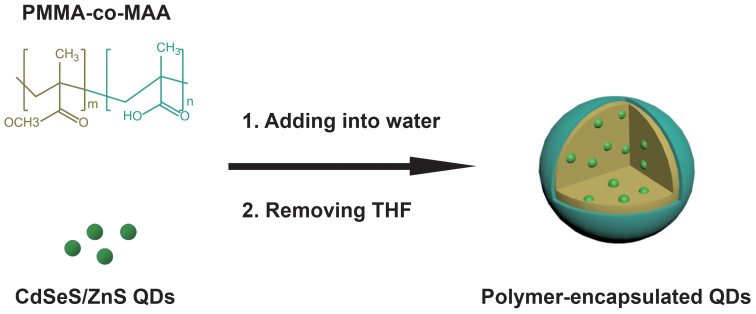
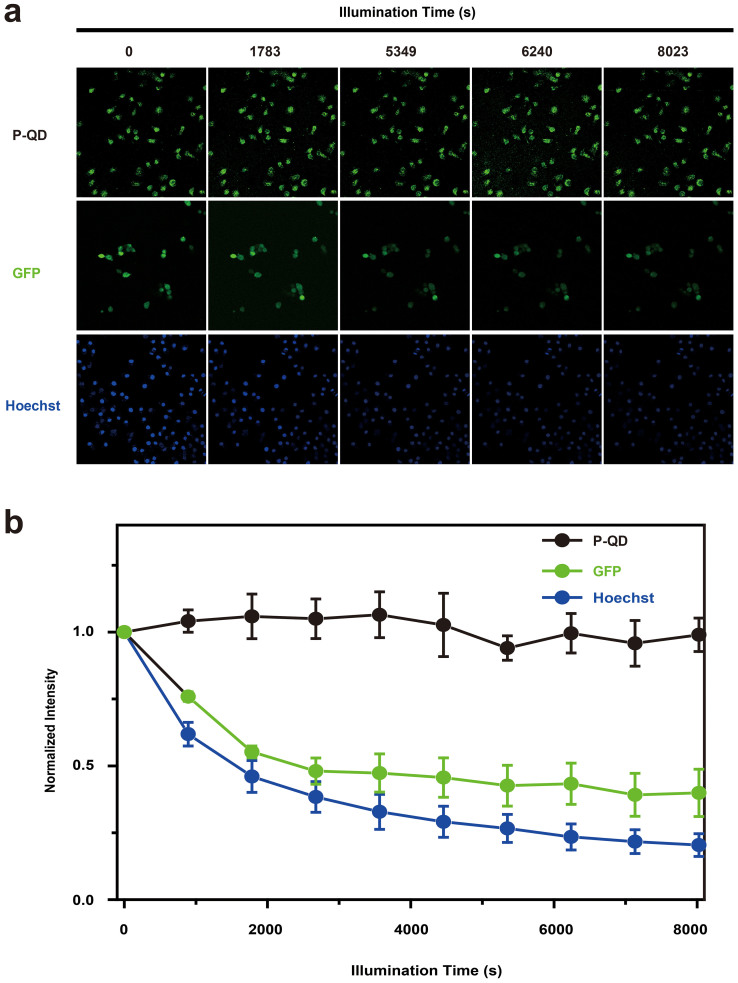
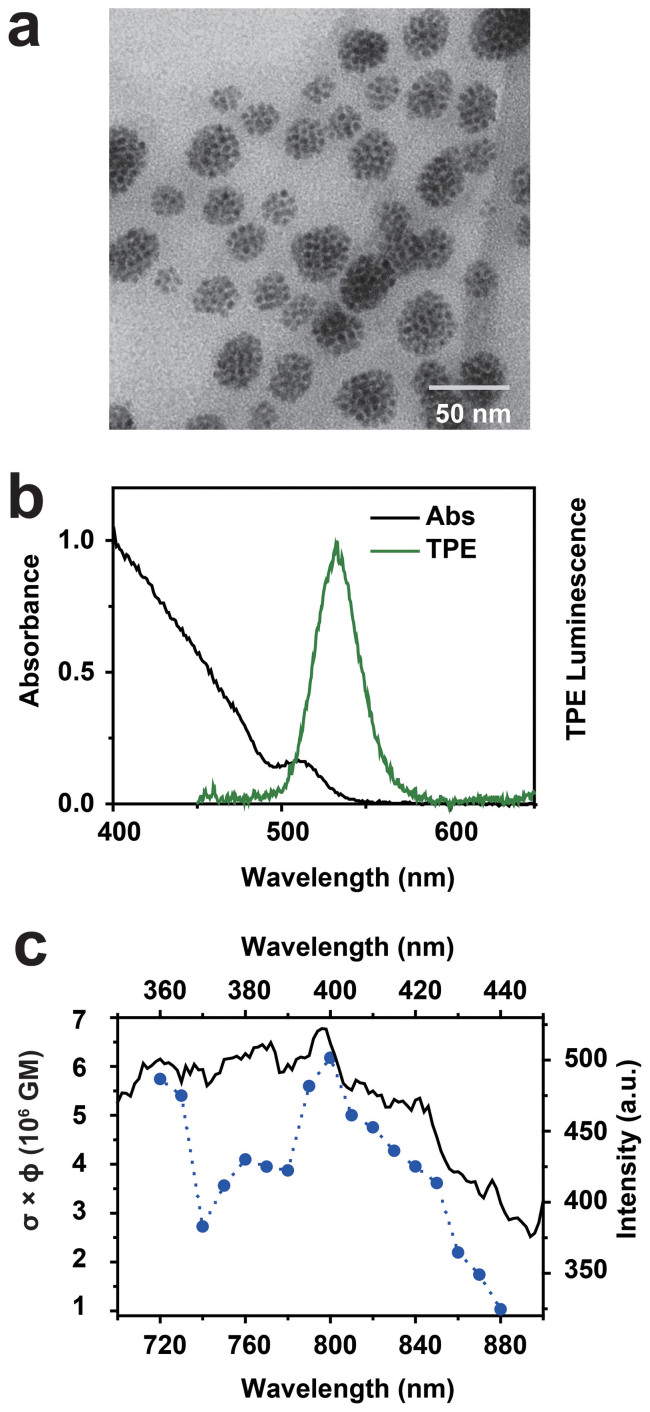
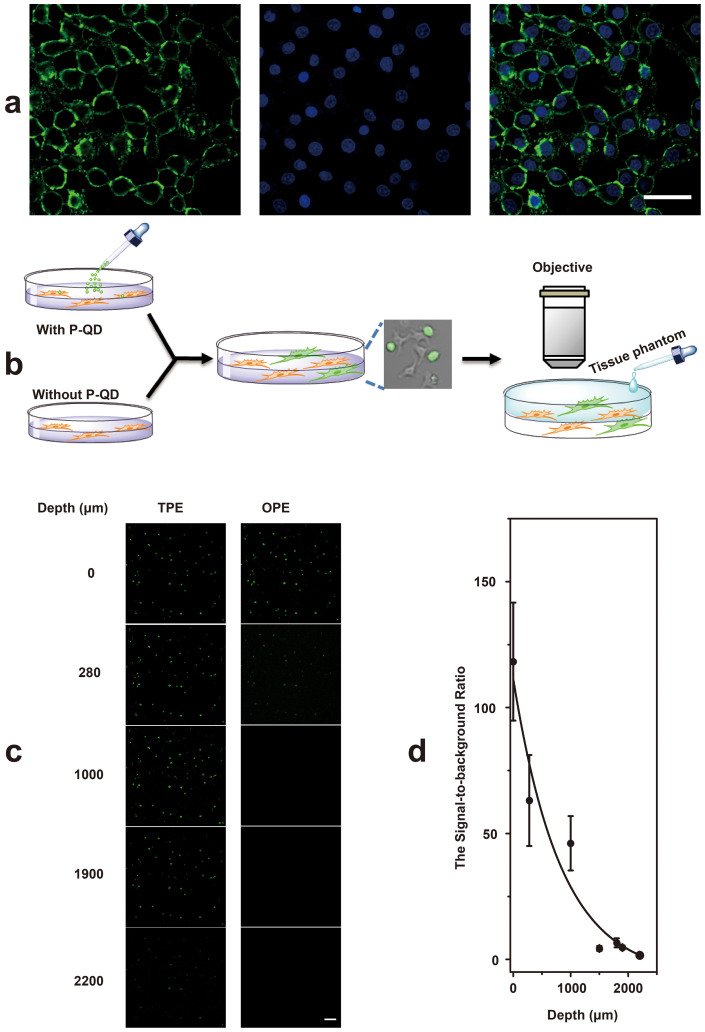
Materials possessing high two photon absorption (TPA) are highly desirable for a range of fields, such as three-dimensional data storage, TP microscopy (TPM) and photodynamic therapy (PDT). Specifically, for TPM, high TP excitation (TPE) brightness (σ × ϕ, where σ is TPA cross-sections and ϕ is fluorescence quantum yield), excellent photostability and minimal cytotoxicity are highly desirable. However, when TPA materials are transferred to aqueous media through molecule engineering or nanoparticle formulation, they usually suffer from the severely decrease of quantum yield (QY). Here, we report a convenient and efficient method for preparing polymer-encapsulated quantum dots (P-QD). Interestingly, the QY was considerably enhanced from original 0.33 (QDs in THF) to 0.84 (P-QD in water). This dramatic enhancement in QY is mainly from the efficiently blocking nonradiative decay pathway from the surface trap states, according to the fluorescence decay lifetimes analysis. The P-QD exhibits extremely high brightness (σ × ϕ up to 6.2 × 10(6) GM), high photostability, excellent colloidal stability and minimal cytotoxicity. High quality cellular TP imaging with high signal-to-background ratio (> 100) and tissue imaging with a penetration depth of 2200 μm have been achieved with P-QD as probe.
具有高双光子吸收(TPA)的材料在一系列领域中都非常受欢迎,例如三维数据存储、双光子显微镜(TPM)和光动力疗法(PDT)。具体而言,对于TPM,高双光子激发(TPE)亮度(σ×ϕ,其中σ是TPA截面,ϕ是荧光量子产率)、优异的光稳定性和最小的细胞毒性是非常理想的。然而,当通过分子工程或纳米颗粒配方将TPA材料转移到水性介质中时,它们通常会遭受量子产率(QY)的严重降低。在此,我们报告了一种制备聚合物包裹量子点(P-QD)的简便有效方法。有趣的是,QY从原来的0.33(四氢呋喃中的量子点)显著提高到0.84(水中的P-QD)。根据荧光衰减寿命分析,QY的这种显著提高主要来自于有效阻断表面陷阱态的非辐射衰减途径。P-QD表现出极高的亮度(σ×ϕ高达6.2×10⁶GM)、高光稳定性、优异的胶体稳定性和最小的细胞毒性。以P-QD为探针实现了高质量的细胞双光子成像,其信背比>100,以及穿透深度为2200μm的组织成像。