Fan Fenxia, Du Pengcheng, Kan Biao, Yan Meiying
State Key Laboratory for Infectious Disease Prevention and Control, National Institute for Communicable Disease Control and Prevention, Chinese Center for Disease Control and Prevention, Beijing, China; Collaborative Innovation Center for Diagnosis and Treatment of Infectious Diseases, Hangzhou, Zhejiang, China.
PLoS One. 2015 Apr 24;10(4):e0124507. doi: 10.1371/journal.pone.0124507. eCollection 2015.
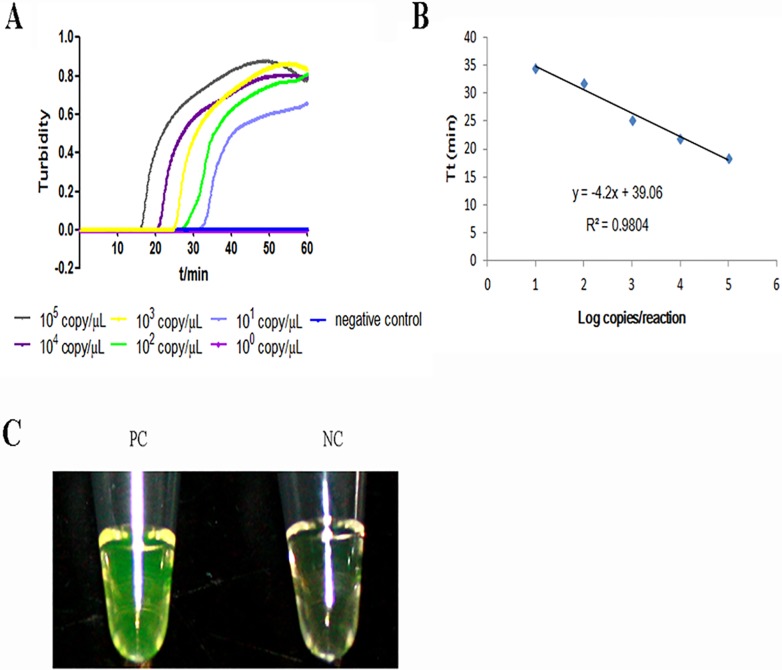
Typhoid fever remains a public health threat in many countries. A positive result in traditional culture is a gold-standard for typhoid diagnosis, but this method is time consuming and not sensitive enough for detection of samples containing a low copy number of the target organism. The availability of the loop-mediated isothermal amplification (LAMP) assay, which offers high speed and simplicity in detection of specific targets, has vastly improved the diagnosis of numerous infectious diseases. However, little research efforts have been made on utilizing this approach for diagnosis of Salmonella enterica serovar Typhi by targeting a single and specific gene. In this study, a LAMP assay for rapid detection of S. Typhi based on a novel marker gene, termed STY2879-LAMP, was established and evaluated with real-time PCR (RT-PCR). The specificity tests showed that STY2879 could be amplified in all S. Typhi strains isolated in different years and regions in China, whereas no amplification was observable in non-typhoidal strains covering 34 Salmonella serotypes and other pathogens causing febrile illness. The detection limit of STY2879-LAMP for S. Typhi was 15 copies/reaction in reference plasmids, 200 CFU/g with simple heat-treatment of DNA extracted from simulated stool samples and 20 CFU/ml with DNA extracted from simulated blood samples, which was 10 fold more sensitive than the parallel RT-PCR control experiment. Furthermore, the sensitivity of STY2879-LAMP and RT-PCR combining the traditional culture enrichment method for simulated stool and blood spiked with lower S. Typhi count during the 10 h enrichment time was also determined. In comparison with LAMP, the positive reaction time for RT-PCR required additional 2-3 h enrichment time for either simulated stool or blood specimens. Therefore, STY2879-LAMP is of practical value in the clinical settings and has a good potential for application in developing regions due to its easy-to-use protocol.
伤寒热在许多国家仍然是一种公共卫生威胁。传统培养法检测结果呈阳性是伤寒诊断的金标准,但该方法耗时较长,且对低拷贝数目标病原体样本的检测灵敏度不够。环介导等温扩增(LAMP)检测方法具有检测特定目标快速、简便的特点,极大地改善了多种传染病的诊断。然而,针对肠炎沙门氏菌伤寒血清型,利用该方法靶向单个特定基因进行诊断的研究工作较少。在本研究中,建立了一种基于新型标记基因快速检测伤寒杆菌的LAMP检测方法,称为STY2879-LAMP,并通过实时荧光定量PCR(RT-PCR)进行评估。特异性试验表明,在中国不同年份和地区分离的所有伤寒杆菌菌株中均可扩增出STY2879,而在涵盖34种沙门氏菌血清型的非伤寒菌株及其他引起发热性疾病的病原体中未观察到扩增。STY2879-LAMP对伤寒杆菌的检测限为:参比质粒中为15拷贝/反应,简单热处理模拟粪便样本提取的DNA时为200 CFU/g,模拟血液样本提取的DNA时为20 CFU/ml,比平行的RT-PCR对照实验灵敏度高10倍。此外,还测定了在10小时富集时间内,STY2879-LAMP和RT-PCR结合传统培养富集法对低菌量伤寒杆菌污染的模拟粪便和血液样本的检测灵敏度。与LAMP相比,RT-PCR的阳性反应时间对于模拟粪便或血液样本需要额外2-3小时的富集时间。因此,STY2879-LAMP在临床环境中具有实用价值,因其操作简便,在发展中地区具有良好的应用潜力。