Çınarka Halit, Kayhan Servet, Karataş Mevlüt, Yavuz Asiye, Gümüş Aziz, Özyurt Songül, Cüre Medine Cumhur, Şahin Ünal
Department of Chest Diseases, Recep Tayyip Erdogğan University, Rize, Turkey.
Department of Biochemistry, Recep Tayyip Erdogğan University, Rize, Turkey.
Ther Clin Risk Manag. 2015 Apr 10;11:589-94. doi: 10.2147/TCRM.S80779. eCollection 2015.
Copeptin which is the C-terminal fragment of antidiuretic hormone (ADH), is a biomarker that has been reported to be increased in various cardiovascular disorders, cerebrovascular diseases and associated with prognosis. Patients with obstructive sleep apnea syndrome (OSAS) have a tendency to develop coronary and cerebral atherosclerotic diseases.
The aim of the present study was to study copeptin levels in patients with obstructive sleep apnea and in a control group in order to determine whether copeptin could be used as a biomarker predicting the severity of OSAS and possible complications in this group.
A total of 116 patients with OSAS, diagnosed by polysomnography, and 27 controls were included in the study. Blood samples were collected after overnight fasting, and copeptin levels were measured with enzyme-linked immunosorbent assay.
Copeptin levels were significantly higher in the OSAS group compared to control group (2,156±502; 1,845±500 pg/mL, respectively, P=0.004). Mean copeptin level of the patients having apnea-hypopnea index (AHI) ≥30 was significantly higher than that of the patients having AHI <30 (2,392±415; 2,017±500 pg/mL, respectively, P<0.001). A multivariate regression analysis showed that copeptin level, (hazard ratio: 1.58; 95% confidence interval: 1.09-2.30) was a predictor of severe OSAS (P=0.016). Copeptin levels showed significant positive correlation with AHI (r=0.32; P<0.001), desaturation index (r=0.23; P=0.012), arousal index (r=0.24; P=0.010) and CRP (r=0.26; P=0.011) respectively.
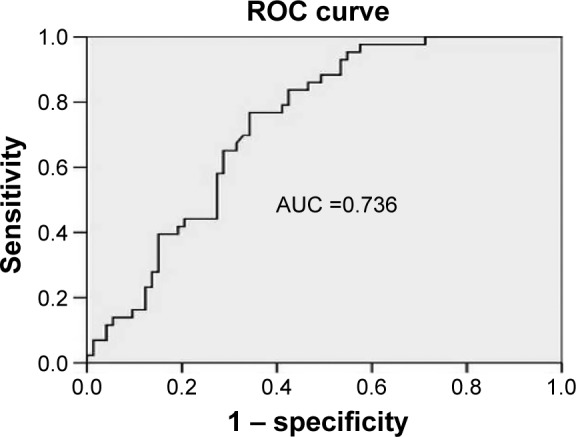
Copeptin levels are high in OSAS patients and copeptin is a potential marker for identifying patients with a high risk of early cardiovascular complications of OSAS. Copeptin has modest sensitivity (84%) for discriminating severe OSAS patients who are candidates for severe cardiovascular complications.
copeptin是抗利尿激素(ADH)的C末端片段,是一种生物标志物,据报道在各种心血管疾病、脑血管疾病中升高,并与预后相关。阻塞性睡眠呼吸暂停综合征(OSAS)患者有发生冠状动脉和脑动脉粥样硬化疾病的倾向。
本研究的目的是研究阻塞性睡眠呼吸暂停患者和对照组中的copeptin水平,以确定copeptin是否可作为预测该组OSAS严重程度和可能并发症的生物标志物。
本研究共纳入116例经多导睡眠图诊断的OSAS患者和27例对照。过夜禁食后采集血样,采用酶联免疫吸附测定法测定copeptin水平。
OSAS组copeptin水平显著高于对照组(分别为2,156±502;1,845±500 pg/mL,P = 0.004)。呼吸暂停低通气指数(AHI)≥30的患者的平均copeptin水平显著高于AHI<30的患者(分别为2,392±415;2,017±500 pg/mL,P<0.001)。多因素回归分析显示,copeptin水平(风险比:1.58;95%置信区间:1.09 - 2.30)是严重OSAS的预测指标(P = 0.016)。copeptin水平分别与AHI(r = 0.32;P<0.001)、去饱和指数(r = 0.23;P = 0.012)、觉醒指数(r = 0.24;P = 0.010)和CRP(r = 0.26;P = 0.011)呈显著正相关。
OSAS患者的copeptin水平较高,copeptin是识别有OSAS早期心血管并发症高风险患者的潜在标志物。copeptin对鉴别有严重心血管并发症风险的严重OSAS患者具有中等敏感性(84%)。