Safaeyan Firouzeh, Nahaei Mohammad Reza, Seifi Sirus Jedary, Kafil Hossein Samadi, Sadeghi Javid
Tuberculosis & Lung Disease Research Center, Tabriz University of Medical Sciences, Tabriz, Iran.
Department of Medical Microbiology, Faculty of Medicine, Tabriz University of Medical Sciences, Tabriz, Iran.
GMS Hyg Infect Control. 2015 Apr 15;10:Doc06. doi: 10.3205/dgkh000249. eCollection 2015.
Viral influenza is a seasonal infection associated with significant morbidity and mortality. In the United States more than 35,000 deaths and 200,000 hospitalizations are recorded annually due to influenza. Secondary bacterial infections or co-infections associated with cases of influenza are a leading cause of severe morbidity and mortality, especially among high-risk groups such as the elderly and young children.
The aim of the present study was the quantitative detection of S. aureus, S. pneumoniae and H. influenzae in a group of patients with seasonal influenza A, influenza A (H1N1) pandemic 2009, and patients with symptoms of respiratory infection, but the negative for H1N1 serving as control group.
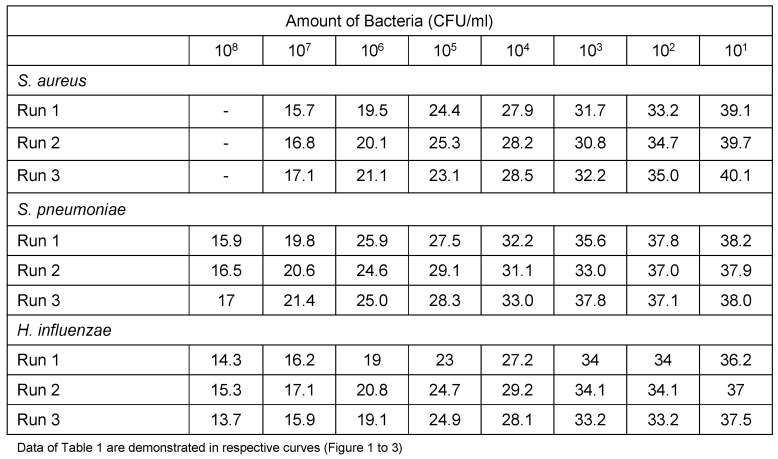
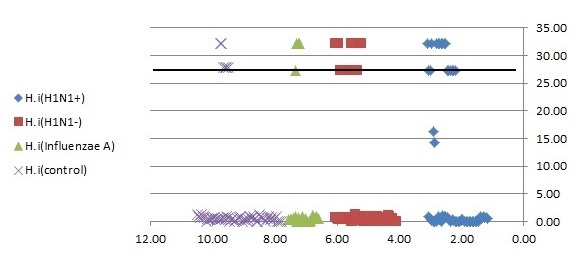
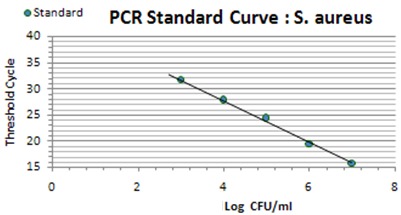
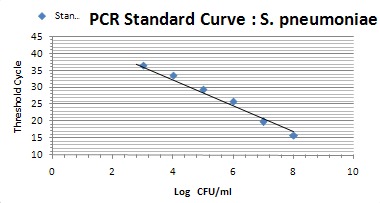
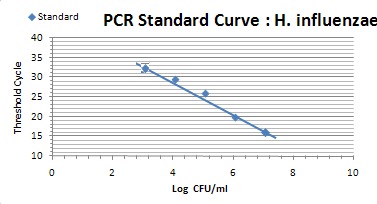
In total, 625 patients suspected respiratory infection from April 2009 to April 2010 were studied. There were 58 patients with influenza A H1N1 and 567 patients negative for influenza A H1N1. From November 2010 to February 2011, 158 patients with respiratory symptoms were analyzed for seasonal influenza A. There were 25 patients with seasonal influenza A. To check the colonization status among the healthy individuals 62 healthy persons were further investigated. Individual were screened in parallel. The choices of special genes were amplified from clinical specimens using real-time PCR with a cutoff of 10(4) CFU/mL to differentiate colonization from infection in respiratory tract.
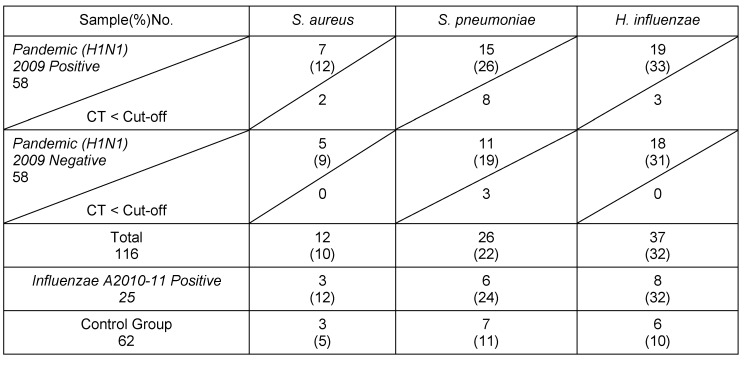
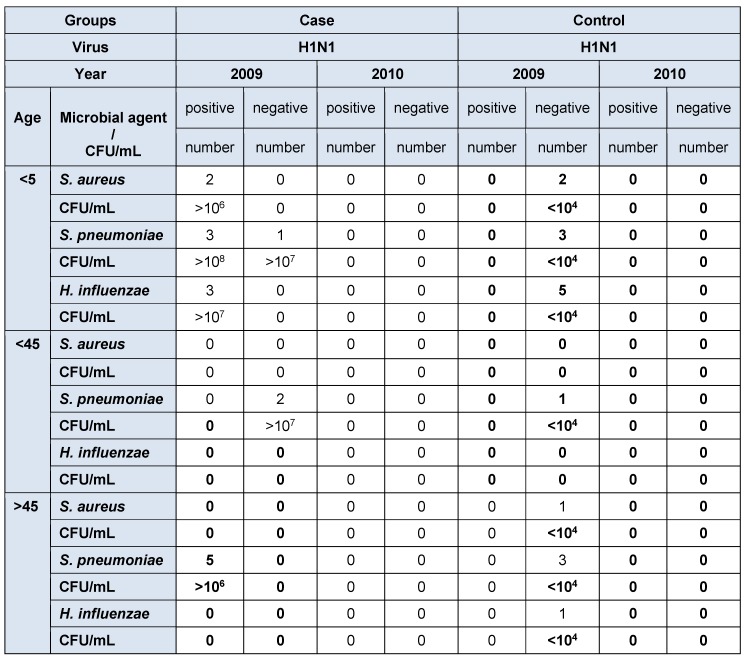
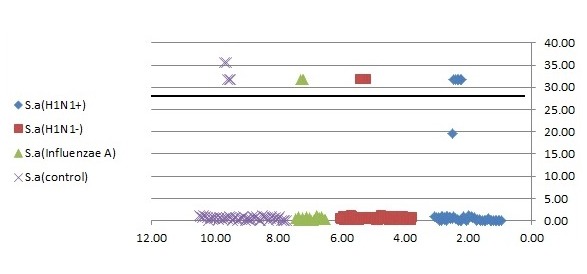
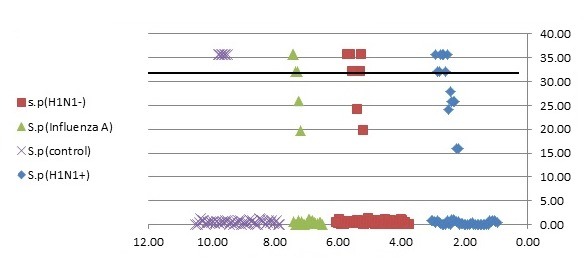
S. aureus, S. pneumoniae and H. influenzae were detected in 12%, 26% and 33% of patients with H1N1, while the corresponding figures were 9%, 19%, and 31% for H1N1 negative patients. Among patients with seasonal influenza A 12% S. aureus, 24% S. pneumoniae, and 32% H. influenzae co-infections were detected, while influenza negative control group yielded 5% S. aureus, 11% S. pneumoniae, and 10% H. influenzae, respectively.
The results of this study indicated that the serotype of pandemic H1N1 2009 did not increase incidence of secondary infection with S. aureus, S. pneumoniae and H. influenzae. Quantitative detection of secondary bacterial infection by QR-PCR can help us for distinguishing colonization from infection and controlling misuse of antibiotics and bacterial drug resistances.
病毒性流感是一种季节性感染,会导致较高的发病率和死亡率。在美国,每年有超过35000人死于流感,20万人因流感住院。与流感病例相关的继发性细菌感染或合并感染是严重发病和死亡的主要原因,尤其是在老年人和幼儿等高风险人群中。
本研究的目的是对一组季节性甲型流感、2009年甲型(H1N1)大流行性流感患者以及有呼吸道感染症状但H1N1检测呈阴性的患者(作为对照组)中的金黄色葡萄球菌、肺炎链球菌和流感嗜血杆菌进行定量检测。
对2009年4月至2010年4月期间总共625例疑似呼吸道感染患者进行了研究。其中甲型H1N1流感患者58例,甲型H1N1流感检测呈阴性的患者567例。2010年11月至2011年2月,对158例有呼吸道症状的患者进行了季节性甲型流感分析。其中季节性甲型流感患者25例。为检查健康个体中的定植情况,对62名健康人进行了进一步调查。对个体进行平行筛查。使用实时PCR从临床标本中扩增特定基因,以10(4) CFU/mL为临界值来区分呼吸道定植与感染。
在甲型H1N1流感患者中,金黄色葡萄球菌、肺炎链球菌和流感嗜血杆菌的检出率分别为12%、26%和33%,而甲型H1N1流感检测呈阴性的患者相应数字分别为9%、19%和31%。在季节性甲型流感患者中,金黄色葡萄球菌、肺炎链球菌和流感嗜血杆菌合并感染率分别为12%、24%和32%,而流感阴性对照组中金黄色葡萄球菌、肺炎链球菌和流感嗜血杆菌的检出率分别为5%、11%和10%。
本研究结果表明,2009年大流行性H1N1流感血清型并未增加金黄色葡萄球菌、肺炎链球菌和流感嗜血杆菌继发性感染的发生率。通过定量实时PCR检测继发性细菌感染有助于我们区分定植与感染,并控制抗生素的滥用和细菌耐药性。