Chen Huaguo, Zhou Xin, Zhao Yang, Gong Xiao-Jian, He Yan, Ma Feng-Wei, Zhou Mei, Zhao Chao, Niu Yi, Deng Jie
Guizhou Engineering Laboratory for Quality Control & Evaluation Technology of Medicine, Guiyang, Guizhou, P. R. China; The Research Center for Quality Control of Natural Medicine, Guizhou Normal University, Guiyang, Guizhou, P. R. China; Key laboratory for Information System of Mountainous Areas and Protection of Ecological Environment, Guizhou Normal University, Guiyang, Guizhou, P. R. China.
Han Fang Pharmaceutical co., LTD of Guizhou province, Guiyang, Guizhou, P. R. China.
PLoS One. 2015 Apr 27;10(4):e0123176. doi: 10.1371/journal.pone.0123176. eCollection 2015.
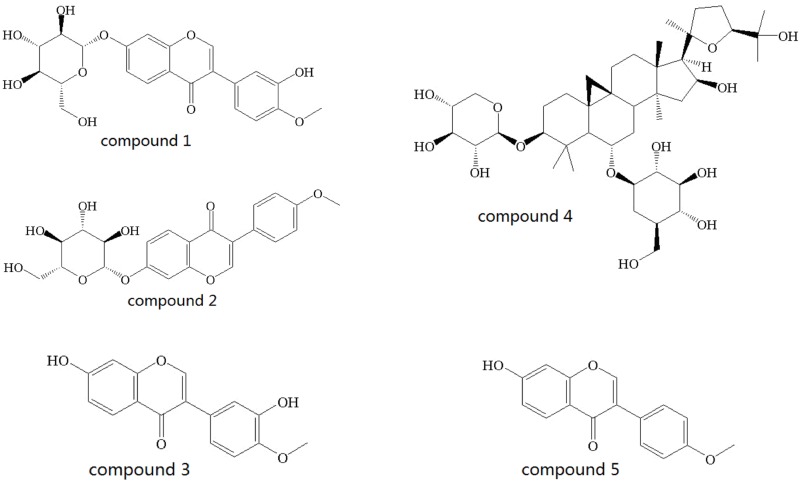
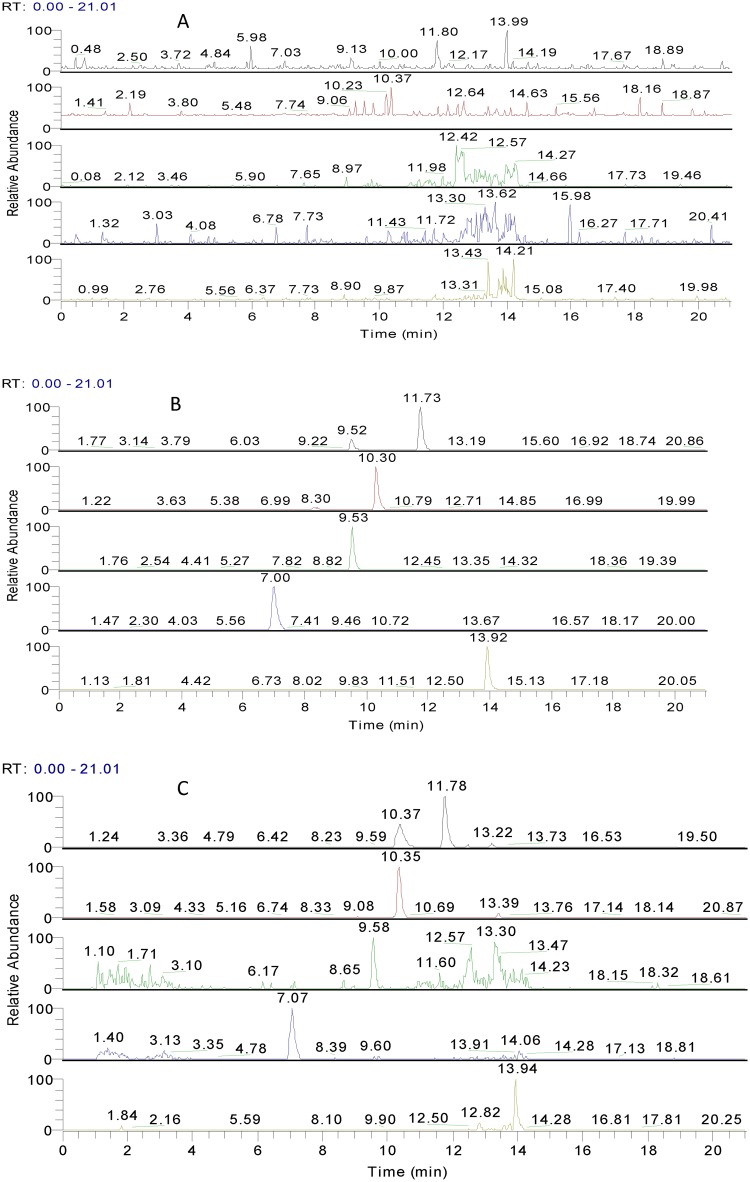
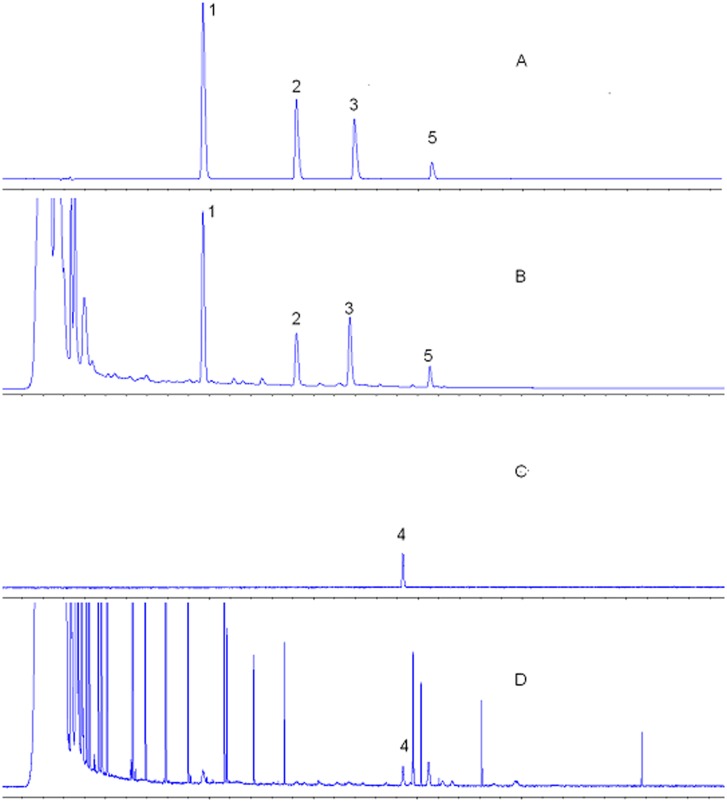
To more scientifically and reasonably control the quality of Huangqi Granules, preliminary studies on the pharmacodynamics and serum pharmacochemistry of this medicine were performed. DPPH and MTT experiments showed that water extracts of Huangqi Granules had good antioxidant activity and increased immunity. Timed blood samples collected 5 min, 15 min, and 30 min after oral administration of a set amount of Huangqi Granules were collected and tested using UPLC-ESI-MS/MS. As a result, calycosin-7-O-β-D-glucoside, ononin, calycosin, astragaloside IV, and formononetin were found to exist in rat blood after dosing, indicating that the five chemical compounds might have pharmacological activity, and based on this result, they were designated biomarkers for quality control of Huangqi Granules. Consequently, a simple, rapid and efficient method was developed in the present study for the simultaneous determination of the five characteristic compounds in Huangqi Granules using HPLC-DAD-ELSD.
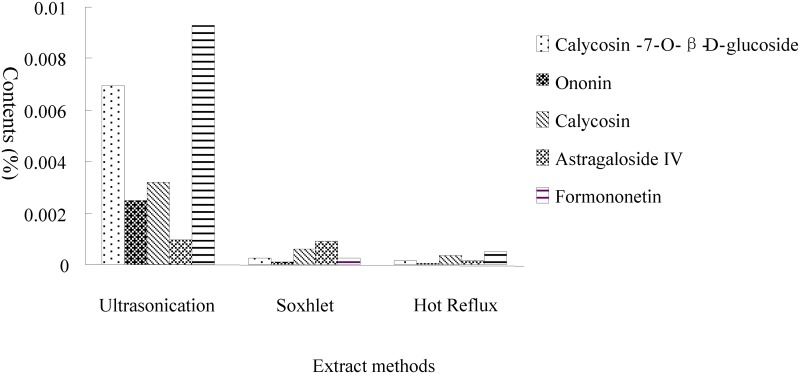
The separation was performed using an Agilent Hypersil ODS column (4.6 × 250 mm, 5 μm) at 30 ℃. The mobile phase was composed of water (solvent A) and acetonitrile (solvent B) with a flow rate of 1 mL/min. The drift tube temperature of the ELSD system was set to 85 ℃, and the nitrogen pressure was 3.5 bar.
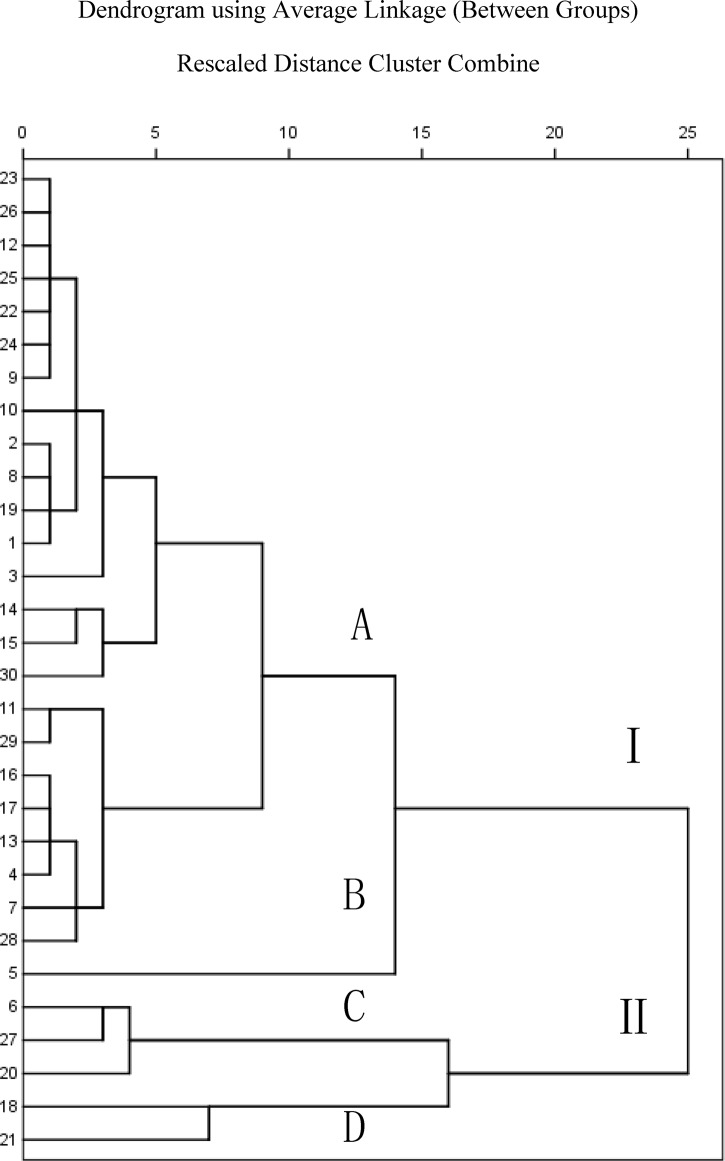
All five characteristic compounds had good linear behavior with r2 values greater than 0.9972. The recoveries varied from 96.31% to 101.22%. Subsequently, the developed method was applied to evaluate the quality of Huangqi Granules from different batches, and hierarchical clustering analysis (HCA) was used to analyze the classification of the samples based on the values of the five compounds.
The established HPLC method combined with HCA proved to be effective to evaluate the quality of Huangqi Granules.
为更科学合理地控制黄芪颗粒的质量,对该药物进行了药效学及血清药物化学的初步研究。DPPH和MTT实验表明,黄芪颗粒水提取物具有良好的抗氧化活性并能增强免疫力。口服一定量黄芪颗粒后,分别于5分钟、15分钟和30分钟采集定时血样,采用超高效液相色谱-电喷雾串联质谱(UPLC-ESI-MS/MS)进行检测。结果显示,给药后大鼠血液中存在毛蕊异黄酮葡萄糖苷、芒柄花苷、毛蕊异黄酮、黄芪甲苷和芒柄花素,表明这5种化合物可能具有药理活性,据此将它们确定为黄芪颗粒质量控制的生物标志物。因此,本研究建立了一种简单、快速、高效的HPLC-DAD-ELSD法同时测定黄芪颗粒中这5种特征性成分的含量。
采用Agilent Hypersil ODS柱(4.6×250 mm,5μm),在30℃下进行分离。流动相由水(溶剂A)和乙腈(溶剂B)组成,流速为1 mL/min。蒸发光散射检测器(ELSD)系统的漂移管温度设定为85℃,氮气压力为3.5 bar。
5种特征性成分均具有良好的线性关系,r2值均大于0.9972。回收率在96.31%至101.22%之间。随后,将所建立的方法应用于评价不同批次黄芪颗粒的质量,并采用层次聚类分析(HCA)根据5种化合物的含量对样品进行分类。
所建立的HPLC方法结合HCA被证明可有效评价黄芪颗粒的质量。